



The question almost never arrives as a question. It arrives as a small, careful silence in the middle of a conversation, and then something like: so I couldn't have pizza anymore.
Thirty years of these conversations, and that's the moment. Not the science. Not the verse. The moment a person does the arithmetic on what they think they're being asked to hand over — the ice cream on a Sunday evening, the cheese on a cracker when someone drops by, the bread — and decides quietly that they couldn't live like that.
We'd like to answer that as plainly as we can. You still have pizza. You still have ice cream, cheese, butter, ketchup, burgers, bread and something chocolate. Most of them you'll make yourself, and most of those are easier than you'd guess.
That's the whole of what we mean by the principle we come back to more than any other: "Replace Before You Eliminate."
The principle has two halves, and most people only hear one
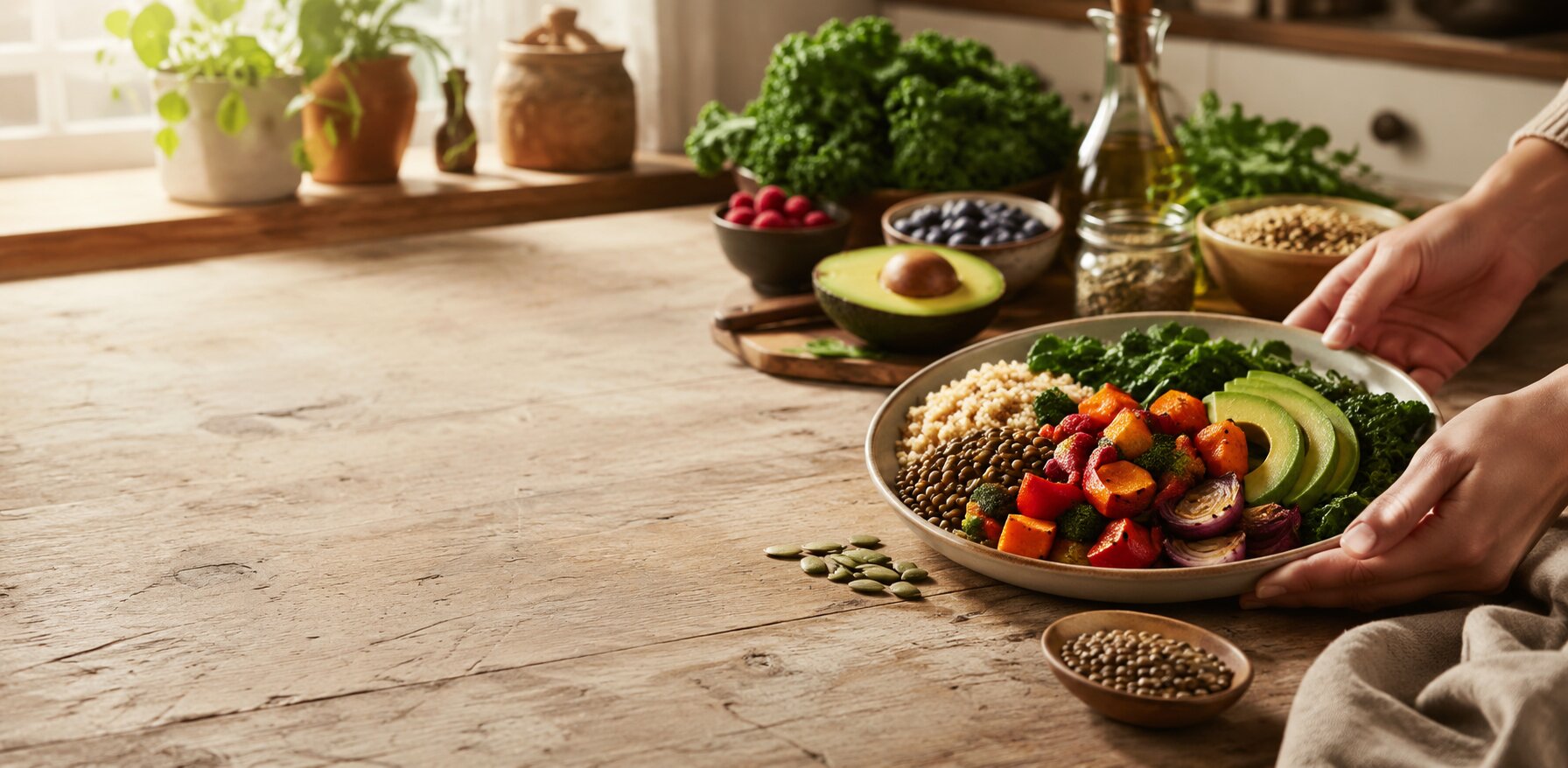
The half people hear is the plate. Add enough good food — a green juice in the morning, a large raw salad before the main meal, fruit, nuts, seeds, more vegetables than seems reasonable — and the rest gets crowded off without a fight. Elimination becomes a result rather than a task.
That's true, it works, and it happens quietly in the background while you're busy with other things. If you want the practical version of that half, it's the salad box — an hour on Sunday, everything washed and waiting, so that the good thing is also the easy thing at six in the evening. That single habit does more for the adding half than anything else we teach.
The other half is the fun one, and it's the half that keeps people here. You take the foods you'd genuinely miss and you rebuild them out of better material.
We didn't give up ice cream. We make it.
The swaps, by what you'd actually miss
Most articles on this sort themselves by food group — dairy, then eggs, then meat. That isn't how anyone experiences it. Nobody quits at nine in the evening because they miss dairy. They quit because they want something crunchy, or something creamy, and there's nothing in the house that answers.
So here it is by the craving.
Creamy
The easiest category, and the one with the highest success rate, because the originals were already soft.
- Ice cream. Frozen bananas run through a food processor come out like soft serve. Blend and freeze almost any fruit and you have what people call nice cream — we have a shelf of those, from Fuzzy Mango to Raw, No Sugar or Cream to Sandy's Rocky Road. If you want the other kind — churned, rich, scoopable straight from the freezer, the one you'd set in front of company — that's Cashew Ice Cream.
- Milk. Plant milk, made in a blender in under two minutes. The ratio is one to four: one cup of oats or cashews to four cups of water, blended smooth and strained. A dozen versions are on the site, including Creamy Almond, Hazelnut, Frothy Walnut and one titled, with no ceremony at all, Raw, Home Made Rice Milk (A cow milk replacement).
- Cream cheese. Hallelujah Cream Cheese and a Chive Cream Cheese.
- Cheese sauce. No Cheese, Cheese Sauces and the Red Pepper Cashew Cheese Dip.
- Butter. House Butter — firm from the refrigerator, soft on the counter, creams for baking.
Salty and savory
- Cheese you can slice. Sliceable Cheddar sets firm enough to cut and grate and holds its shape in the refrigerator. There's also Janice's Jack Cheese.
- Parmesan. Five-Minute Parmesan — cashews, nutritional yeast, garlic, salt, ground fine. Four ingredients and about the length of time it takes to find the lid.
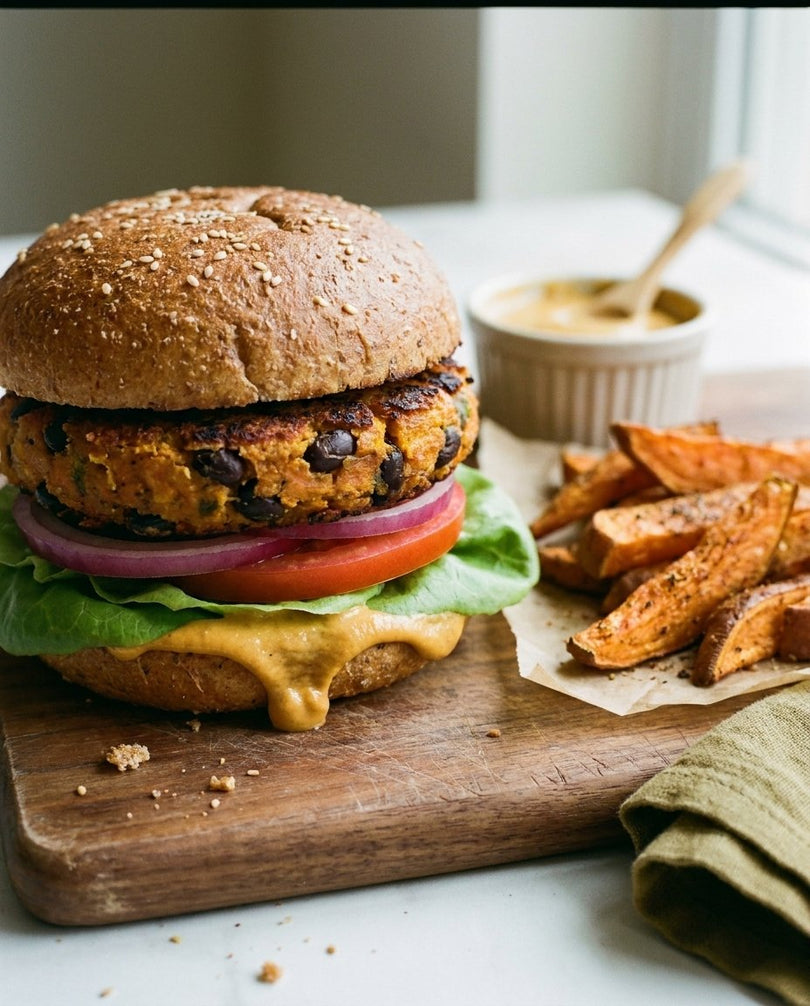
- Burgers. Sweet Potato and Black Bean Power Burger, or the Raw Veggie Burgers.
- Sausage, chili, tacos. Vegan Sausage, Vegetarian Chili, Chili Lime Mushroom Tacos.
- Ketchup. Four minutes, no cooking, and tomato is the first ingredient instead of the third. Read the label on a bottle sometime.

Crunchy
This is the craving that breaks people, and it's usually the one nobody has planned for. There's more here than you'd think.
- Marinated, dehydrated chickpeas. Season them, dry them properly, and they rattle. The drying is the whole trick — if they aren't bone dry going in, they come out chewy, which is why most people's first attempt fails.
- Soaked, seasoned, dried nuts. Soak them, season them, dry them low and slow. Better than anything in a bag and you control what's on them.
- Chili Lime Sweet Potato Chips — mandoline them thin, single layer, low oven, long time.
- Crunchy Crisp Kale Chips and an Apple Cinnamon version.
- Sun-Dried Tomato Crackers and Crisp Rosemary Flatbread.
- Cheesy Popcorn — air popped, nutritional yeast. The one people are still making a year later.
A dehydrator earns its counter space faster than most appliances if crunch is your weakness.
Bread and pasta
- Pizza. Margarita's, Rhonda's Basil Pesto, Easy Healthy Flatbread. We buy a chickpea crust, though it doesn't have to be gluten-free.
- Bread. Essene Bread, Blender Bread, and now a Gluten-Free Bread that goes in a blender for thirty seconds and into a pan. No kneading.
- Pasta. Chickpea or lentil pasta if you're avoiding wheat. Or skip the noodle — Zucchini Pasta with Puttanesca has been on this site for years. One tip nobody mentions: use short shapes rather than spaghetti. Under a heavy sauce the texture difference in a bean pasta nearly disappears in penne and is obvious in a long strand.

Sweet — and yes, chocolate
- Dates do most of the work. Date Coconut Logs, Raw Date and Nut Balls, Medjool Date and Almond Delight. Soak dates in hot water, blend to a paste, and you have a sweetener that keeps its fiber.
- Puddings. Avocado Banana Pudding, Raw Key Lime Pudding. Blended avocado with cocoa and a little maple makes a chocolate pudding nobody guesses.
- Fudge and sauces. Raw Fudge, Raw Carob Fudge (With the Taste of Chocolate), Not Your Mother's Chocolate Sauce, Healthy Hot Chocolate.
- Nut butter, which is the snack we'd point you at first. Take a good almond or cashew butter and stir something into it — a little honey, a spoon of cacao or carob powder, both. Carob Almond Butter and Almond Butter Carob Crunchies are on the site, and it takes about a minute to invent your own.
- Something frozen with green in it. BarleyMax Mint Carob Frozen Cake, which is exactly as unlikely and as good as it sounds.
A word on carob and cocoa. The Hallelujah Diet has traditionally used carob, and there are good carob recipes above. We'll be honest with you: in some things cocoa simply comes out better. We're not encouraging anybody to eat a lot of chocolate. But if the choice is a homemade chocolate pudding or a candy bar from a gas station, that isn't a close call.
Fizzy
If what you'd actually miss about soda is the fizz rather than the sugar — and for most people it is — a carbonated water maker and a splash of real fruit juice gets you there. Muddle berries or citrus in the glass, top with sparkling water, and you don't even need the juice.

About mozzarella, since somebody always asks
Melty, stretchy cheese is the one people assume can't be done. It can.
The version we make is simple, and it doesn't look like mozzarella — it goes on in dollops, spread across the top of the vegetables before it goes in the oven. It's phenomenally good and nobody has ever complained that it wasn't shaped like a ball.
If you want it to shred, add agar and let it set firm first, then grate it. And if you want the real thing — the melt and the pull — that's what kappa carrageenan is for. It's a seaweed-derived setting agent, it's what the chefs who've solved this problem are using, and it's easy enough to find.
So the honest answer isn't that mozzarella is impossible. It's that it takes one ingredient most kitchens don't have yet, and that the simple dollop version is good enough that we've never bothered.
Here's the thing we'd rather you took from it, though: once the vegetables are good, the cheese turns out to be optional. That surprises people more than any recipe on this page.
What we don't mean by replacing
There's an aisle in every grocery store now marked plant-based, and a great deal of what's in it is junk food that happens to be vegan.
These products are chemically produced, high in sodium, high in fat and low in nutrition. The Beyond Burger and the Impossible Burger are the ones people ask us about most, and we'd put them near the bottom of anything a person could choose to eat — a long list of isolates, refined oils and flavorings, engineered to behave like the thing it's imitating. What troubles us is who buys them. Somebody decides to go plant-based, walks into a health food store, and comes home with burgers, hot dogs, deli slices and shrink-wrapped cheese, believing they've done something good.
Just because a thing is sold in a health food store does not make it healthy. The shelf isn't the standard. The ingredient list is.
We keep so-called healthy chips in the house ourselves and we're under no illusions about them. The replacements worth making are the ones you make.
About the salt, since you'll notice it in the recipes
If you read down through those recipes you'll find salt in the savory ones. We'd rather explain that than have you catch it.
What comes out of the diet is refined table salt — and standard sea salt belongs in that same category, because most of it has been processed too. What we use is unprocessed salt: Himalayan, Celtic sea salt, Real Salt.
People usually assume the difference is the trace minerals, and that's part of it. But the thing that matters more is the processing itself. Refined salt has been stripped, bleached and chemically treated, and what comes out the other end is not the same substance that went in.
The same logic runs through everything else here. What comes out is refined sugar, not sweetness. What comes out is white flour, not bread. If we told you to cook without seasoning or sweetness of any kind, you'd last about eleven days, and we'd rather you lasted thirty years.
Every recipe in this collection lists salt on its own line, with a range, so it stays a decision you make rather than a number you follow.
What you're adding the whole time
None of this replaces the first half of the principle. While you're rebuilding the foods you'd miss, the plate is still filling with the things that actually change how a body works: the green juice in the morning, the large raw salad, the vegetables in volume.
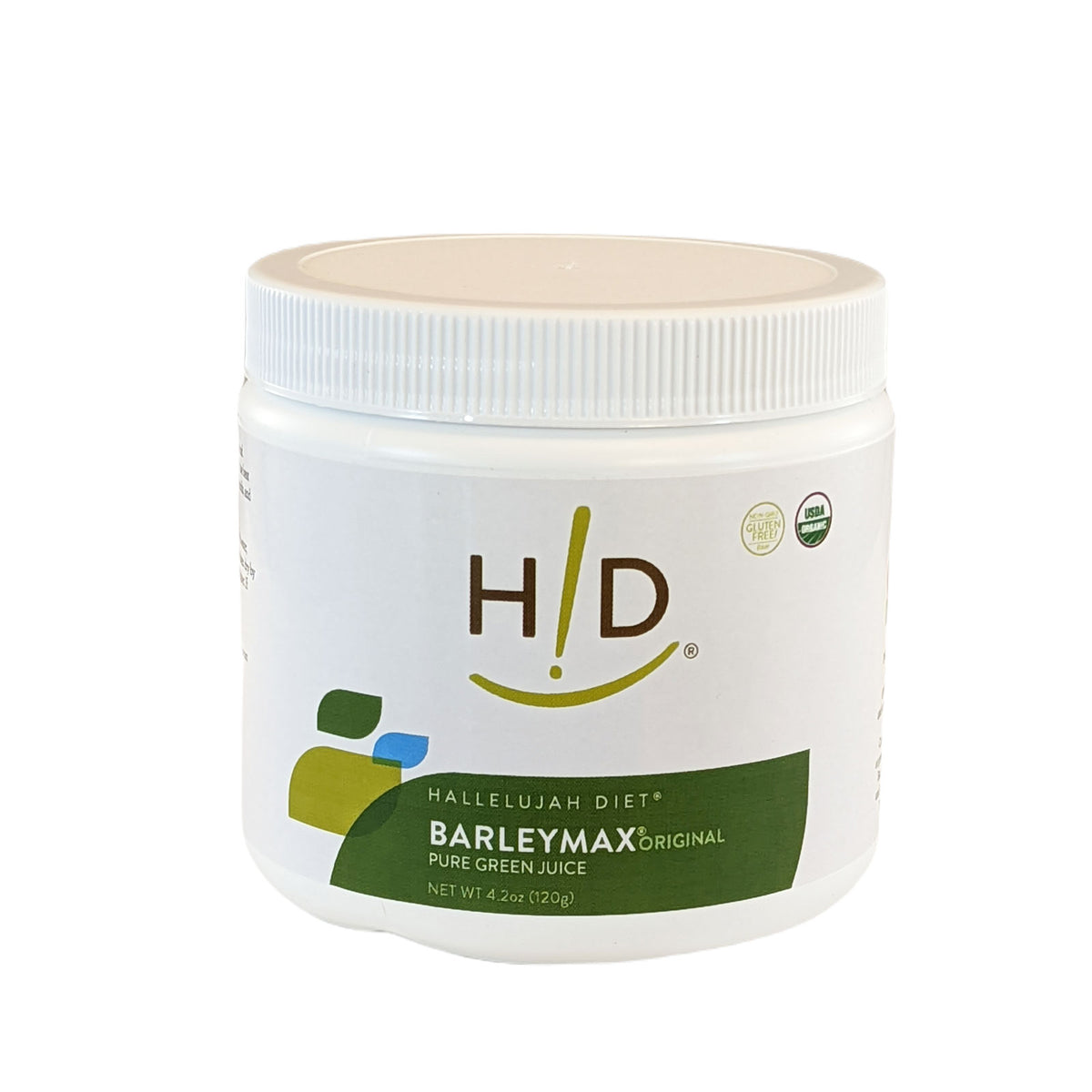
That's where a green drink sits, and it's the honest place for it. BarleyMax replaces nothing on this list. There's no junk food it stands in for. It belongs in the adding half, where it's always been — a tool, not the foundation, working alongside living food rather than in place of it.
The swaps carry you through the early weeks. The adding is what's doing the work.
And then something happens that nobody warns you about
Here is the part we find most interesting, and we're going to be careful with it, because this is where articles like this one usually overpromise.
Your palate changes. The cells in a taste bud are replaced every week or two — which is where the popular "your taste buds reset in three weeks" line comes from, and it's roughly in the right neighborhood. But that turnover isn't really the mechanism. Nothing is coating your tongue and nothing gets scrubbed off. What changes is what your brain has decided "right" tastes like.
For salt, this is well documented. People eating less of it come to prefer roughly a third less, somewhere between three weeks and a few months. And there's a detail worth knowing before you start: the craving goes up before it goes down. The first stretch is the worst one. That's a research finding, not a pep talk.
For fat, the evidence is good if newer. In an eight-week trial, people on a lower-fat diet became measurably more sensitive to it, and the effect held regardless of genetics.
For sugar, we'd be more careful. Food genuinely does start tasting sweeter to you — that part holds up. But the best trials find people don't reliably stop wanting sweet things, and that when the study ends they return to where they started. Anyone promising that a few clean weeks will kill your sweet tooth is telling you something the research doesn't support. Fruit displacing dessert is a more honest plan than waiting for a craving to disappear.
So: the food you cook will start tasting properly seasoned with less salt. Rich food will taste rich sooner. Everything will taste better as the oil, sugar and salt of commercially processed food stop setting the baseline — and that part is real, and it's the reason people who've been at this a while eat so simply.
But whether you want fewer sweet things is going to be more about what's in the house than what's on your tongue. The decision that matters is made at the grocery store, not at the refrigerator door at nine in the evening.
Every Swap on One Page
If it would help to have all of this on one sheet, we've put it together as a printable — every swap on this page, sorted by the craving, with the rule that predicts which ones work. It's the kind of thing that ends up on a refrigerator door or in the pocket of a shopping list.

Where to start
Not with a list of what you're giving up. Start with three swaps, in this order, because they're the hardest to get wrong:
- Five-Minute Parmesan — four ingredients, two minutes, almost impossible to ruin.
- Ketchup — four minutes, no cooking, and it's the one that surprises people.
- A plant milk — Creamy Almond or any of the dozen others. Two minutes in a blender.
Then the ones that take a little more: the cheddar, the butter, the ice cream, the bread.
And alongside all of it, the adding half — which for most people means the salad box one afternoon a week, so that the vegetables are already washed and waiting when you're tired.
One word about equipment, since nobody says it. A strong blender does a great deal of the work here. Most complaints you'll read about gritty homemade cheese trace back to a machine that couldn't quite get there — if yours struggles, soak the cashews in hot water for thirty minutes and drain them, which closes most of the gap. We'll say plainly that a machine like the Thermomix changes what's realistic in a kitchen; it blends, heats, grinds and kneads in one bowl, and it makes this way of eating markedly easier to keep up. Paul writes about it separately at TheManWhoCouldntBoilWater.com, which is where to go if you want the long answer. A dehydrator is the other one worth having if crunch is your weakness.
What we'd leave you with
"And God said, Behold, I have given you every herb bearing seed, which is upon the face of all the earth, and every tree, in the which is the fruit of a tree yielding seed; to you it shall be for meat."
— Genesis 1:29
That was given as a provision, not a restriction. It reads like a list of what there is, not a list of what's forbidden — and after thirty years we've come to think that's the right way round for all of this.
You are not being asked to hand over your favorite foods. You're being asked to build them out of better material.
Questions We Hear Most Often
Q: Do I have to give up my favorite foods? A: Almost never. Ice cream becomes frozen fruit or churned cashew. Milk becomes almond or cashew, two minutes in a blender. Cheese, pizza, pasta, burgers, ketchup and something chocolate all have versions worth eating. The list of things with no good homemade version is much shorter than people fear.
Q: Can you really make mozzarella that melts? A: Yes. The simple version goes on in dollops and spreads across the top of the vegetables, and it's very good. Add agar and it sets firm enough to shred. For genuine melt and stretch, kappa carrageenan is the setting agent chefs use, and it's not hard to find. The bigger surprise is that once the vegetables are good, most people stop missing the cheese.
Q: How can I tell whether a swap will be any good before I spend an afternoon on it? A: Ask what the original food's texture depended on. Soft, creamy or crumbly — ricotta, sour cream, ice cream, cheese sauce — and the plant version usually works straight off. Anything that depended on stretch or snap needs a setting agent and a bit of technique. That one question will save you most of the disappointment.
Q: What do I do about wanting something crunchy at night? A: Plan for it, because it's the craving that ends the most attempts. Marinated and dehydrated chickpeas, soaked and seasoned dried nuts, kale chips, thin-sliced sweet potato chips, sun-dried tomato crackers, or air-popped popcorn with nutritional yeast. A dehydrator earns its counter space faster than most appliances.
Q: Can I still have chocolate? A: Yes. Chocolate ice cream, chocolate pudding made from blended avocado, chocolate sauce, fudge, hot chocolate, and nut butter with a spoon of cacao and a little honey stirred in. The Hallelujah Diet has traditionally used carob and there are good carob recipes on the site — though in some things cocoa honestly comes out better. What we can't do well is a hard tempered chocolate bar.
Q: Isn't the plant-based aisle at the store easier? A: Easier, yes. Better, no. Most of it is chemically produced, high in sodium and fat, low in nutrition — the Beyond and Impossible burgers especially. And it's bought by people who think they're doing something good, which is the part that bothers us. Being sold in a health food store doesn't make a thing healthy. The ingredient list is the standard, not the shelf.
Q: Why do your recipes still use salt? A: Because what comes out of the diet is refined salt, not seasoning. Use unprocessed salt — Himalayan, Celtic sea salt, Real Salt. Standard table salt and most standard sea salt have been processed, and that processing matters more than the trace minerals people usually talk about. Our recipes list salt on its own line with a range so it stays a decision rather than an instruction.
Q: Aren't taste buds replaced every three weeks anyway? A: The cells in a taste bud do turn over every week or two, so the popular figure is in the right neighborhood. But that turnover isn't what changes your preferences — what changes is what your brain treats as the right amount. That's why the shift takes weeks to months rather than a couple of weeks, and why it's a good deal more reliable for salt than for sugar.
Q: Will my taste buds really change? A: Partly, and it's worth being precise. With salt, yes — people eating less come to prefer noticeably less, usually within three weeks to a few months, and the craving tends to rise before it falls. With fat, good evidence you become more sensitive within a couple of months. With sugar, food starts tasting sweeter, but the research doesn't support the promise that you'll stop wanting sweet things. That one takes more than time.
Q: Do I need special equipment? A: A strong blender does most of the work, and it's the thing nobody admits. If yours struggles, soak the cashews in hot water for thirty minutes and drain them first. A dehydrator matters if crunch is your weakness. And a machine like the Thermomix — which blends, heats, grinds and kneads in one bowl — genuinely changes what's realistic on a weeknight.
Q: Can I make plant milk at home, or do I need to buy it? A: Make it, and it costs a fraction. One cup of oats or cashews to four cups of water. Blend until completely smooth and strain. Cashews take longer than oats.
Q: What's the difference between this and just eating less? A: Everything. Eating less is subtraction, and subtraction is why most eating changes end. This starts with a plate that's fuller than what it replaced and a shelf that still has the things you like on it. Nobody sustains a way of eating they experience as a loss.
Q: Isn't this all a lot of cooking? A: Less than it looks. Most of these are blend-and-refrigerate and several take under five minutes, and they're batch jobs — a jar of parmesan lasts weeks, ketchup lasts three, a round of cheddar lasts a week. Pair them with a salad box afternoon once a week and the daily cooking gets smaller, not bigger.
Q: Where should I actually start? A: The parmesan, the ketchup and a plant milk. All three are nearly impossible to ruin and all three take minutes. Get a small win first. And alongside them, start adding — a green drink in the morning, a large raw salad before your main meal.
You Might Also Like
- The Salad Box — the other half of the principle. An hour on Sunday and the good thing becomes the easy thing at six in the evening.
- Salad in a Jar — the same idea, built to travel. The layering order and how long one actually keeps.
- A Guide to a Day on the Hallelujah Diet — morning to evening, written out. The least abstract thing we have.
- What the Bible Actually Says About Food — the passages in order, with a short note on each.
- Whole-Food Supplements: What to Look For — if you're going to fill gaps, fill them with something real.
We offer these teachings freely to support clarity, stewardship, and responsible care. If this article was helpful, you may explore additional resources here:
- MyHDiet.com — plant-based nutrition, detox foundations, courses to help you learn the diet from your home
- CleanseYourBlood.com — circulation, nitric oxide and blood-flow support
- WipeOutToxins.com — toxin-free living and prevention
- AMPMForHealth.com — health for the rhythm of real life
- HealthRetreat.com — Hallelujah Diet Health Retreat
Questions about any of this, including about our own products, come straight to us.