



The three o'clock slump. Hungry ninety minutes after breakfast. Shaky if a meal runs late, and wide awake at two in the morning. These all come from one thing, and it is not how much you ate.
People describe wanting more energy, and then describe a day that has plenty of it in patches. Fine at nine. Flattened at three. Awake at two.
What they are describing is a line that will not hold still. And once you can see the shape of it, most of what to do becomes obvious.
What your body is actually defending
Glucose in your blood has to stay within a narrow band. Your brain holds no store of its own. It runs on what is in the blood right then, so if the level drops too far you stop thinking clearly within minutes. Too high, and over time it damages the lining of your vessels. The body treats that band as non-negotiable and spends considerable effort holding it.
Two hormones do most of the work.
Insulin comes out when glucose rises. Its message is to take glucose out of the blood — into muscle to be used or stored, into the liver, and, what neither wants, into fat. Insulin is a storage signal.
Glucagon comes out when glucose falls, telling the liver to release some of its store back into the blood. Between meals and overnight, that is what keeps you level.
Both of those are working correctly in a person having a three o'clock slump. The problem is the size of the swings they are being asked to manage.
The swing, and why the bottom of it is what you feel
Eat something that arrives quickly, a pastry, juice, white bread, anything refined and low in fiber, and glucose rises fast. A fast rise prompts a large insulin response, because the body is reacting to the speed as well as the amount.
A large insulin response tends to overshoot. Glucose comes down past comfortable and into the lower part of the band. The body reads that as an emergency, and it responds the way it responds to emergencies: adrenaline and cortisol, to push glucose back up.
That moment is what people experience as the crash. Foggy, shaky, irritable, suddenly starving, and needing something sweet. The craving is not weakness. It is a correction signal from a body that has been pushed below where it wants to sit.
Then whatever you eat to fix it starts the next cycle. Three or four of those a day is an exhausting way to live, and none of it is caused by eating too little.
Structure matters more than the label
Two foods with identical nutrition labels can behave completely differently, depending on whether the food's physical structure is intact.
An intact grain — oat groats, barley, millet, quinoa, brown rice — is a sealed package. Your digestion has to break it down mechanically, and glucose is released slowly over hours.
The same grain milled into flour has had that work done for it. Even whole wheat flour, with all its fiber present, behaves far more like sugar than the intact grain does, because the surface area available to your enzymes has multiplied.
Whole fruit works the same way. The sugar in an apple sits inside cell walls with fiber and water around it, and it arrives slowly. The same apple juiced arrives in minutes.
So the useful question about any food is how much work your body still has to do to get at it — not whether the label says whole grain.
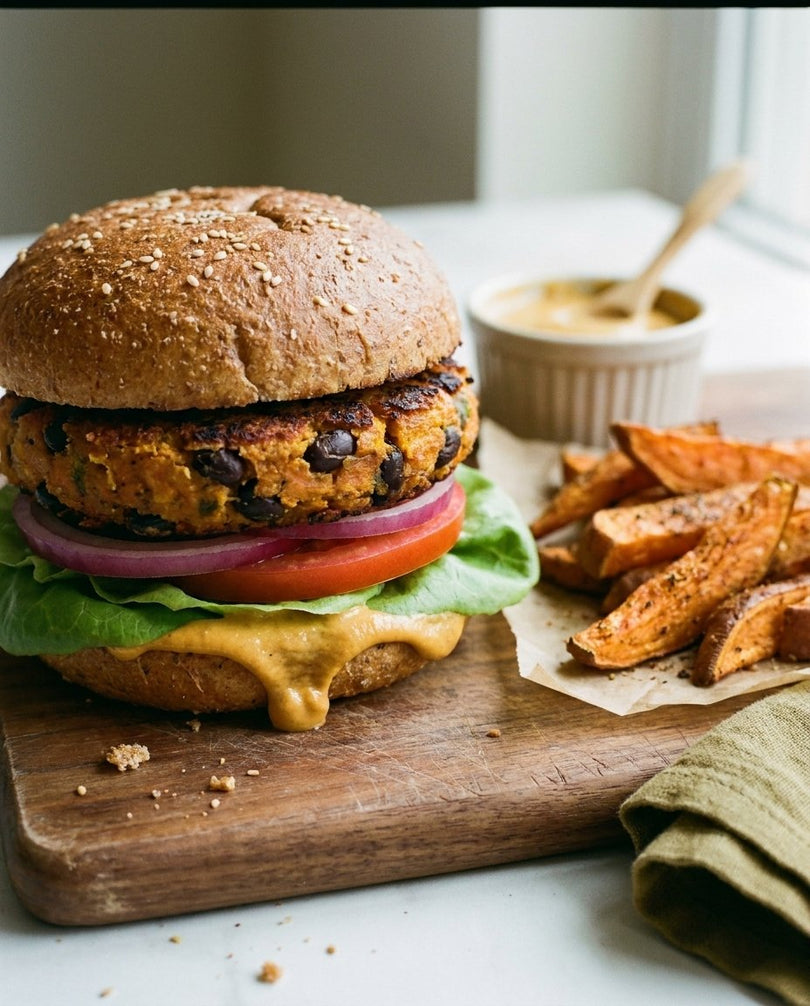
Beans are the champions here — fiber, protein and a starch that partly resists digestion altogether — which is why they flatten a meal's response better than almost anything, and why they make the next meal's response flatter too.
Muscle is where glucose goes
Your muscles are by far the largest place glucose can be put, and this gives you a lever.
A contracting muscle takes glucose out of the blood without needing much insulin at all. Movement opens a door that does not depend on the hormone.
Which is why a ten-minute walk after a meal works so well. It is not about calories. You are opening the largest storage site you have at exactly the moment glucose is arriving, and the peak simply never gets as high.
The longer-term version of the same fact: more muscle means more somewhere for glucose to go. Someone who has lost muscle over twenty years has a smaller sink for the same meal.
Two things people do not connect to this
Sleep. A single short night measurably reduces how well your cells respond to insulin the following day. A week of them shifts things considerably. Someone doing everything right with food and sleeping five hours is working against themselves.
Pressure. Cortisol's job includes raising blood glucose, because a body that thinks it is in trouble wants fuel available. A stressful morning raises glucose with no food involved at all, which is why the shape of a day can be off before breakfast.
Where it commonly gets stuck
Refined carbohydrate on its own. Toast alone, a bowl of cereal, a cookie with tea. The same food alongside fat, protein and fiber behaves differently.
Drinking calories, which bypasses the work of digestion entirely.
Sitting still after eating, which leaves the largest door shut.
Eating constantly. Grazing from morning to bedtime means insulin is never fully switched off, and insulin being permanently present is the beginning of cells listening to it less.
Short sleep and long pressure, per above.
And shortfalls of magnesium and chromium, both of which the machinery of glucose handling depends on, and both of which are thin in a processed diet.
What it needs
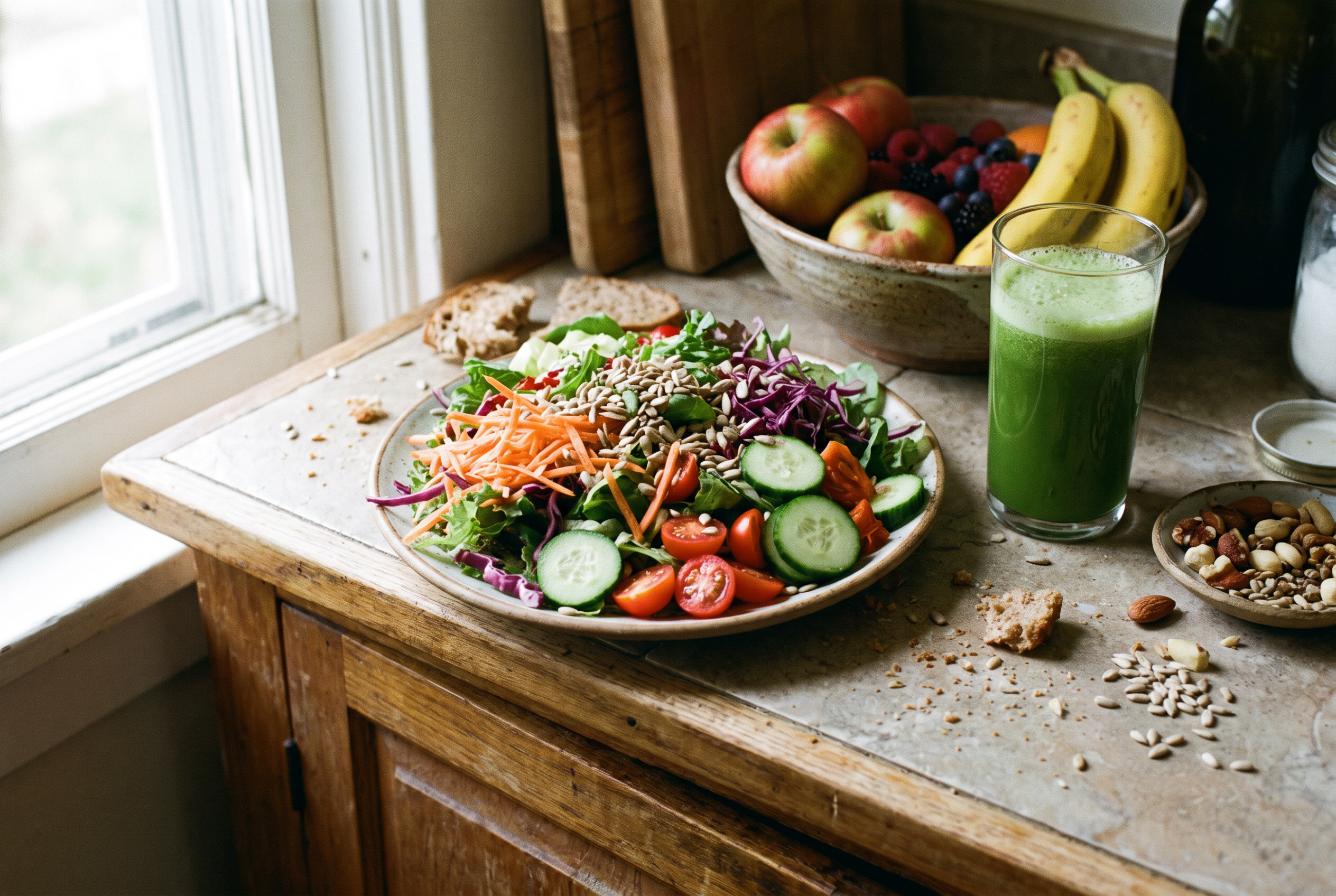
The food side has its own piece. It comes down to intact grains rather than milled ones, beans most days, vegetables before the starchy part of the meal, fat or protein alongside anything starchy, fruit whole rather than juiced, and the minerals named above.
Juice your vegetables and eat your fruit. Vegetable juice carries very little sugar, so removing the fiber costs you nothing, and it gains you more than speed. Breaking the cell walls open releases what is inside them, so far more of what the plant is carrying actually reaches you. Dr. H. E. Kirschner put the difference at under 35 percent absorbed from vegetables eaten whole, even by a digestion in good order, against upwards of 90 percent from the juice. Fruit juice is the opposite case. It carries a great deal of sugar, and the fiber was the brake.
Three things that are not about food:
A real gap between meals, and nothing after dinner. Three meals with space between them gives insulin time to fall, and that falling is when your body works from its own stores.
The walk. Ten minutes after your largest meal. Of everything here, this is the one with the best ratio of effort to result.
Sleep, and the pressure you are under, per above. Neither is a food problem, and both move the line.
What to notice in yourself
Whether you can go four or five hours without eating and stay civil. That is the clearest readout of a steady line available, and it requires no equipment.
The three o'clock slump, and whether it tracks what you ate at lunch rather than how much.
Hunger arriving ninety minutes after a meal, which points at the swing rather than at the portion.
Waking between two and three and struggling to get back to sleep, which is often a glucose dip prompting a cortisol response.
Shakiness or a short temper when a meal runs late.
Also, whether your energy has a shape to it, a repeatable daily pattern because a pattern has a cause, and causes can be worked with.
A thought to close
For forty years in the wilderness the children of Israel were fed each morning, and the instruction was to gather enough for that day only. What was kept overnight bred worms and spoiled (Exodus 16:19-21). Whatever else that account is teaching, it describes a body made for regular provision rather than for feast and famine.
That is close to what the physiology says. The system is built for food arriving at intervals, in a form that releases slowly, with gaps in between and movement across the day. Give it that and it holds the line by itself, without anything being asked of you.
The modern arrangement is nearly the opposite — fast fuel, no gaps, no movement, and then we treat the resulting swings as a personal failing. They are not. They are the predictable output of a design being run on inputs it was not built for, and the line steadies within a week or two of changing them.
Questions We Hear Most Often
Q: Why do I crash at three in the afternoon?
A: A fast-arriving meal produces a large insulin response that tends to overshoot, pushing glucose below comfortable. The body reads that as an emergency and answers with adrenaline and cortisol. Foggy, shaky, irritable and suddenly starving is the bottom of that swing.
Q: Is the craving for something sweet a willpower problem?
A: It is a correction signal from a body that has been pushed below where it wants to sit. Which is why the answer is preventing the swing rather than resisting the craving.
Q: Does a walk after eating actually make a difference?
A: A contracting muscle takes glucose out of the blood without needing much insulin, so ten minutes of walking opens the largest storage site you have at exactly the moment glucose is arriving. Of everything available, it has the best ratio of effort to result.
Q: Why does sleep affect my blood sugar?
A: A single short night measurably reduces how well your cells respond to insulin the following day. Someone eating carefully and sleeping five hours is working against themselves.
Q: Is fruit bad for blood sugar?
A: Whole fruit is fine. The sugar sits inside cell walls with fiber and water around it and arrives slowly. Juiced, the same fruit arrives in minutes — which is the rule we teach: juice your vegetables and eat your fruit.
Keep exploring
→ Foods That Steady Your Energy — the food side, in more detail
→ Reserves: Why You Were Fine Until You Suddenly Were Not — the other reason energy runs out
→ How Your Body Works — the full library
If you would rather begin than read, our Get Started Meal Plan lays out the first week for you.
Educational content. Not medical advice.
More food-first writing: MyHDiet.com · AMPMForHealth.com
Reviewed by Olin Idol, ND, CNC — Vice President of Health, Hallelujah Diet