



Your brain is built out of fat, runs on a fuel it cannot store, and is assembled from materials that arrived in the last few weeks. All three of those are things food decides.
The brain is about two percent of your weight and spends around twenty percent of your energy. It keeps almost no reserve of fuel, and sixty percent of its dry weight is fat — fat that came from what you have been eating.
Which makes it unusually responsive to the plate, in three separate ways. What it is built from. What it runs on. And what it needs to clear out at night.
What it is built from
Omega-3 fats are the structural item. Every membrane where signaling actually happens is built from fatty acids, and one in particular — DHA — concentrates in the membranes that signal fastest. Supplied well, those membranes stay fluid and signals move easily. Supplied poorly, the body substitutes whatever fat is available and builds something stiffer.
Ground flaxseed, walnuts, chia and hemp supply the plant form of omega-3, and they are worth eating daily.
The plant form is not the whole story, though. Your body has to convert it into the two forms that do the work — EPA and DHA, and the conversion is poor. Something like five to ten percent becomes EPA, and under one percent becomes DHA. People eating only plant sources measurably run low on both, and DHA is the one the brain is built out of.
So the preformed versions matter more for this organ than for any other. Fish oil is the most direct source of both. For anyone who would rather not take it, algae oil supplies the same two molecules — algae being where the fish get theirs in the first place.
Less of the industrial seed oils, since membranes get built from whatever is most available, and a diet heavy in those changes what the body has to work with.
Choline, used to build one of the main memory transmitters and genuinely scarcer in plant diets. Soy foods, quinoa, broccoli, Brussels sprouts, beans, peanuts, and wheat germ.
What it runs on
The brain has no pantry, so it depends on a steady arrival of glucose minute by minute. A dip is felt quickly, which is most of what afternoon fog actually is.
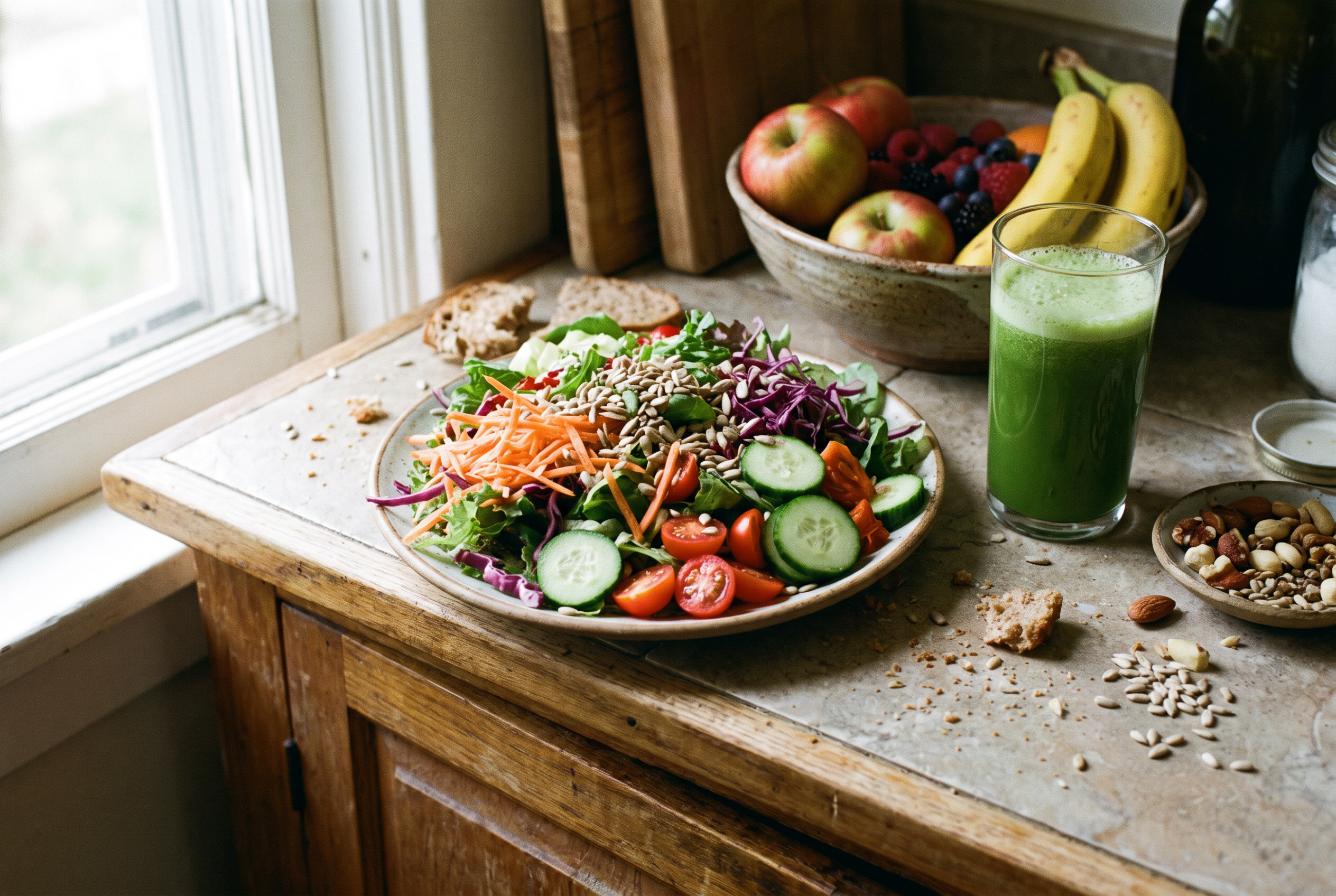
So the steadying rules matter here as much as anywhere. Intact whole grains rather than milled. Beans most days. Protein and fat alongside anything starchy. Vegetables first in the meal.
Millet, oats as groats or steel-cut, quinoa, barley, brown rice, and beans of every kind. A flat line is what the brain rewards.
Water, since mild dehydration reduces attention and short-term memory well before thirst becomes obvious.
The materials that build the signals
Neurotransmitters are made from amino acids using a small set of tools, and a shortfall in any tool slows the work.
The B group. Folate from dark leafy greens, lentils, asparagus, avocado. B6 from pistachios, sunflower seeds, potatoes, bananas, chickpeas. Riboflavin and niacin from whole grains, mushrooms and nutritional yeast.
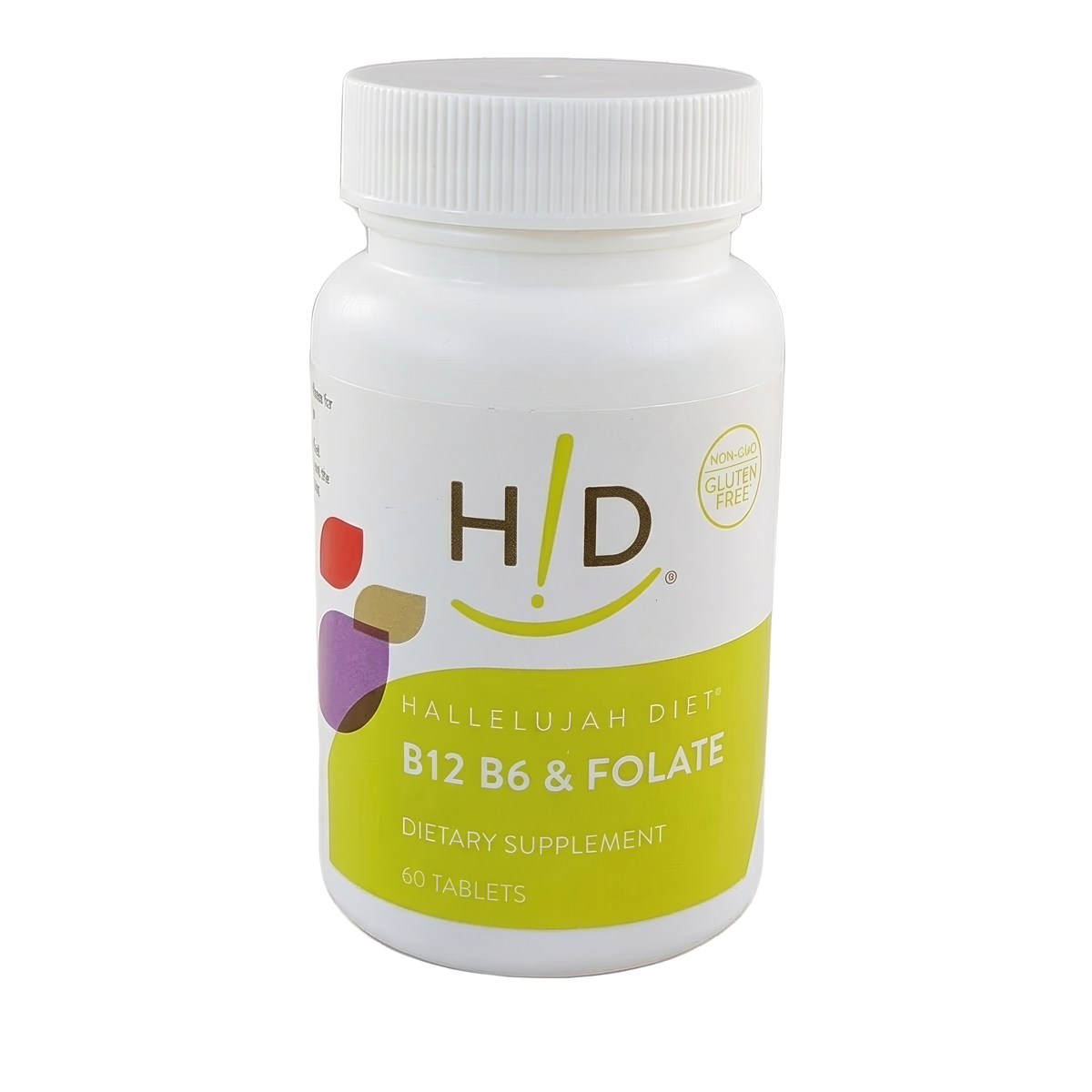
Vitamin B12 deserves its own sentence. It maintains the insulation around nerve fibers that lets signals travel quickly, and a shortfall shows up as fog, poor memory, low mood and pins and needles. It is stored for years, so it builds invisibly and then arrives. On a plant-based diet it needs a reliable source, a supplement or genuinely fortified food. No plant provides it dependably, and this is the one nutrient where the way we eat has a gap that has to be filled deliberately. It is not only a plant-based concern. Absorption depends on stomach acid, which falls with age, and several common medications reduce it further, so low B12 turns up in people who eat meat as well.
Iron, which carries the oxygen the brain consumes more of than any other organ. Low iron produces fog long before it produces anemia. Lentils, beans, pumpkin seeds, dark greens, quinoa, with vitamin C in the same meal.
Magnesium, required by hundreds of enzymes and responsible for settling the baseline excitability of the whole system. Short of it, the system runs hot and sleeps badly. Pumpkin seeds, greens, black beans, almonds, cacao.
Zinc, concentrated in the hippocampus and involved in forming memories. Pumpkin seeds, hemp seeds, cashews, chickpeas, oats.
The ones that protect it
The brain's combination of high oxygen use and delicate fats makes it unusually exposed to oxidation, and the compounds that protect it come from color.
Berries first, and blueberries most of all. They have the best evidence of any food for cognitive protection, and several of these compounds cross into the brain rather than acting only in the blood.
Blackberries, black currants, cherries, pomegranate, beets, unsweetened cocoa, green tea. Several of these raise blood flow to the brain measurably within a couple of hours.
Dark leafy greens, which in long-running observation track better cognitive aging than almost any other single food, probably through folate, vitamin K, lutein and nitrate together.
Turmeric with black pepper, and rosemary, sage and thyme, all of which act on the general load.
Vitamin E, protecting the fats in those membranes. Sunflower seeds, almonds, hazelnuts, avocado.
What helps it clear out at night
The brain washes its own waste out during deep sleep, and that is the only time the channels open properly. Food plays a modest part and the habits play a larger one.
Nothing heavy late, since digestion competes.
No alcohol in the evening, which is the most common cause of shallow sleep and the least suspected. It shortens the time to fall asleep and then suppresses the deep stage.
Last caffeine before noon, given how long it lingers.
Tart cherries and a magnesium-rich evening meal, both of which help the transition.
What works against it
Blood sugar swings, which the brain feels faster than any other organ.
Alcohol, at both ends, the sleep it costs and the direct effect.
A diet low in omega-3 and high in industrial oils, so membranes are built from second-best material.
Sitting still, which is not food. Movement raises the signaling factor that maintains and grows connections, and it is the closest thing to a general tonic the brain has.
What actually helps, in practice
Three habits that do the heavy lifting:
Get preformed DHA from fish oil or algae oil, since it is what the membranes are actually built from, and put ground flaxseed and a handful of berries into breakfast alongside it. Make sure your B12 comes from somewhere reliable. Move your last coffee to before noon, which protects the deep sleep that does the clearing.
What to notice in yourself
The shape of your day. Sharp at ten and gone at three points at fuel and sleep. Poor from the moment you wake points at the night itself.
Word-finding, and whether it is worse when you are tired or hungry, which tells you it is supply rather than structure.
Whether a brisk walk clears your head. If it does, blood flow is part of the story, and that is good news.
Whether you wake feeling restored, which matters more than the hours on the clock.
Whether you can read something demanding for twenty minutes, compared with a year ago.
A thought to close
It is a strange thing to sit with: the organ you think with is physically rebuilt out of what you eat. The membranes where every thought actually happens are assembled from fats that were on a plate a few weeks ago.
We are used to treating the mind as separate from the body, and as the part of us that is above being affected by lunch. It is not. A mind that will not hold a paragraph cannot dwell on much, and plenty of what we are asked to do with our minds assumes they are working.
That makes flaxseed and blueberries and an earlier last coffee a slightly more serious business than they sound.
Questions We Hear Most Often
Q: What are the best foods for brain health?
A: Preformed DHA for the membranes, berries for protection, dark leafy greens, steady fuel from intact whole grains and beans, and the B group with B12 from a reliable source. Blueberries have the best evidence of any single food.
Q: Is flaxseed enough for brain omega-3?
A: It is worth eating daily and it is not sufficient on its own. Your body converts only around five to ten percent of plant omega-3 into EPA and under one percent into DHA, and DHA is what the membranes are built from. Fish oil is the most direct source; algae oil supplies the same molecules.
Q: Do I need to supplement B12 on a plant-based diet?
A: Yes. No plant food provides it dependably, and it maintains the insulation around nerve fibers. It is stored for years, so a shortfall builds invisibly and then arrives as fog, poor memory and low mood.
Q: What foods cause brain fog?
A: Refined carbohydrate eaten alone, because the brain keeps no store of fuel and feels the counter-swing quickly. Alcohol in the evening, which costs the deep sleep that clears the brain. And a diet low in omega-3, so membranes get built from second-best material.
Q: Does what I eat affect memory?
A: The organ you think with is physically rebuilt from what you eat — sixty percent of its dry weight is fat, assembled from fats that were on a plate a few weeks ago. Choline, iron, magnesium and zinc are all used in forming memories.
Keep exploring
→ Brain Fog Is Not Vague, and It Is Not Your Age — the glymphatic flush, and why the effortful part goes offline first
→ Energy Is Not a Quantity. It Is a Steady Line. — the fuel half, in detail
→ How Your Body Works — the full library
If you would rather begin than read, our Get Started Meal Plan lays out the first week for you.
Educational content. Not medical advice.
More food-first writing: MyHDiet.com · AMPMForHealth.com
Reviewed by Olin Idol, ND, CNC — Vice President of Health, Hallelujah Diet