




Two things go wrong in a body: something present that should not be, and something absent that should be. Almost everything you can do addresses one of them. Here is why one glass addresses both.
Almost everything you can do for your health works one side of the problem.
Swapping a cleaning product lowers what your body has to process. Eating a better lunch raises what it has to work with. Both are worth doing, and neither does the other's job. That division is the subject of Toxicity and Deficiency: The Two Things That Actually Go Wrong, and if you have not read it, the short version is this: healing has conditions, and there are only two ways they fail. Something is in the way, or something is missing.
There is one thing on our shelf that works both sides at once. That is a large claim, so what follows is the mechanism rather than the assertion.
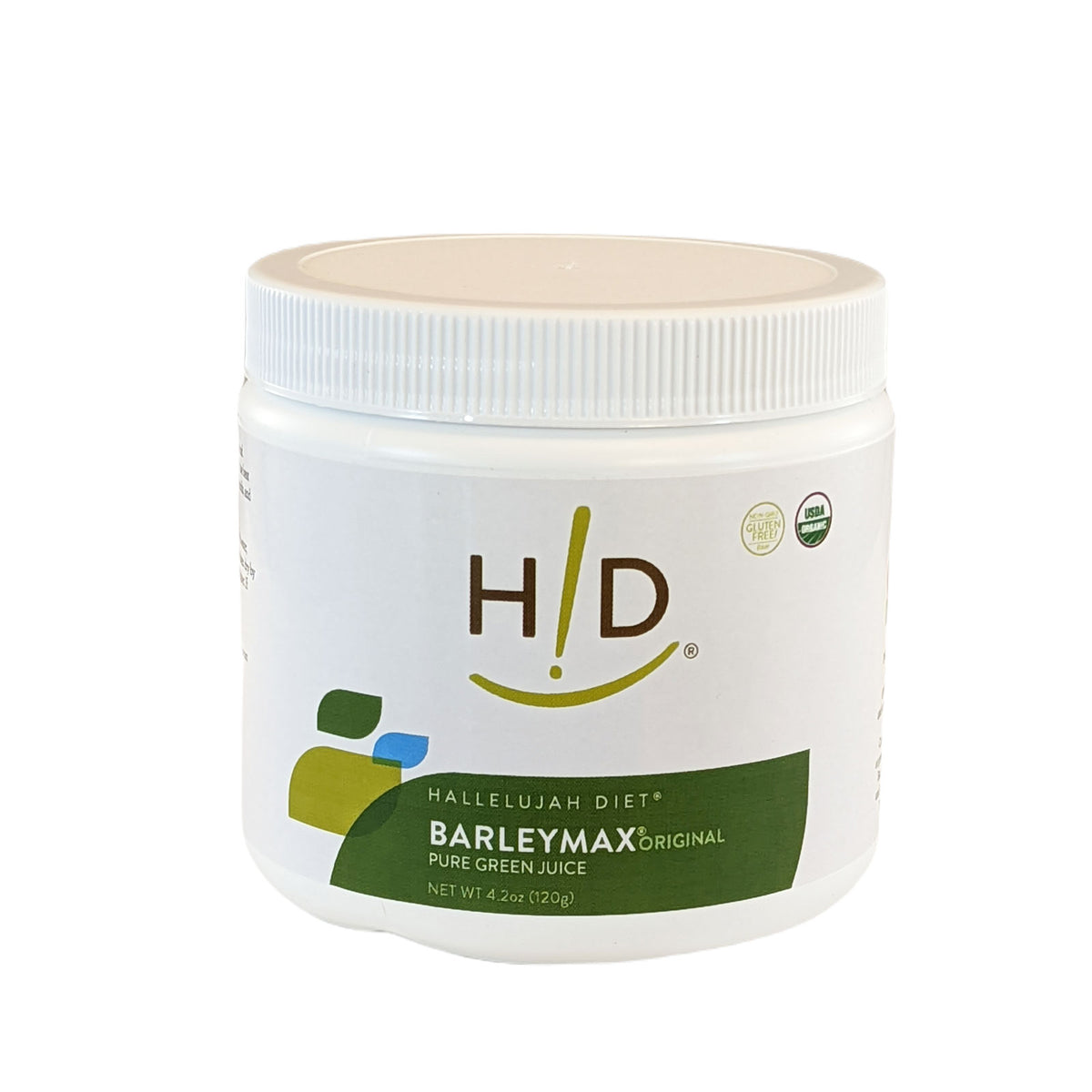
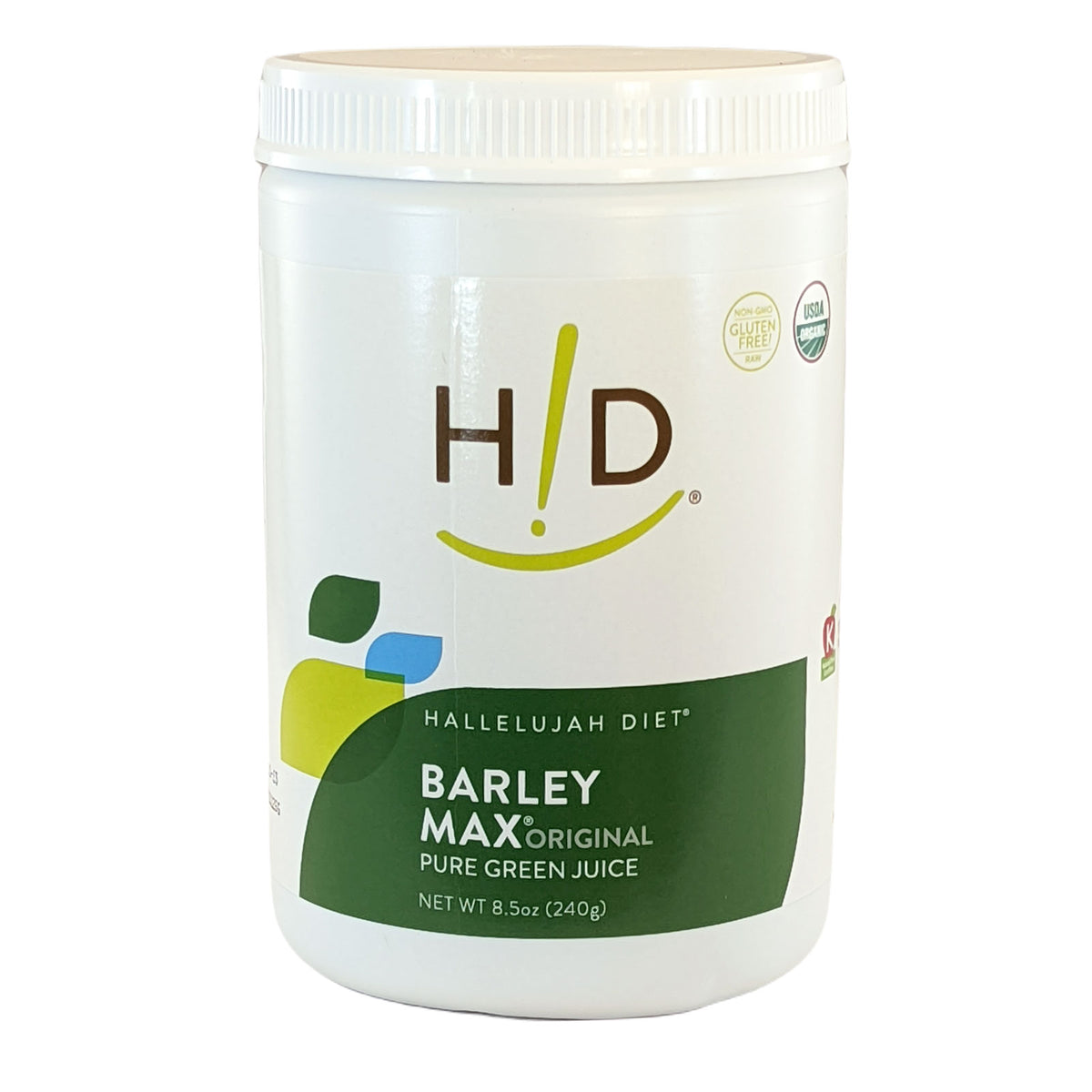
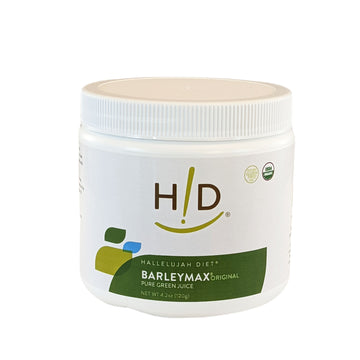
BarleyMax is barley grass and alfalfa grass, juiced, with the juice dried into a powder. Two ingredients. Nothing added. What follows is what each of those two words — grass and juiced — is actually doing.
It begins with sunlight
Grass is the point in the chain where light becomes food, and chlorophyll is the molecule that performs the conversion.
A cow builds an entire body — bone, muscle, blood, milk — on essentially nothing but grass, which tells you how much is in it. God designed the grasses to carry a great deal, and grazing animals have been the living proof for as long as there have been herds.
Young grass carries the most, which is why barley is cut at ten to twelve inches. At that point the plant has built what it needs to grow and has not yet spent it on making seed. What it is carrying at that stage is chlorophyll, enzymes, amino acids, vitamins A, C, E, K and the B group, and minerals including calcium, iron, magnesium and potassium.
Alfalfa is in there for one particular reason. Its roots run twenty to thirty feet down, far below where vegetable roots reach, drawing up minerals from soil that was never farmed out. Which answers one of the main causes of modern deficiency directly: when the topsoil is depleted, a plant that roots beneath it is not.
The supply side: nutrition that does not have to be worked for
It rests on something people rarely separate: eating a nutrient and absorbing it are two different events.
A salad is excellent, and a salad is work. The body has to break plant cell walls open to reach what is inside them, and that takes hours and a digestive system in good order. Weak stomach acid, a rushed meal, a gut that never gets its turn — and a good deal of what was eaten never arrives.
Juicing does that work in advance. The fiber is separated out; what remains is the contents of the cells, already released. It asks almost nothing of your digestion, and it arrives in minutes rather than hours.
That difference is larger than it sounds. Dr. H. E. Kirschner put it at under 35 percent of the nutrients absorbed from vegetables eaten whole, even by a digestion in good order, against upwards of 90 percent from the juice.
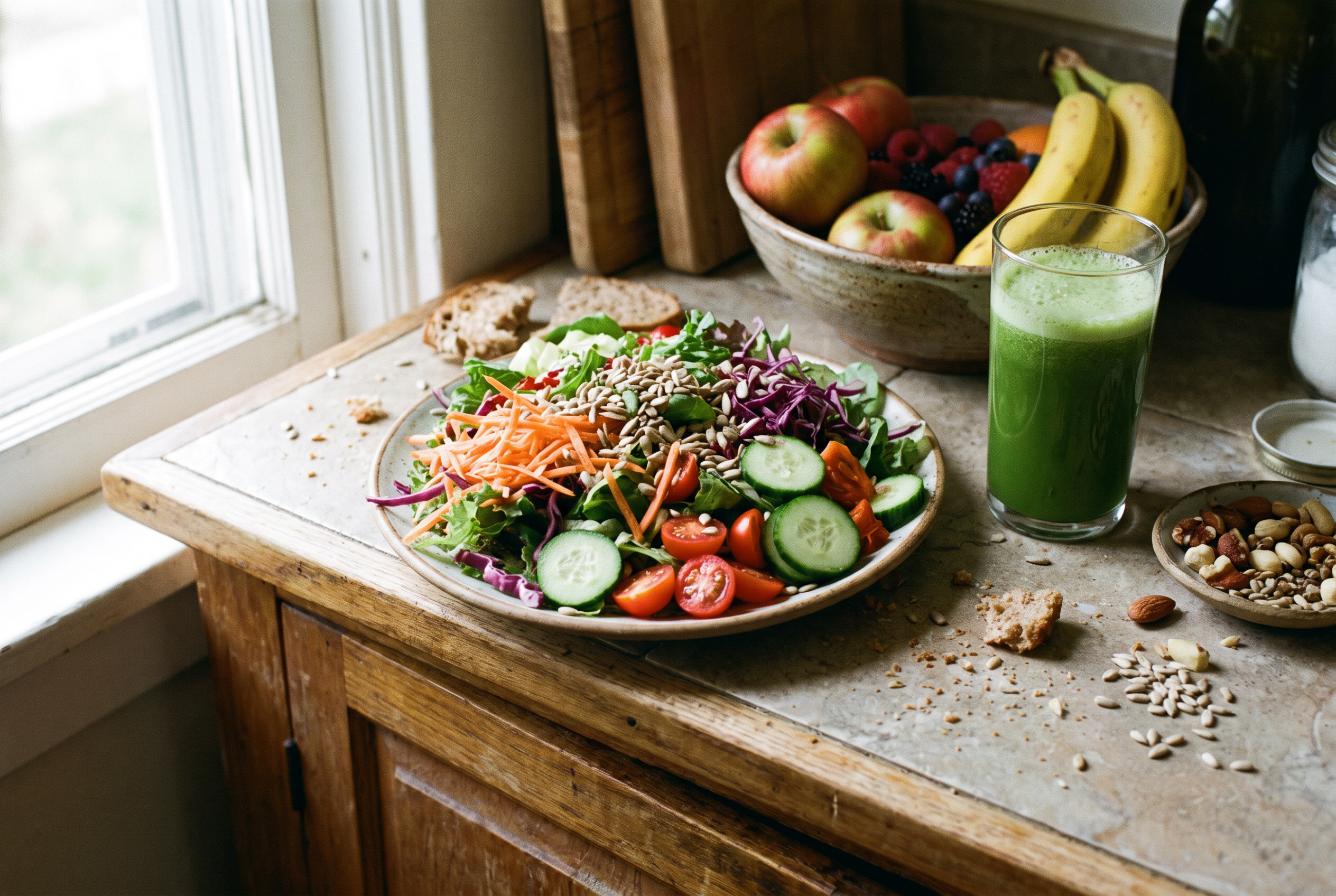
One distinction matters here, and it is the rule we teach: juice your vegetables and eat your fruit. A vegetable or a grass carries very little sugar, so taking the fiber out costs nothing and gains you everything above. Fruit carries a great deal of sugar, and there the fiber is the brake that keeps it arriving slowly, so fruit belongs whole. Barley grass is about as far from fruit as a plant gets.
This is why juice has been at the center of what we teach for thirty years. It raises supply without first requiring that the digestion be repaired, and the people who most need the nutrition are usually the ones least able to extract it.
It also arrives as food rather than as a list. Nutrients in a plant come surrounded by the cofactors and phytonutrients that help the body use them, which is a real difference from an isolated vitamin made in a laboratory. Think of it as a vegetable juice that happens to keep in a cabinet, rather than as a supplement that happens to be green.
The drying is done below 118°F for that reason. Above it the enzymes are lost, and what you would have left is the analysis of a food rather than the food.
The clearing side: feeding the systems that do the work
Now the other half, and this is the part most people do not expect a green juice to touch.
Every cell runs on oxygen, and oxygen-based metabolism throws off free radicals as exhaust. Michael Donaldson — a Cornell-trained chemical engineer, and a member of our research team for years, which you should know before you weigh what follows — calls it biological rust. Nothing invaded to cause it. It is the cost of being alive, and it is going on in you now.
The body's defense against it is threefold: enzymes that disarm free radicals, small molecules that absorb them, and antioxidants that arrive from food.
Note where the third one comes from. That defense was designed to be partly supplied by the plate.
Young barley grass carries both of the parts food can supply. It carries antioxidants, and it carries enzymes, including superoxide dismutase, whose whole job is disarming free radicals before they do damage.
Donaldson has tested what that adds up to. In laboratory work, cells put under a deliberate oxidative challenge were significantly protected when BarleyMax was present in the solution, and at higher concentrations protected almost completely. He is careful, and so are we: a result in a dish is not a result in a person. He also notes that the same kind of protection has been measured for kiwifruit, broccoli sprouts, spinach, carrot juice and blood orange, which is rather the point. This is what real food does. BarleyMax behaves like real food because that is what it is.
Then the connection back to the first half, which is the one most people miss entirely. Every system that clears — liver, kidneys, lymph, gut — runs on nutrients. A body short of them clears slowly. So supplying those nutrients is not a separate activity from clearing.
It is how the clearing gets funded.
Both halves, one glass
That is the whole case, and it has the same shape as the problem.
On the supply side: dense living nutrition that arrives without first requiring a repaired digestion.
On the clearing side: the exact materials — antioxidants and enzymes — that the body's own defenses were built to be handed from food, reaching the organs that do the removing.
Most things do one. This does both. That is why it has been the first thing we recommend for thirty years, and why it sits at the front of our Get Started Kit rather than somewhere down the list.
One thing worth checking, on any brand
Barley grass can be sold two ways: the whole leaf dried and milled, or the grass juiced and the juice dried. In a jar they look identical.
Donaldson's verdict on the first is blunt — whole-leaf barley grass powder is, in practical terms, expensive fiber. A cow can open grass fiber and get at what is inside it. We cannot. Everything above depends on it being juice, which is the difference between grape juice and raisins.
And you can check that yourself in an afternoon. Put a spoonful of any green powder you own into clear water, stir it, and leave it two to four hours.
- Juice stays green and stays suspended.
- Milled leaf settles, leaving a layer at the bottom. That is the fiber, doing what fiber does.
- A powder dried with too much heat has already gone brown rather than staying green.
No equipment, no cost, and it works on anything. We would genuinely rather you ran it on what is in your cabinet right now than take our word for any of this.
How to actually use it
A teaspoon in eight ounces of water. It is very fine and does not stir in well, so a shaker bottle or a few seconds in a blender makes the difference. It also works taken dry — a spoonful straight in the mouth, left to dissolve. Some people prefer it that way, and it is the easiest way to take it away from home.
Cold water rather than hot — heat undoes the point of the low-temperature drying. Not with coffee or tea, where the tannins interfere with mineral absorption, and not with milk.
Little and often beats a lot at once. A teaspoon two or three times through the day gives the body repeated opportunities to absorb rather than one large one. Many people settle into it before meals, where the fat in the food helps carry the fat-soluble part.
On taste, we will be straight with you. It tastes like what it is, which is green juice — earthy and grassy. Some people take to it immediately and some do not. What the long-term customers say almost without exception is that it becomes something they miss on a day they skip it. There are berry and mint versions, sweetened with stevia and nothing else, if that makes the first month easier.
Two other forms. It comes in capsules, which takes the taste out of it altogether. And there is a version made without alfalfa, for anyone avoiding it. The alfalfa is in the original blend because its roots reach minerals the shallow-rooted plants never get to, and the barley grass is doing the main work in either version.
And on timing: give it longer than two weeks. Most people notice energy first, somewhere in the first two to four weeks, and the people who abandon it do so at about two and a half weeks — just before the point where it usually becomes obvious.
What to notice in yourself
Energy in the mid-afternoon, which is where people report the change most often and most consistently. Whether you are reaching for coffee at three o'clock. Digestion and regularity. Whether small things mend a little faster than they were.
A thought to close
There is nothing exotic here. Grass, cut young, juiced, dried gently. No extraction, no synthesis, nothing that had to be discovered.
What it is doing is giving the body materials it was designed to be handed from food — some of which go toward building you, and some of which go toward the quiet work of clearing what should not be there. The body does both jobs itself. It has always done both jobs itself. It just cannot do either one out of nothing.
Questions We Hear Most Often
Q: What is BarleyMax?
A: Barley grass and alfalfa grass, juiced, with the juice dried into a powder at low temperature. Two ingredients and nothing added. The grass is cut young, at ten to twelve inches, before the plant spends what it has built on making seed.
Q: What is the difference between barley grass juice powder and barley grass powder?
A: One is the juice with the fiber removed; the other is the whole leaf dried and milled. In a jar they look identical. A cow can open grass fiber and get at what is inside it, and we cannot, which is why the juice is the part that matters.
Q: How can I tell if a green powder is juice or milled leaf?
A: Put a spoonful in clear water, stir, and leave it two to four hours. Juice stays green and stays suspended. Milled leaf settles into a layer at the bottom. A powder dried with too much heat has already gone brown.
Q: Why juice vegetables instead of eating them?
A: Juicing does the digestive work in advance — cell walls opened, contents released — so it asks almost nothing of your digestion and arrives in minutes. Dr. H. E. Kirschner put the difference at under 35 percent of the nutrients absorbed from vegetables eaten whole against upwards of 90 percent from the juice. The rule is juice your vegetables and eat your fruit, since fruit's fiber is the brake on its sugar.
Q: How should I take it, and how long before I notice anything?
A: A teaspoon in eight ounces of cold water, shaken rather than stirred. Little and often beats a lot at once. Most people notice energy somewhere in the first two to four weeks, and the people who give up do so at about two and a half weeks, just before it usually becomes obvious.
Keep exploring
→ Toxicity and Deficiency: The Two Things That Actually Go Wrong — the frame this sits inside
→ How Digestion Actually Works — why absorption is the whole game
→ How Your Body Works — the full library
If you would rather begin than read, our Get Started Meal Plan lays out the first week for you.
Educational content. Not medical advice. Not intended to diagnose, treat, cure or prevent any disease. If you take blood thinners, have a grass allergy, or are unsure, check with your provider first.
More food-first writing: MyHDiet.com · AMPMForHealth.com
Reviewed by Olin Idol, ND, CNC — Vice President of Health, Hallelujah Diet