



This is the one theme where how a food is built matters more than what is in it. Two things with identical labels can behave completely differently, and the difference is how much work your body still has to do.
A steady line through the day comes from food arriving slowly, not from eating less of it.
Which means the useful question about any food here is not its calories or even its fiber content. It is how much work is left for your digestion to do because work takes time, and time is what turns a spike into a slope.
Intact beats milled, every time
An intact grain is a sealed package. Oat groats, steel-cut oats, barley, millet, quinoa, brown rice, buckwheat, farro. Your digestion has to break each one open, and glucose is released over hours.
The same grain milled into flour has had that work done for it. Even whole wheat flour, with all its fiber present, behaves far more like sugar than the intact grain does, because the surface area available to your enzymes has multiplied many times over.
The distinction cuts across the labels people rely on. Whole wheat bread is not the same food as whole barley. Instant oats are not the same food as groats.
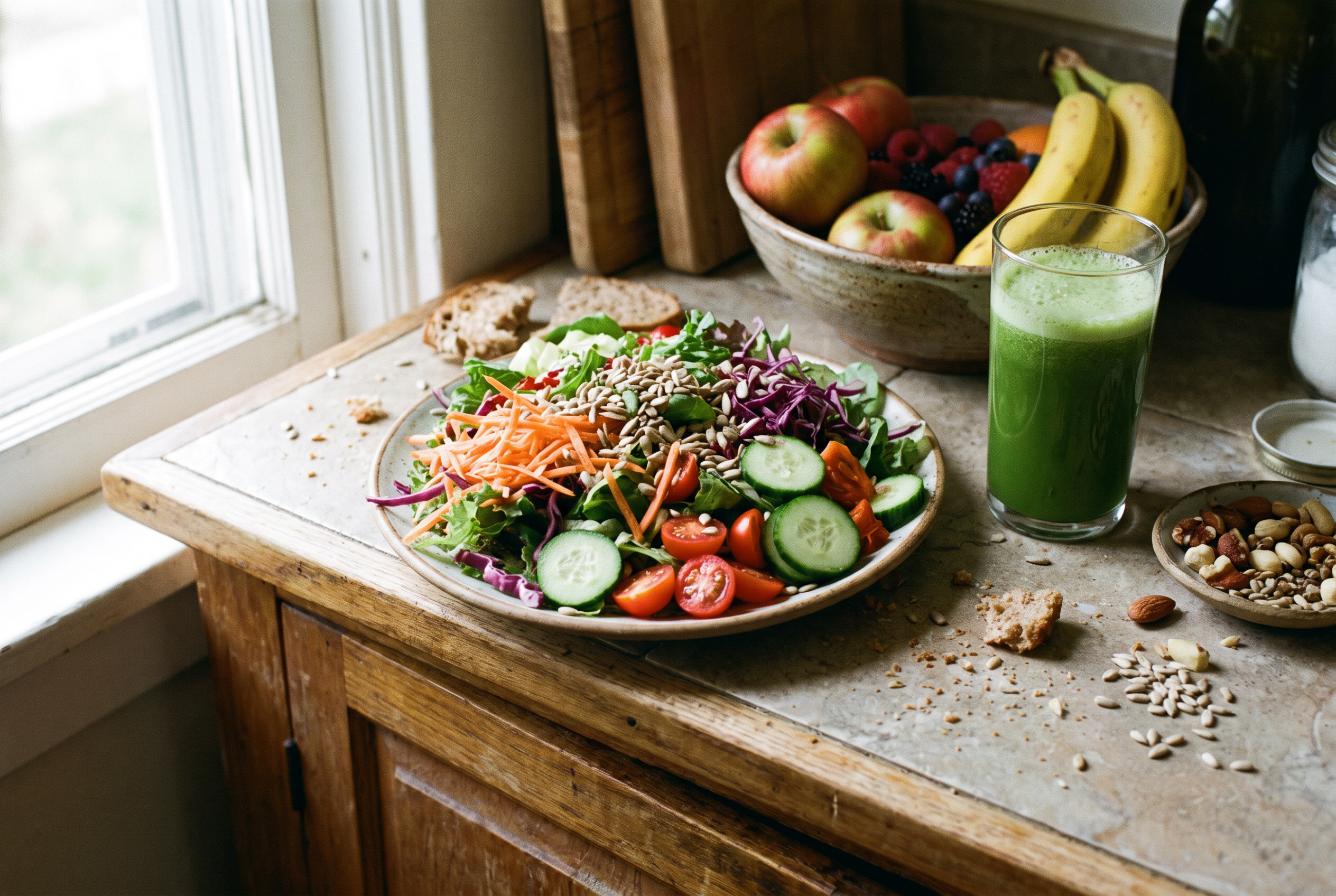
Whole fruit works identically. Sugar inside intact cell walls arrives slowly; the same fruit juiced arrives in minutes. That gives the rule we teach: juice your vegetables and eat your fruit. A vegetable carries very little sugar, so removing its fiber costs nothing. Fruit's fiber is the brake.
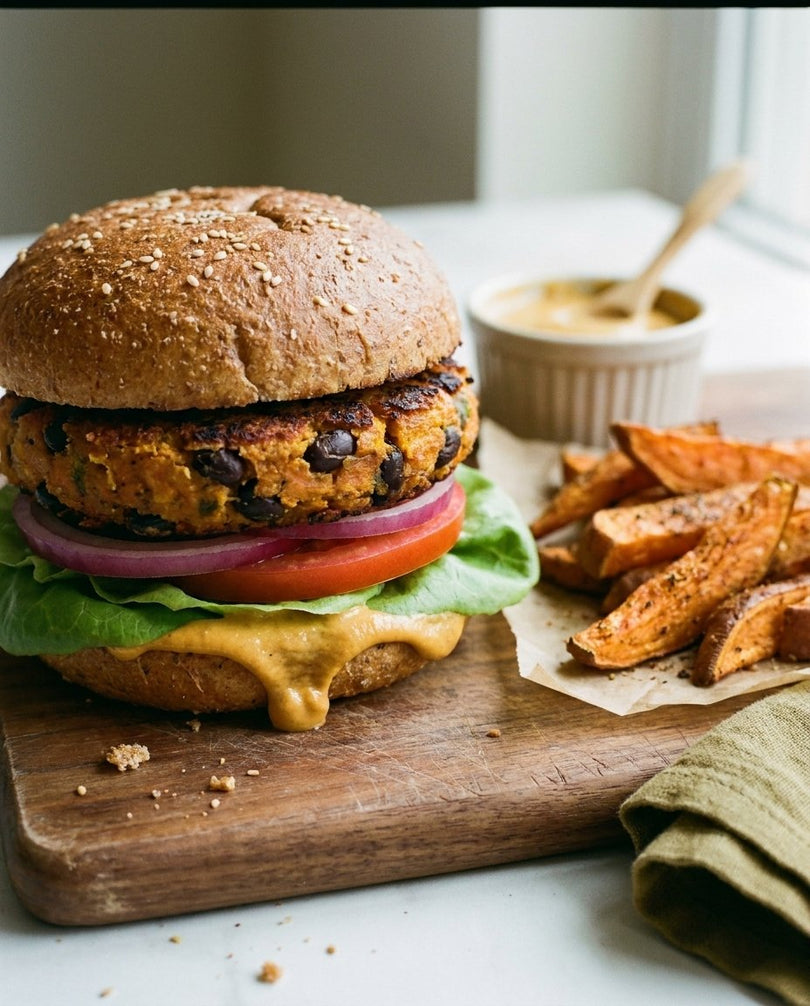
Beans, which win outright
If there were one food on this page, it would be beans.
They carry fiber, protein and a starch that partly resists digestion altogether, reaching the large intestine intact to be fermented rather than absorbed. The result is the flattest response of any staple food.
And they do something stranger. A meal of beans flattens the response to your next meal too, hours later, an effect that has been measured repeatedly and is still not entirely explained. No other food does this reliably.
Lentils, chickpeas, black beans, kidney beans, butter beans, peas. Canned is fine, and rinsing them removes most of the added salt. Most days.
The four things that slow any meal down
These work on whatever else is on the plate, which makes them more useful than any single food.
Fat. It slows how quickly the stomach empties, and everything downstream follows. Tahini, avocado, olive oil, nuts, seeds.
Protein, which does the same and blunts the rise directly. Beans, tofu, tempeh, seeds, nuts.
Fiber, particularly the soluble kind that forms a gel. Oats, ground flaxseed, apples and pears with the skin, beans, eggplant, okra.
And acid. Vinegar or lemon with a meal has a small, real, repeatedly measured effect. A dressing on the salad is doing more than flavor.
Two things about sequence, which cost nothing
Eat the vegetables and the protein before the starchy part of the same meal. Identical food, eaten in that order, produces a noticeably lower rise. It is free, and it requires giving nothing up.
Leave real gaps between meals. Three meals with space between them lets insulin fall, and that falling is when the body works from its own stores. Grazing from morning to bedtime means insulin is never fully switched off, which is where cells begin listening to it less. Nothing after dinner.
The minerals the machinery runs on
Magnesium is required at several points in how glucose is handled, and most people are short of it. Pumpkin seeds, leafy greens, black beans, almonds, cacao, whole grains.
Chromium, which is involved in insulin signaling and is thin in a processed diet. Broccoli, whole grains, green beans, potatoes, nuts.
The smaller helpers, honestly rated
Cinnamon, which has a modest measured effect and is pleasant enough to use daily. Worth having on oatmeal.
Vinegar before a meal, per above.
Bitter greens and cruciferous vegetables, which contribute little sugar and a great deal else.
Berries, which are the fruit with the lowest sugar load and the highest polyphenol content, and which appear to blunt the response to starch eaten alongside them.
Nuts as a snack, if a snack is happening — fat, protein and fiber together, and they flatten whatever they are eaten with.
Green tea and coffee without sugar, both of which are associated with better long-term glucose handling.
What works against it
Refined carbohydrate eaten alone. Toast by itself, cereal, a cookie with tea. The same food alongside fat, protein and fiber behaves differently.
Drinking calories, which bypasses digestion entirely — fruit juice included.
Eating constantly.
Sitting still after a meal, which is not food and which is the highest-leverage habit here. Muscle takes glucose out of the blood without needing much insulin, so ten minutes of walking after your largest meal opens the biggest door you have at exactly the moment glucose is arriving. Ten minutes buys more here than any substitution on the list.
What actually helps, in practice
If you change three things, change these:
Put beans or lentils into one meal a day. Eat the vegetables on your plate before the starchy part, which costs only the order of your fork. Walk for ten minutes after your largest meal.
What to notice in yourself
Whether you can go four or five hours without eating and stay civil. That is the clearest readout of a steady line available, and it needs no equipment.
The three o'clock slump, and whether it tracks what you ate at lunch rather than how much.
Hunger arriving ninety minutes after a meal, which points at the swing rather than the portion.
Waking between two and three, which is often a glucose dip prompting a stress response.
Whether your energy has a repeatable daily shape. A pattern has a cause, and causes can be worked with.
A thought to close
In the wilderness the instruction with the manna was to gather enough for the day, and what was kept overnight spoiled (Exodus 16:19-21). Whatever else that account is teaching, it describes provision arriving regularly and in the amount needed.
That is close to what the physiology asks for. Food at intervals, in a form that releases slowly, with gaps between and movement across the day. The aim is food that behaves itself rather than less of it.
And almost all of it comes down to leaving things as they were grown. The grain still whole, the fruit still in its skin, the bean still a bean. The work we save ourselves by processing food is precisely the work our bodies needed to be doing.
Questions We Hear Most Often
Q: What foods keep blood sugar steady?
A: Intact whole grains rather than milled ones, beans most days, and fat, protein, fiber or a little acid alongside anything starchy. Beans are the single most effective food, and a meal of them flattens the response to your next meal too.
Q: Is whole wheat bread better than white bread for blood sugar?
A: Only slightly, and less than people assume. Even whole wheat flour behaves far more like sugar than the intact grain does, because milling multiplies the surface area your enzymes can reach. The useful question is how much work is left for your body to do.
Q: Does eating food in a particular order matter?
A: Eating the vegetables and the protein before the starchy part of the same meal produces a noticeably lower rise from identical food. It costs nothing but the order of your fork.
Q: Should I drink fruit juice?
A: Fruit juice arrives in minutes because the fiber that was the brake has been removed. The rule we teach is juice your vegetables and eat your fruit — a vegetable carries little sugar, so removing its fiber costs nothing.
Q: Is snacking bad for blood sugar?
A: Grazing from morning to bedtime means insulin is never fully switched off, and that is where cells begin listening to it less. Three meals with real gaps between them lets insulin fall, which is when the body works from its own stores.
Keep exploring
→ Energy Is Not a Quantity. It Is a Steady Line. — the swing, the muscle sink, and why sleep and pressure belong in this subject
→ How Digestion Actually Works — the work this article keeps referring to
→ How Your Body Works — the full library
If you would rather begin than read, our Get Started Meal Plan lays out the first week for you.
Educational content. Not medical advice.
More food-first writing: MyHDiet.com · AMPMForHealth.com
Reviewed by Olin Idol, ND, CNC — Vice President of Health, Hallelujah Diet