



No food removes what you are carrying. What food does is pay for the running costs of carrying it, and keep the two things that make pressure worse from making it worse.
A body in the effort setting spends differently from a body at rest. It burns through particular nutrients faster, it handles blood sugar differently, and it sleeps less deeply, which raises the cost of the following day.
None of that is addressed by a calming food. It is addressed by covering the spend, steadying the fuel, and protecting the sleep, and by not adding to the load with what you drink.
What pressure actually spends
Magnesium first, and by a distance. It is used by hundreds of enzymes, it settles the baseline excitability of the nervous system, and a body under sustained pressure loses it faster in urine. Low magnesium then makes the stress response more reactive, which spends more magnesium. It is the tightest loop in this theme and the easiest to interrupt.
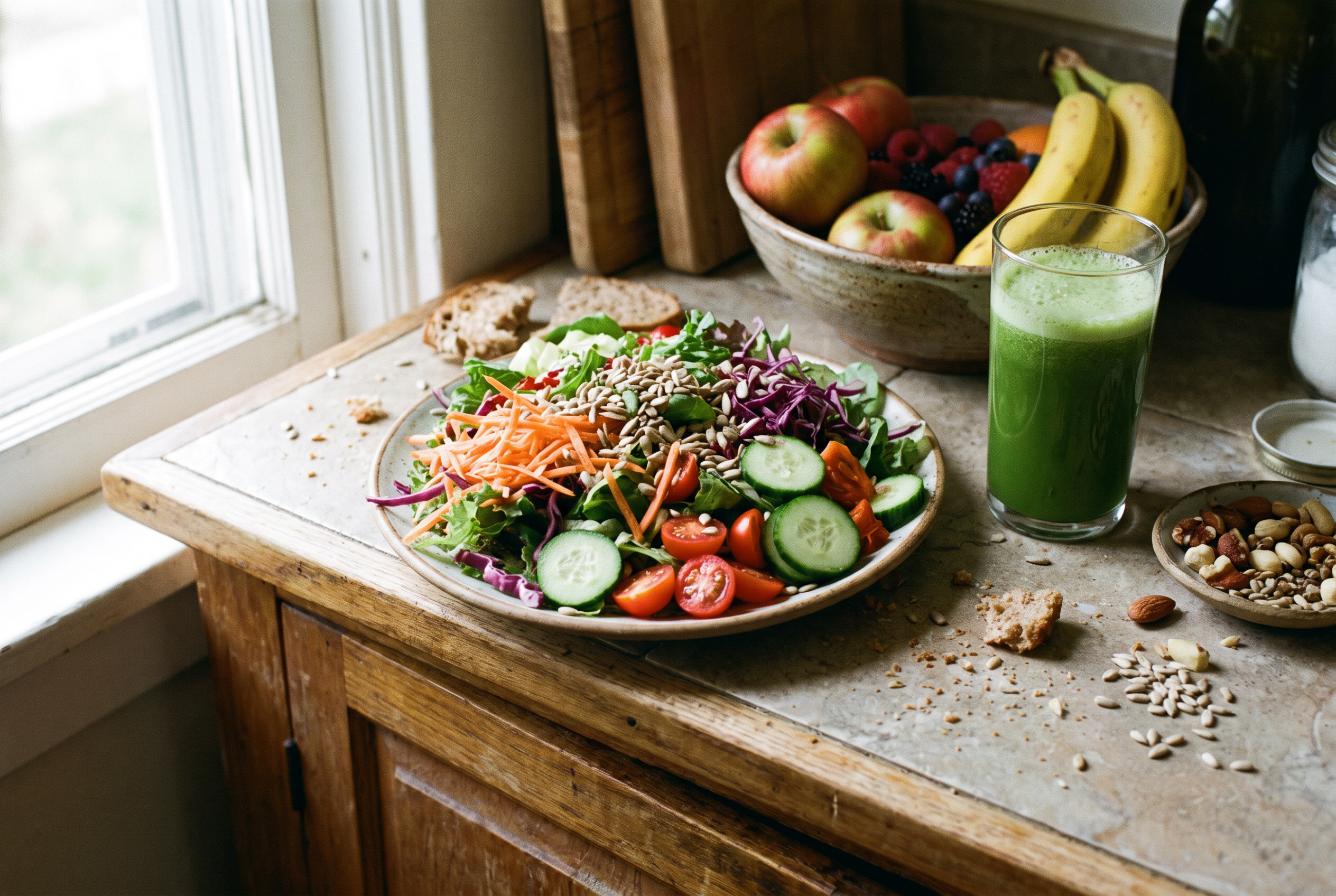
Pumpkin seeds, leafy greens, black beans, almonds, cacao, whole grains, avocado.
Vitamin C, which is concentrated in the adrenal glands at higher levels than almost anywhere else in the body and is consumed when they work. There is no reservoir, so little and often is the only approach that holds. Peppers, black currants, strawberries, kiwi, citrus, broccoli, parsley.
The B group, spent on producing the hormones and the neurotransmitters involved. Whole grains, beans, greens, seeds, nutritional yeast, avocado, with B12 from a reliable source, which no plant food provides dependably. Low B12 also turns up in people who eat meat, since absorption falls with age.
Potassium, because the hormones of pressure act on the kidney to hold sodium and let potassium go. Potatoes with the skin, beans, bananas, avocado, greens, squash.
And protein, since the calming neurotransmitters are built from amino acids. Beans, lentils, tofu, tempeh, seeds, nuts, oats.
Steadying the fuel, which matters more than anything soothing
This is the half most stress advice misses.
Cortisol's job includes raising blood glucose, so pressure is a blood sugar event before any food is involved. And the reverse is also true: a glucose crash is read by the body as an emergency and answered with adrenaline and cortisol. Someone eating refined carbohydrate through a hard week is manufacturing extra stress responses on top of the ones life is supplying.
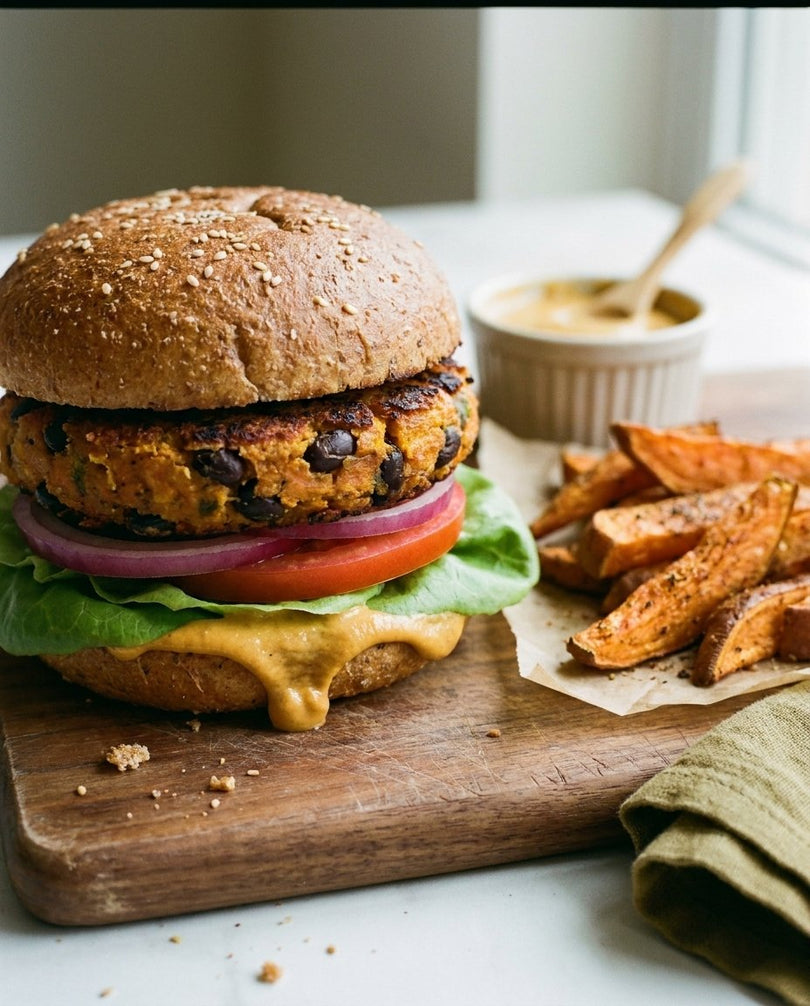
So the steadying rules apply here with more force. Intact whole grains rather than milled. Beans most days. Protein and fat alongside anything starchy. Vegetables before the starchy part of the meal. A real gap between meals.
Eat enough. Under-eating during a hard stretch raises cortisol directly. It is the least intuitive instruction here and one of the most important.
And do not skip breakfast during a difficult period, since the morning is when the pressure hormones are naturally highest and an empty tank raises them further.
The salt craving, which is not weakness
Worth naming because it confuses people.
The hormones of sustained pressure act on the kidney to hold sodium and release potassium, and over a long stretch that balance shifts. A genuine craving for salty food during a hard period is often that shift rather than a failure of discipline.
The answer is not more processed food. It is enough potassium from vegetables and fruit to restore the ratio, and salt on real food if you want it. Sea salt on a tomato is a different proposition from a bag of chips, and the craving is usually satisfied by either.
Protecting sleep, which pays for everything else
Caffeine has a longer reach than people think. Roughly half of a dose is still in you five to six hours later, and considerably longer for slower metabolizers. A three o'clock coffee is still working at bedtime. Under pressure this matters more, because the sleep it costs is the deep sleep that clears the previous day.
Moving your last coffee to before noon does more for a stressed body than any supplement.
Alcohol is the other one, and it is mistaken for a solution. It shortens the time to fall asleep and then suppresses the deep stage for the rest of the night. A person using a glass of wine to unwind is trading the restorative half of their sleep for a faster start.
Magnesium-rich food in the evening, and a carbohydrate with the evening meal, both of which help the transition.
Tart cherries, which carry a little natural melatonin and have reasonable evidence behind them for sleep.
Chamomile, lemon balm or passionflower as an evening drink. Gentle, traditional, and the ritual of a warm drink does part of the work by itself.
The ones that act on the load rather than the supply
Omega-3 fats, which lower the inflammatory tone that sustained pressure produces and which the brain needs for membranes that signal well. Ground flaxseed, walnuts, chia, hemp.
The polyphenols. Berries, cherries, pomegranate, green tea, cocoa. Green tea also carries an amino acid that produces a calm, alert state and takes the edge off its own caffeine.
Dark chocolate, honestly. Magnesium, polyphenols and a small pleasure, which is not a trivial contribution during a hard stretch.
Herbs and spices generally, for the same antioxidant reasons — turmeric with black pepper, ginger, cinnamon, rosemary.
What works against it
Caffeine late, and too much of it.
Alcohol as a wind-down.
Sugar and refined carbohydrate, which add manufactured stress responses.
Skipping meals or eating too little.
Then a screen in the last hour before bed, which is not food and costs more deep sleep than most things on this list.
What actually helps, in practice
The three that matter most:
Put pumpkin seeds on something daily, which handles the magnesium loop more cheaply than anything else. Move your last caffeine to before noon. Have something starchy with protein and fat at each meal rather than alone, so the day has no crashes in it to be answered with adrenaline.
What to notice in yourself
Whether you wake feeling restored. That is the depth question, and it matters more than the hours.
Whether the afternoon has a crash in it, and whether it tracks what you ate at lunch.
How you are at four o'clock compared with ten in the morning.
Whether your patience is the first thing to go, which is usually a fuel and sleep matter rather than a character one.
What happens across a week of pumpkin seeds and an earlier last coffee. Both are small and both are noticeable, which makes them a good place to start.
A thought to close
Elijah, after the most frightening stretch of his life, was not given instruction or correction. He was given food and a sleep, twice, and only then a conversation.
There is something in that worth holding on to. A body under sustained pressure is a body with real running costs, and those costs are not met by resolve. They are met by magnesium, by vitamin C, by a steady line of fuel through the day, and by sleep deep enough to clear what the day collected.
Food does not resolve what you are carrying. It makes you better resourced to carry it, and better able to set it down when the moment comes.
Questions We Hear Most Often
Q: What should I eat when I am stressed?
A: Cover what pressure spends faster: magnesium from pumpkin seeds and greens, vitamin C from peppers and berries, B vitamins from whole grains and beans, and potassium from potatoes and avocado. Then keep the fuel steady, because a glucose crash triggers another stress response.
Q: Do adaptogens help with stress?
A: They are supplements rather than food, and this piece stays with the plate. What reliably helps is covering the nutrients being spent, eating enough, and protecting deep sleep by moving your last coffee earlier.
Q: How long does caffeine actually stay in your system?
A: Roughly half a dose is still in you five to six hours later, and considerably longer for slower metabolizers. A three o'clock coffee is still working at bedtime, and the sleep it costs is the deep sleep that clears the previous day.
Q: Does alcohol help you sleep?
A: It shortens the time it takes to fall asleep and then suppresses the deep stage for the rest of the night. A glass of wine to unwind trades the restorative half of your sleep for a faster start.
Q: Why do I crave salty food when I am stressed?
A: The hormones of sustained pressure act on the kidney to hold sodium and release potassium, and over a long stretch that balance shifts. The craving is often that shift rather than a failure of discipline.
Keep exploring
→ What the Stress Response Actually Does — the effort setting, and why a body stops switching out of it
→ What You May Be Carrying, and Why Your Body Knows About It — the other half of this subject
→ How Your Body Works — the full library
If you would rather begin than read, our Get Started Meal Plan lays out the first week for you.
Educational content. Not medical advice.
More food-first writing: MyHDiet.com · AMPMForHealth.com
Reviewed by Olin Idol, ND, CNC — Vice President of Health, Hallelujah Diet