



Cold feet in a warm room. Hands that go white in the supermarket freezer aisle. Standing up too fast and having to wait a second. These are small things, and they are telling you something specific.
Ann has always had cold hands. For years we treated it as a fact about her, the way you would treat height. It turned out to be a fact about her blood vessels, and it turned out to be adjustable.
That is the useful thing about circulation. Most of what people assume is fixed is actually a setting, and the setting responds.
The part people picture, and the part that matters more
Ask someone how circulation works and they describe the pump. The heart contracts, blood goes out through arteries, comes back through veins, and the heart is what makes it happen.
That is true and it is about a third of the story. The pump is not what decides where the blood goes. Your heart pushes out roughly five liters a minute at rest, and that is nowhere near enough to fill every vessel in you at once. If every blood vessel in your body opened at the same time, there would not be enough blood to go around.
So the body is constantly choosing. Blood is directed — toward the gut after a meal, toward the muscles when you climb stairs, toward the skin when you are too hot, away from your hands when you are cold or alarmed. Circulation is a routing system, and the routing happens in the vessels rather than in the heart.
The vessels are active, not plumbing
An artery is not a pipe. It is a muscular tube with a smooth living lining, and it changes its own diameter constantly.
That lining is called the endothelium, and it is one sheet of cells thick, covering every vessel in you. Laid flat it would cover a tennis court. It is easier to think of it as an organ than as a surface, because it behaves like one. It senses what is flowing past it and responds.
The main signal it uses is nitric oxide. When the endothelium releases nitric oxide, the muscle in the vessel wall relaxes and the vessel widens. More blood flows, at lower pressure. When nitric oxide is short, vessels sit tighter than they need to.
What prompts the endothelium to make it is worth knowing, because two of the three are free.
Flow itself. The drag of blood moving across the lining is the primary signal. Movement produces flow, flow produces nitric oxide, and nitric oxide produces easier flow. This is most of why walking does what it does.
Nitrate from food, which the body converts into nitric oxide by a separate route that does not depend on the endothelium being in good shape. Green leaves and beets are the source.
Warmth, calm, and slow breathing, all of which shift the nervous system out of the setting where it holds the periphery closed.
The other half of the loop: getting back
Arteries have the heart behind them. Veins do not.
Blood returning from your legs has to travel upward against gravity with no pump behind it, and the way it manages is that the veins run between your muscles. Every time you contract a calf muscle, it squeezes the veins inside it and pushes blood up. One-way valves keep it from falling back. The calf is doing genuine pump work, which is why it gets called the second heart.
Which means sitting still is a circulatory event. Not a moral failure, a mechanical one, the return pump is switched off for as long as you are not moving. Blood pools, pressure builds in the lower veins, and fluid presses out into the surrounding tissue. That is what puffy ankles at the end of a long flight actually are.
And then the part that does the real work
Arteries and veins are transport. The exchange happens in the capillaries, which are fine enough that red cells pass through in single file.
This is where oxygen leaves the blood and enters your tissue, and where carbon dioxide and waste come back the other way. Every cell in you lives within a short distance of one, because that is the maximum range over which oxygen can diffuse.
So when circulation is poor, the shortage is not in the big vessels. It is at the last inch — tissue that is a little short of oxygen and a little slow to have its waste collected. Cold hands are the visible version. Tired legs, slow-healing skin on the shins, and thinking that feels sluggish in the afternoon are the same thing happening somewhere less visible.
Where it commonly gets stuck
Long stretches of sitting, which switch off the return pump and remove the flow signal at the same time.
An endothelium under load. The lining is exposed to everything in the blood passing over it, and a high standing load of processed food, high blood sugar and oxidative stress damages it. A damaged lining makes less nitric oxide. Less nitric oxide means tighter vessels and higher pressure over the same lining.
A nervous system that never downshifts. The body closes the periphery when it is braced. Held long enough, that stops feeling like a response and starts feeling like a temperature preference.
Low nitrate intake, which is common on a diet light in green leaves.
Mouthwash, of all things. The conversion of dietary nitrate into a usable form starts with bacteria on your tongue. An antiseptic mouthwash removes them, and the food-nitrate route is interrupted for hours afterward.
Dehydration, which thickens blood and makes every part of this harder.
What it needs
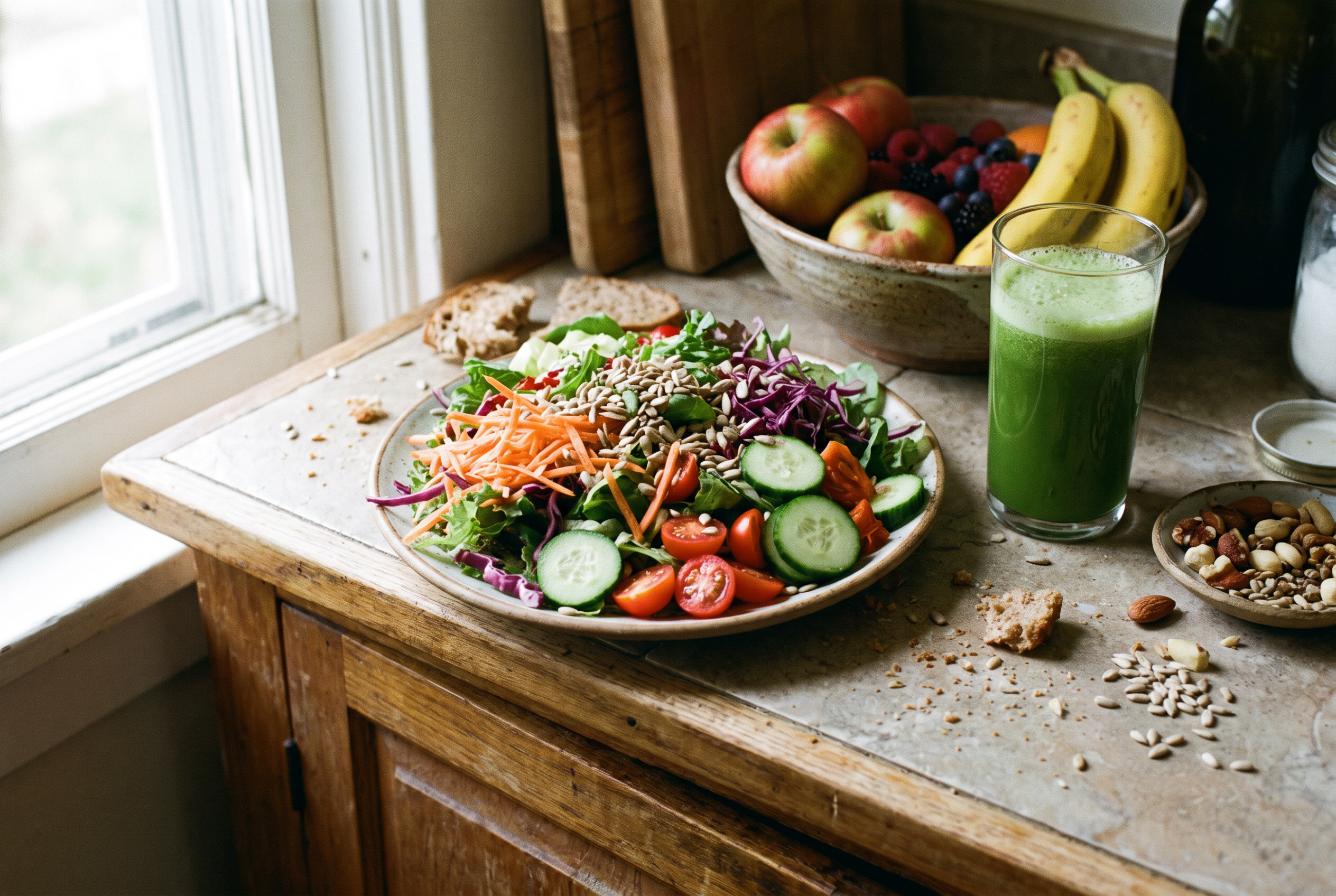
The food side has its own piece. It comes down to nitrate-rich greens and beets most days, garlic and pomegranate, dark berries and unsweetened cocoa for the polyphenols that keep nitric oxide from being broken down before it acts, watermelon for citrulline, magnesium and potassium for vessel tone, and the fats that suit the lining.
Two things that are not about food:
Movement, which outperforms all of it. Walking for twenty or thirty minutes changes flow measurably. So does standing up every half hour if you sit for work, a few minutes on your feet restarts the calf pump. Ten calf raises at the sink are not exercise and they are useful.
Warmth helps directly. Warm feet at night, warm water on cold hands, and enough layers that your body is not spending the day holding its periphery shut.
What to notice in yourself
Your hands and feet, and whether they are cold in rooms other people find comfortable. Whether they change with the season or with how a day has gone.
The color of your lower legs late in the day, and whether socks leave a mark that stays.
How you feel on standing up quickly, and whether you need a second to arrive.
Whether stairs or a hill produce a different result now than they did two years ago, and separately, whether a brisk walk makes your hands warm afterward. That last one is a good check. If it does, the routing is responsive, and responsive is most of what you want to know.
A thought to close
“For the life of the flesh is in the blood.” (Leviticus 17:11)
It is repeated often enough in Scripture to read as a plain statement about how we are made rather than as a figure of speech.
It reads differently once you know what blood is actually doing — reaching every cell you have, every minute, by a system that is constantly deciding where it is most needed. Nothing in you is more than a hair's width from a supply line.
What that system asks for is modest. Move, so the flow signal exists and the return pump runs. Eat green things, so the raw material is there. Stay warm enough that your body is not bracing. None of that is a treatment. It is closer to keeping an appointment your body is already trying to keep.
Questions We Hear Most Often
Q: Why are my hands and feet always cold?
A: Your body cannot fill every blood vessel at once, so it constantly decides where blood goes, and the hands and feet are the first place it economizes. Cold extremities usually reflect that decision rather than a fault, and the decision responds to movement, warmth and what you eat.
Q: What is nitric oxide and why does it matter?
A: It is the signal the lining of a blood vessel releases to tell the vessel to widen. More nitric oxide means more blood flowing at lower pressure. Movement produces it, and so does nitrate from green leaves and beets.
Q: Why do my ankles swell after a long day or a flight?
A: Veins in your legs have no pump behind them and rely on your calf muscles squeezing them as you move. Sitting still switches that pump off, blood pools, and fluid presses out into the surrounding tissue.
Q: Does mouthwash really affect circulation?
A: The conversion of nitrate from food into a usable form begins with bacteria on your tongue. An antiseptic mouthwash removes them and interrupts that route for hours afterward, which is an odd thing to have to say and one of the easiest to act on.
Q: What is the fastest way to tell if my circulation is responsive?
A: Notice whether a brisk walk makes your hands warm afterward. If it does, the routing is working and responding, which is most of what you want to know.
Keep exploring
→ Foods That Support Circulation — the food side, in more detail
→ What the Stress Response Actually Does — why a braced body holds the periphery closed
→ How Your Body Works — the full library
If you would rather begin than read, our Get Started Meal Plan lays out the first week for you.
Educational content. Not medical advice.
More food-first writing: MyHDiet.com · AMPMForHealth.com
Reviewed by Olin Idol, ND, CNC — Vice President of Health, Hallelujah Diet