




A predictable thing happens in the first two weeks of eating well: some people feel worse. Headache, heavy legs, skin that flares, a mood nobody warned them about. Here is the mechanism behind it, and the part of the job that was missing.
We have had this phone call for thirty years. Somebody starts doing everything right — green juice in the morning, salads, cutting out what they know they should cut out — and by day four they feel like they have the flu. They are usually calling to ask what they did wrong.
Almost always, nothing. What happened is that they started one half of a two-part job, and the second half was not in place.
The chain, start to finish
Your cells hold on to things. Material they could not process at the time gets tucked away in tissue, because storing something is safer than leaving it in circulation. That is a sensible decision and it accumulates over years.
Storage takes resources to maintain, and releasing something takes resources too. So a cell that has been running short does not let go of much. It holds what it is holding, because it has nothing spare to do anything else with it.
Then you start feeding it properly. Nutrition arrives, the cell has something to work with, and it begins releasing what it has been storing. This is the thing you wanted. It is also the moment the trouble starts, because of what happens next.
What comes out of the cell goes into circulation. From there it travels to the liver, which processes it through two stages and packages it for removal. Fat-soluble material goes out in bile, into the small intestine, and toward the colon.
Also, at the end of that chain there is a step nobody mentions. Bile is designed to be reabsorbed. Most of it gets taken back up further along the intestine and returned to the liver to be used again, which is good economy. The problem is that whatever was dissolved in it can be carried back too.
So material that came out of a cell, went through the liver, and got packaged for export arrives back in circulation and starts the loop again. Every trip through, the person feels it.
Fiber is what breaks the loop. It binds to bile in the intestine and holds on, so what the liver sent out keeps going and leaves. Nothing else in the chain does that job.
This is why feeding and clearing are one job rather than two. Raise the supply and you raise how much comes loose. If the exit is not open, you have mobilized material into a body that keeps handing it back.
What fiber is actually doing down there
Four things, and they are worth separating.
It holds water and makes bulk. Soluble fiber absorbs many times its weight in water and forms a gel. That gel is what gives the colon something to move, and it is why fiber without enough water makes things worse rather than better. A colon can move a soft bulky mass easily. It struggles with a small hard one.
It binds. Psyllium and apple pectin in particular latch on to bile and to what is dissolved in it. This is the step above, the one that decides whether material leaves or comes back around.
It shortens the time everything spends in there. Reabsorption is partly a function of contact time. Material that moves through in a day has far less opportunity to be taken back up than material sitting for three.
It feeds your gut bacteria. The bacteria that ferment fiber produce short-chain fatty acids, which are the preferred fuel of the cells lining your colon. Fiber feeds the lining by way of the bacteria rather than directly, which is a strange and rather elegant arrangement.
There is a fifth thing worth mentioning plainly. A gut that moves well and carries plenty of fiber is a less hospitable place for unwelcome passengers. Several of the plants traditionally used for that purpose — fennel among them — are also carminative and digestive herbs, which is why they turn up in cleansing formulas going back a long way. The mechanical sweeping does some of that work by itself. This is traditional use rather than trial data; the combination has not been studied in that form.
Where this leaves most people
Fiber intake in the ordinary Western diet is roughly half of what it should be, and it has been for most people's entire adult lives.
The consequence is not only constipation, though that is the visible part. It is a colon that moves slowly, a bile loop that keeps closing, and years of material that had somewhere to go and did not go there. Someone in that position who starts eating well is asking their body to mobilize a backlog through an exit that has never been open properly.
Which is the argument for doing something about the exit first, or at least at the same time.
Where Fiber Cleanse fits
Food can do this. Ground flaxseed, apples and pears with the skin on, oats, beans, and vegetables at real volume will all bind bile and carry it out, and long-term that is the answer.
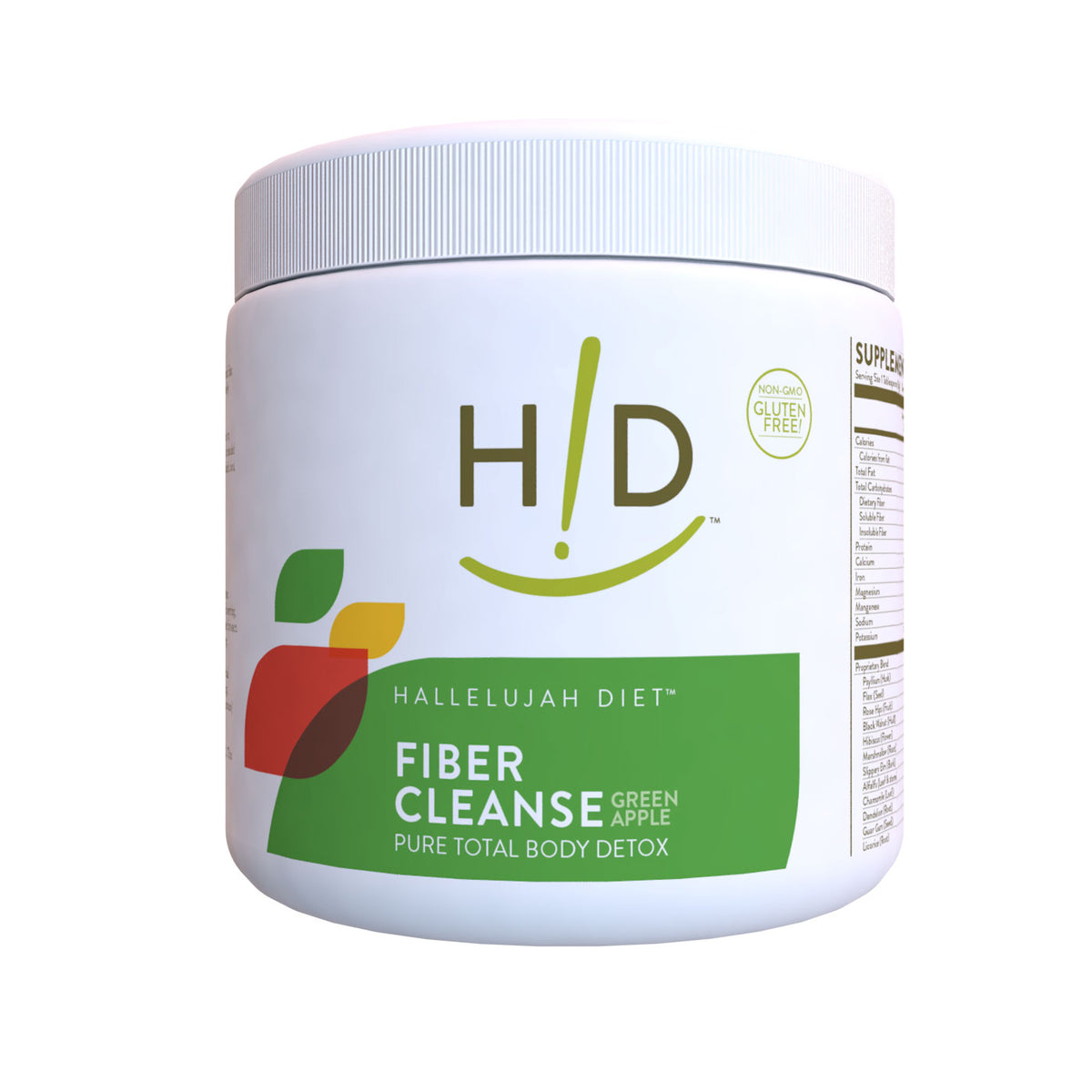
The reason we make Fiber Cleanse, and the reason we recommend it for the first two to three months rather than indefinitely, is that the beginning is not the long term. At the start there is a backlog to clear and a habit that does not exist yet, and the amount of fiber needed to do that is more than most people are going to eat in week one of changing everything else about how they live.
What is in it, and what each part is for:
Psyllium husk — soluble fiber that forms the gel and does most of the bulk and binding work.
Flaxseed meal — soluble and insoluble fiber together, plus omega-3 fats and lignans that suit the intestinal lining.
Apple pectin, a soluble fiber that is particularly good at binding, which is the step the whole chain turns on.
Fennel seed — long traditional use for settling digestion and easing gas and bloating, which matters when you have just increased someone's fiber substantially.
Peppermint leaf — soothes the digestive tract and eases the cramping that a sudden change in bulk can cause.
It is not a laxative and it does not work like one. Nothing in it irritates the bowel into contracting. It adds bulk, water and binding capacity, and the bowel does what a bowel does when it is given something to work with.
How to use it. A tablespoon up to 150 pounds, a tablespoon and a half from 150 to 200, two tablespoons above that. Mix into eight ounces of water or juice and drink it straight away. It thickens as it sits, and a thickened glass is unpleasant enough that people skip the next one. First serving early in the morning, and a second before noon if you want it.
Water is not optional. Half an ounce per pound of body weight across the day — seventy-five ounces at 150 pounds. Fiber works by holding water, and fiber without water is the one way to make elimination harder rather than easier. If things tighten up instead of loosening, add water before you consider adding anything else.
Keep it two hours clear of medications, since fiber binds those as readily as anything else.
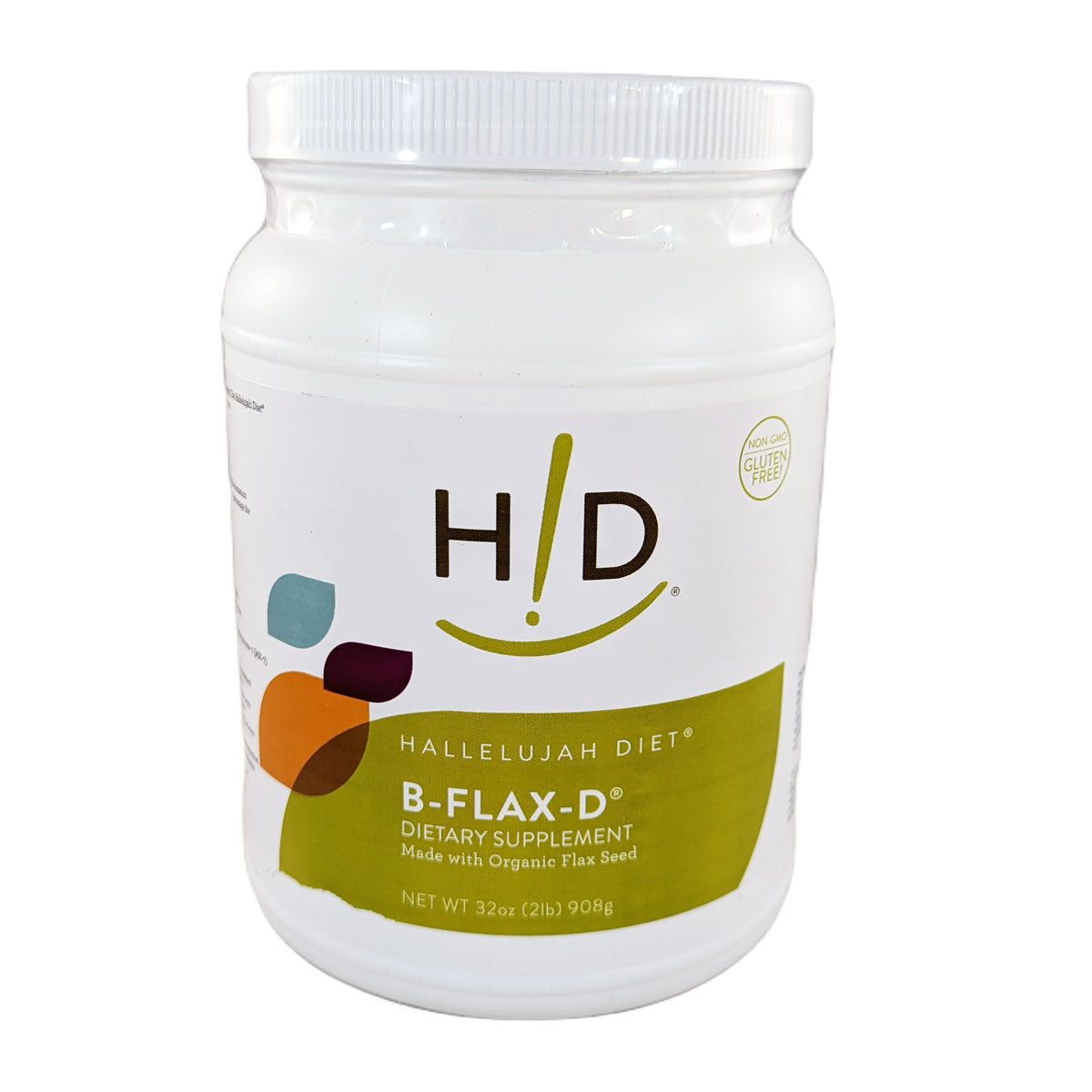
And treat it as a season rather than a habit. Two to three months, then move to freshly ground flaxseed or B-Flax-D, both of which are made for the long run.
What to expect, honestly
The first few days. Elimination usually increases, often from once a day to two or three times. Two to three a day is the design rather than a side effect. Some people get a mild headache, a flat afternoon or a skin flare in the first week as the backlog moves, which is the loop above finally opening, and it passes.
Weeks two to eight. Elimination becomes easier and more complete, bloating settles, and most people notice the energy change here rather than at the start. Some lose five to fifteen pounds over this stretch. That is accumulated waste leaving rather than fat loss, and it is worth knowing which one it is so the number does not mislead you later.
If your bowels get loose, reduce the serving or the frequency. The dose is a starting point rather than a target.
The two halves, in two containers
Feeding raises what comes loose. Green juice, living food, a body finally supplied well enough that its cells can let go of what they have been holding.
Fiber decides where it goes. Bound and carried out, or handed back for another trip around.
Either one alone is half a job. Supply without an exit makes people feel ill and convinces them that eating well does not agree with them. An exit without supply gives the colon something to do while the cells stay exactly as they were.
That is why the Get Started Kit has both in it. Not as a bundle, as a pair, the same reason you would not hand somebody a bucket and no tap.
What to notice in yourself
How many times a day you eliminate, and whether it is complete. This is unglamorous and it is the most direct feedback available.
Whether the first week is rough and the third is noticeably better: that shape is the loop opening.
Bloating, particularly in the evening. Skin, which takes on some of the load when the main exits are slow. And whether the energy you expected from eating well finally shows up, which for a lot of people is the week the exit opens rather than the week the food changed.
A thought to close
There is a line in Second Corinthians about purifying ourselves from what contaminates body and spirit. It sits in a passage about promises rather than about health, and it assumes something matter-of-fact: that some things are meant to be put out rather than carried.
The body agrees with that and has the machinery for it. Cells release, the liver processes, bile carries, the colon eliminates. Every step is already built. The only step that depends on us is the last one, and it depends on something as ordinary as what we eat having enough substance to carry a load out.
Feed it well and it will start letting go. Give it somewhere to put what it lets go of.
Questions We Hear Most Often
Q: Why do I feel worse when I start eating well?
A: A better-supplied cell begins releasing what it has been storing. That travels to the liver, gets packaged, and leaves in bile — and most bile is reabsorbed further down unless fiber binds it. Without an exit, material keeps arriving back, and you feel every trip.
Q: What does Fiber Cleanse actually do?
A: It adds bulk and water so the colon has something to move, it binds bile and what is dissolved in it so that material leaves rather than returning, it shortens the time everything spends in the intestine, and it feeds the bacteria that line it.
Q: Is it a laxative?
A: No. Nothing in it irritates the bowel into contracting. It adds bulk, water and binding capacity, and the bowel does what a bowel does when given something to work with.
Q: How much water do I need with it?
A: Half an ounce per pound of body weight across the day — about seventy-five ounces at 150 pounds. Fiber works by holding water, so fiber without enough water is the one way to make elimination harder rather than easier.
Q: How long should I use it?
A: Two to three months, then move to freshly ground flaxseed or B-Flax-D, both of which suit the long run. The beginning is not the long term: at the start there is a backlog to clear and a habit that does not exist yet.
Keep exploring
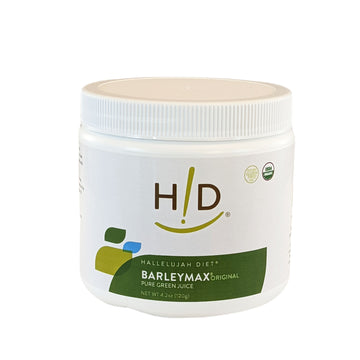
→ How BarleyMax Powers the Body — the supply half of the same job
→ What Your Liver Actually Does All Day — the processing step in the middle of this chain
→ Toxicity and Deficiency: The Two Things That Actually Go Wrong — the frame both of these sit inside
→ How Your Body Works — the full library
If you would rather begin than read, our Get Started Meal Plan lays out the first week for you.
Educational content. Not medical advice. Keep it two hours clear of medications. If you are pregnant, nursing, or have an existing digestive condition, raise it with a nutritionally minded health care professional first.
More food-first writing: MyHDiet.com · AMPMForHealth.com
Reviewed by Olin Idol, ND, CNC — Vice President of Health, Hallelujah Diet