


If you rinse with an antibacterial mouthwash every morning, you may be undoing the best thing you did for your blood pressure at breakfast.
That sounds like a stretch until you know where the process starts. Your body makes a molecule called nitric oxide that tells your blood vessels to relax and open. Most of the raw material comes from plants. And the first step of turning that food into something your body can use happens on your tongue, done by bacteria that live there. An antiseptic rinse kills them along with everything else. Researchers have measured blood pressure rising in people who changed nothing else in their routine.
The second thing worth knowing early: it is not beets. Beets are wonderful and they earn their reputation. Arugula is higher in what matters, by a wide margin, and a handful of it does real work.
We get the beet question constantly. Someone calls or writes and somewhere in the first minute it comes out: should I be drinking beet juice? The answer is yes, and beets are also one door into something larger — a system your body runs every day, that slows down quietly as you age, and that responds to food faster than almost anything else we teach.
The Foods, Highest First
Here's the part worth writing on something and putting where you'll see it.
Arugula is the highest of any common food, by a wide margin. A handful does real work. If you've written it off as a peppery garnish, it's worth another look.
Beets are the famous one, and they earn it. Roots and greens both — most people throw the greens away, which is a shame. Beet juice is the most concentrated form: a small glass, not a pint.
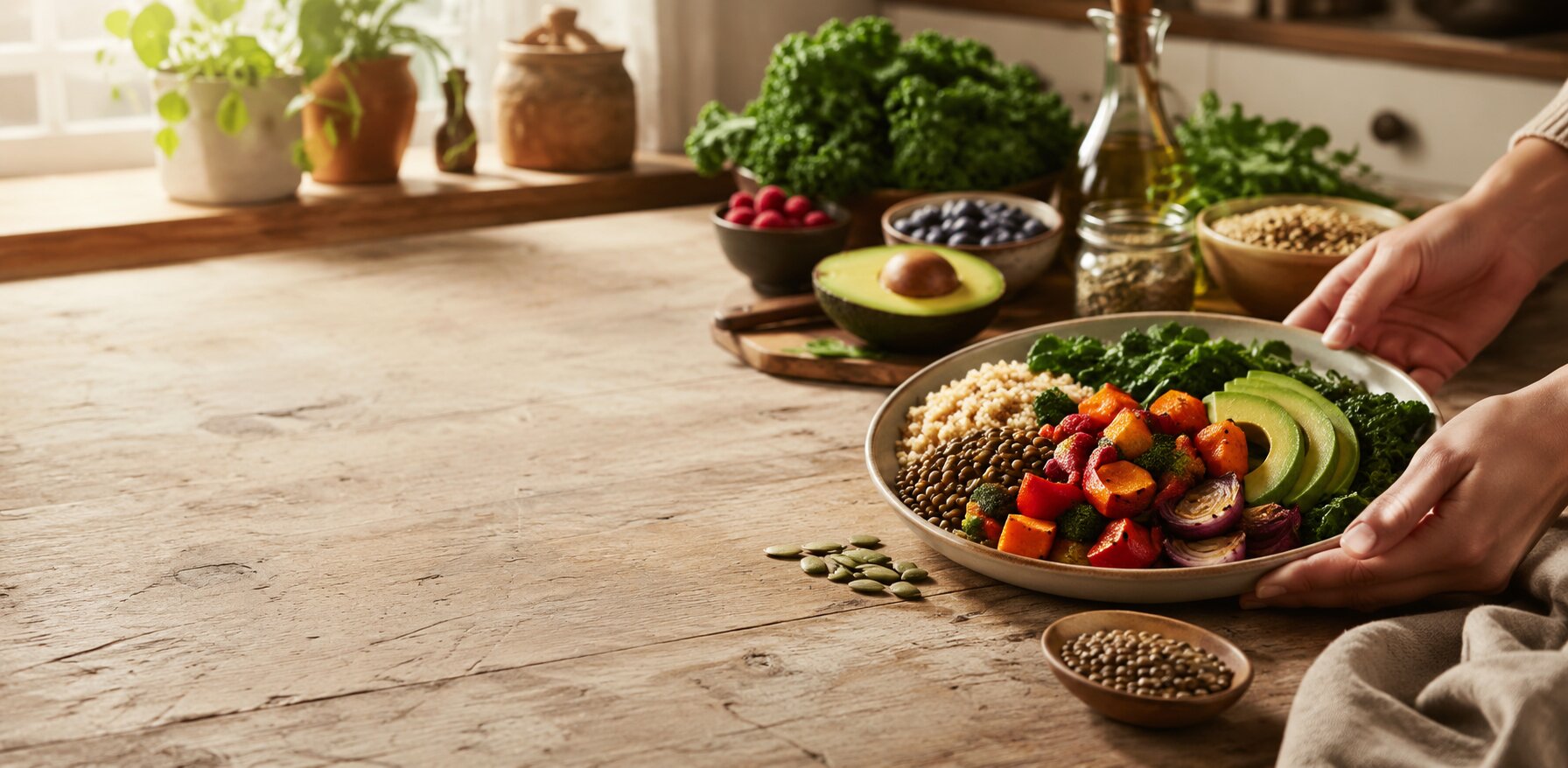
Then the greens: spinach, easier to eat in quantity than arugula. Swiss chard, which brings magnesium along with it. Butter lettuce, higher than romaine, which surprises people. Bok choy, an easy way in if raw greens aren't your thing. Watercress, old-fashioned and underrated.
And a few that most people overlook entirely — celery, better than its reputation and excellent juiced. Radishes, including the leafy tops nobody eats.
There's also a supporting cast that doesn't carry nitrates but helps your body use and protect what it makes. Garlic supports the enzyme side of the pathway — crush it, wait ten minutes, then cook. Pomegranate and berries bring antioxidants that help nitric oxide last longer once it's made. Watermelon supplies citrulline, which the body converts along a second route entirely.

The Step That Happens on Your Tongue
This is the piece almost nobody knows, and it changes how you'd approach the whole thing.
The first step of that conversion doesn't happen in your stomach. It happens on your tongue. Friendly bacteria living on the back of it take the nitrates from your food and convert them into the next form along. Only then does your body finish the job.
Which means two ordinary habits matter more than they should.
Chewing. Food swallowed in a hurry skips the beginning of the process. It's a small thing, and it's free.
Antibacterial mouthwash. The antiseptic kind kills bacteria indiscriminately — the ones causing trouble and the ones doing this job. Researchers have measured blood pressure rising in people who changed nothing else. If you rinse with it every day, that's worth knowing. There are gentler options, and plain water after brushing is usually enough.
We've had people write back about that one more than almost anything else we teach. It's such a small hinge for such a large door.
Don't Pour It Down the Sink
Nitrates are water-soluble. Boil a pot of greens and pour the water down the sink and you've poured a good part of this away with it.
Steam them. Sauté them. Eat them raw. If you do boil something, use the liquid — soup, a sauce, anything that keeps it.
And spread it out. The effect is measured in hours rather than days, so greens at lunch and again at dinner does more than one large salad on Sunday.

The System Behind the Beet Question
Your body makes a molecule called nitric oxide. Its job is to tell the smooth muscle lining your blood vessels to relax, which widens the vessel and lets blood move more easily.
That single function touches more than people expect. Circulation. Blood pressure already within a healthy range. How your legs feel on a flight of stairs. How cold your hands get. How clearly you think at three in the afternoon.
Production falls with age — by fifty, most people make substantially less than they did at twenty-five. And the raw material comes almost entirely from plants.
Wider Vessels, Same Pump
Picture a garden hose with a nozzle you can widen or narrow. Same water, same pump, very different flow.
Nitric oxide is the signal that widens the nozzle. When there's plenty of it, vessels open, blood moves, and every tissue downstream gets what it needs — muscles, brain, the small vessels feeding your eyes and kidneys and skin.
When there's less of it, the vessels stay tighter than they should. Nothing dramatic happens. Things just get a little harder. You notice hills. You notice stairs. You put it down to age, and in a sense you're right — but not in the way you think.

Only Half the Decline Is Age
Two things happen at once, and only one of them is age.
The lining of your blood vessels makes some nitric oxide directly, and that capacity does decline over the years. That part is normal.
But there's a second pathway, and this one is entirely about what you eat. Nitrates from plants — concentrated in leafy greens and beets — get converted into nitric oxide through a chain of steps that starts in your mouth and finishes in your stomach. That pathway doesn't have to decline. It depends on supply.
Most people simply stop supplying it. Not deliberately. It happens the way most dietary drift happens: salad becomes a side rather than a habit, greens become a thing you mean to eat, and the plants that carry this particular gift quietly leave the plate.

Simple Steps to Begin
-
Aim for a cup of raw leafy greens a day. Two is better. It doesn't need to be one sitting, and it doesn't need to be a salad — a handful into a smoothie counts.
-
Add beets twice a week. Roasted, grated raw into a salad, or juiced. Use the greens.
-
Chew properly. Genuinely. It's the first step of the process.
-
Check your mouthwash. If it says antiseptic or antibacterial, consider switching or simply stopping.
-
Steam rather than boil, and keep the water if you do.
-
Give it three to four weeks. Most people notice the difference on stairs or hills before they notice it anywhere else. It arrives quietly.
What God's Original Design Points Toward
Behold, I have given you every herb bearing seed, which is upon the face of all the earth." (Genesis 1:29)
We come back to that verse constantly, and this is one of the clearer illustrations of why.
Nobody knew what nitric oxide was until the 1980s. The three scientists who worked it out received the Nobel Prize in 1998. It is, by any measure, a modern discovery.
And the foods that supply it are green plants and roots — sitting at the front of the provision described in the first chapter of Genesis, thousands of years before anyone had a name for the molecule or a way to measure it.
We don't say that to prove anything. Scripture isn't a biochemistry text and shouldn't be read as one. But we've noticed, over thirty years, how often the research eventually arrives somewhere the garden already was. It's happened too many times to feel like coincidence.
Where a Beet Powder Fits — and Where It Doesn't
We make one, and you should weigh what follows accordingly.
Beets are wonderful, and juicing them is a nuisance. It stains everything it touches, it takes time, and fresh juice doesn't keep or travel. Somewhere in the gap between I should and I did is where most good intentions about beet juice quietly go to die. We've watched it happen for thirty years, including in our own kitchen.
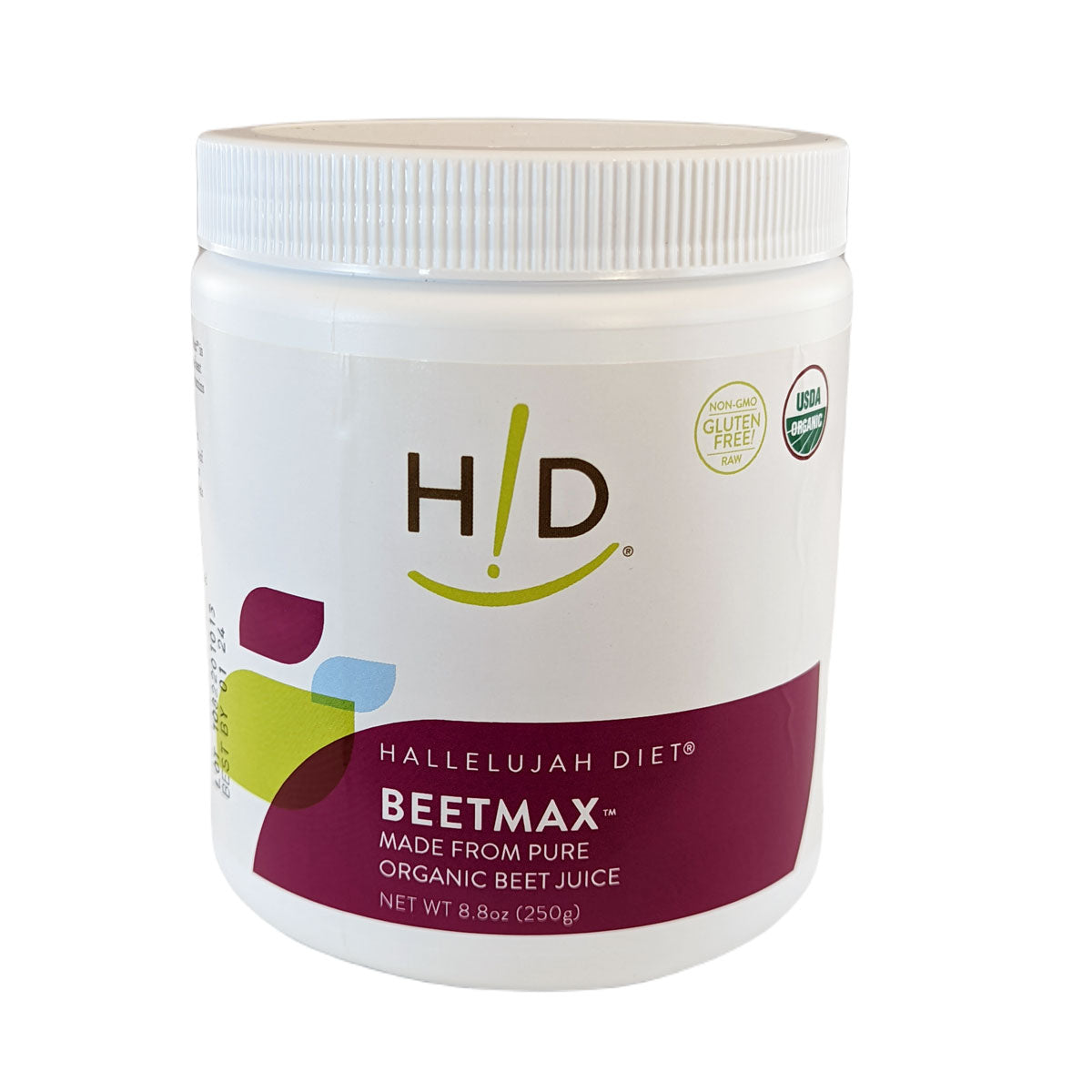
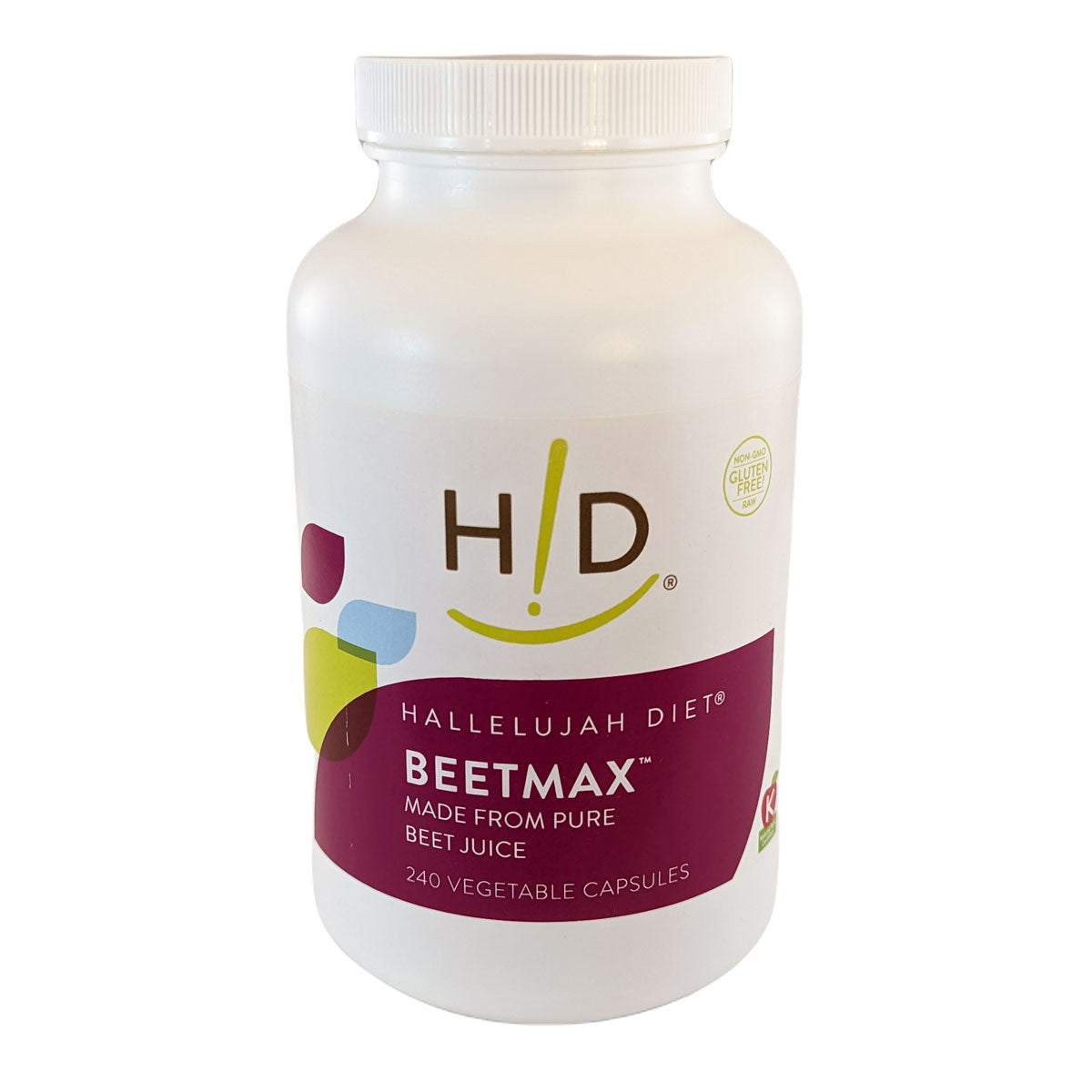
That's the honest case for a dehydrated beet juice powder. Ours is called BeetMax — it's the juice with the water taken out, so a spoonful stirred into a glass gets you near what a small glass of fresh would, without the mess or the timing.
Here's what it isn't. It isn't better than the beets. Whole beets bring fiber that no powder carries, and the greens on top bring things nothing in a jar can replace. If you'll eat the beets, eat the beets — that's not modesty, it's just true.
Where a powder earns its place is in the gap. The traveling week. The season when everything is too busy. The household where nobody is going to run a juicer at seven in the morning and clean it afterward. Something you'll actually do four days a week beats something perfect you'll manage twice a month.
That's the entire argument for it. If it doesn't describe you, it doesn't apply.
The Hallelujah Diet Perspective
There's something in this we find worth sitting with.
The body was designed with a way to keep its own vessels open, and the raw material for it was placed in ordinary green plants — the cheapest, most available food there is. Not in something rare. Not in something you'd need a prescription or a specialist to obtain. In arugula. In beet greens. In the stuff at the edge of the garden.
Then we built a way of eating that mostly leaves those things out, and a way of caring for our mouths that interrupts the first step, and we wonder why the stairs got harder.
None of that is anyone's fault. It's the water we all swim in. But it does suggest that the way back is simpler than it looks, and considerably less expensive than most people assume.
Questions We Hear Most Often
What is nitric oxide, in plain language?
It's a molecule your body makes that signals the muscle lining your blood vessels to relax, which widens them and lets blood flow more easily. It affects circulation throughout the body — how your legs feel on stairs, how warm your hands stay, how clearly you think in the afternoon. Your body makes less of it as you age, but the food-based pathway that supplies it doesn't have to decline.
Which food is highest in nitrates?
Arugula, by a wide margin, followed by beets and beet greens, spinach, Swiss chard, butter lettuce, and watercress. Beet juice is the most concentrated single source — a small glass rather than a large one. Roughly a cup of raw leafy greens a day gets most people into the range where it matters.
Does mouthwash really affect this?
Antibacterial and antiseptic mouthwashes do, yes. The first step of converting food nitrates happens on your tongue, done by bacteria that live there. Antiseptic rinses kill them along with everything else, which stops the pathway before it starts. Studies have measured blood pressure rising in people who changed nothing else in their routine. Gentler rinses are available, and plain water after brushing is usually enough.
Should I take a nitric oxide supplement instead?
Food comes first, and in our experience it usually does the job on its own. It's worth separating two different things, though. An isolated nitric oxide booster is a manufactured compound. A dehydrated beet or greens powder is a food with the water removed — closer to the plant, and a reasonable bridge when juicing genuinely isn't happening. Neither one builds the foundation. A cup of greens a day costs very little and brings the fiber, magnesium and everything else that came with the plant.
How long before I notice anything?
The effect on any given day is measured in hours, which is why spreading greens across meals works better than one large salad. A general sense of difference usually takes three to four weeks. Most people notice it on stairs or hills first, and often sideways — realizing afterward that something they'd been avoiding got easier.
I'm on blood pressure medication. Is this safe?
Eating more greens is good for essentially everyone, and this is food rather than a drug. But blood pressure medication is not something to adjust on your own based on how you feel, and if you're making a significant dietary change it's worth telling whoever manages your prescriptions so they can watch your numbers with you.
Where to Start
If you'd like the whole thing on one page — what to eat, how much, and the habits that quietly undo it — we've put it together in a free guide.
It's called The Nitric Oxide Food List. One page, no fluff, made to go on the fridge.

You may also find these helpful:
-
Top 10 best vegetables to boost nitric oxide now
- 5 health benefits of drinking carrot, beet and spinach juice
- Is arugula the best food for nitric oxide?
We offer these teachings freely to support clarity, stewardship, and responsible care. If this article was helpful, you may explore additional resources here:
-
MyHDiet.com — plant-based nutrition, enzymes, detox foundations
-
CleanseYourBlood.com — circulation, nitric oxide and blood-flow support
-
WipeOutToxins.com — toxin-free living and prevention
-
AMPMForHealth.com — stewarded health for the rhythm of real life
- HealthRetreat.com — Hallelujah Health Retreats
Thank you for being part of a community committed to thoughtful, responsible healing.