




You see it in the mirror. You see it in your face. It's not that you're just getting chronologically older, but you're gaining weight, especially around the middle, but really all over. That wasn’t part of your plan. What is going on? You haven't changed what you've been doing or eating. And you know it's somehow related to your hormonal shifts, but it's not fair.
You've worked hard at your health all your life. You've eaten what you thought was healthy, and your weight has been stable all these years. And now your body is betraying you.
Of course you don't like it. Who would? So you sigh, and you search. Why? Why does menopause cause weight gain anyway? It's not fair. In this article, I explain what's actually going on and how to make changes that make you appreciate your “mirror” image again.
Why Estrogen Decline Changes Everything
Your instincts are right. It is about the hormone shifts going on. The scale doesn't lie, but that explanation isn't complete. What's driving the weight gain is a cascade of metabolic changes triggered by falling estrogen. And once you understand the mechanism, you'll see why the same strategies that worked at 35 don't work at 52.
Estrogen is way more than just a reproductive hormone, playing a central role in how you feel as a woman. But estrogen also plays a central role in how your body handles energy. When estrogen drops, several things happen at once.
First, insulin sensitivity decreases. This means your muscle cells become less responsive to the insulin signal to take up glucose. The pancreas compensates by secreting more insulin, forcing the muscle cells to take up glucose. But higher insulin levels favor more fat storage, particularly around the abdomen. This is where the classic menopausal belly comes from, and it's not cosmetic. Visceral fat is metabolically active fat that drives insulin formation. This is bad fat.
Second, estrogen directly affects mitochondrial function. Torres and colleagues at East Carolina University published research in Cell Metabolism demonstrating that estrogen physically integrates into mitochondrial membranes in skeletal muscle and lowers membrane viscosity. This helps keep the mitochondria supple and efficient. When estrogen declines, mitochondrial membrane microviscosity increases, complex I respiratory activity decreases, and hydrogen peroxide output rises. The mitochondria that burn your calories become less efficient. This is a real mechanism, not a theory.
Third, the gut microbiome changes. Estrogen helps regulate the estrobolome — the community of gut bacteria responsible for metabolizing and recycling estrogens. As estrogen levels fall, the microbial community shifts. Becker and Manson at Harvard Medical School and Brigham and Women's Hospital reviewed this in Menopause, noting that gut microbiome changes post-menopause are associated with increased adiposity, decreased metabolic rate, and insulin resistance in rodent studies, and that these changes were attenuated by estrogen administration. The microbiome is responding to the hormonal shift and making the metabolic situation worse, not better.
These 3 changes induced by falling estrogen levels are why so many women do everything right and still gain weight. The old playbook doesn't account for these three simultaneous changes. You need a strategy that addresses all of them.
Fatigue often arrives alongside all of this, and it has causes of its own worth knowing — we've written separately about why you're so tired all the time.
7 Plant-Based Strategies That Work With Your Changed Biology
1. Switch to Low-Glycemic, High-Fiber Plant Foods
Insulin resistance is the primary metabolic driver of menopausal belly fat. The most direct dietary response is to reduce the insulin demand of every meal. High-fiber, low-glycemic plant foods do exactly that. Legumes, non-starchy vegetables, intact organic whole grains, nuts, and seeds produce slower, smaller glucose peaks than refined carbohydrates do. The pancreas doesn't have to flood the bloodstream with insulin. Fat storage slows down.
This isn't a theory about menopause specifically. It's a well-established mechanism. This didn't matter so much when you were younger, but now it matters more, because your baseline insulin sensitivity is already compromised.
If you'd like a starting list rather than a category, The Yes List is twenty-five foods worth getting onto your plate, with a note on what each one is doing there.
2. Make Flaxseed a Daily Habit
Ground flaxseed deserves special mention for two reasons. First, it is the richest known dietary source of lignans, plant compounds that gut bacteria convert into weak phytoestrogens. These act as mild estrogen modulators at receptor sites. Second, it is an excellent source of soluble fiber, which helps blunt the glycemic response of any meal it's added to.
For women navigating reduced estrogen, lignans offer a gentle compensatory effect. A tablespoon or two of ground flaxseed daily (in a smoothie, stirred into oatmeal, or mixed into a salad) is the easiest addition to make. This is exactly what our B-Flax-D supplement provides, along with vitamins D3, K2, B12, B6, and zinc.
3. Add Soy Foods — the Evidence Is Stronger Than You Think
Soy isoflavones are phytoestrogens that bind weakly to estrogen receptors and help moderate the effects of estrogen decline. The clinical evidence for their role in relieving menopause symptoms is real. Some women are still concerned about the risk of eating soy foods. I dealt with this question in another article and webinar here.
Dr. Neal Barnard and his colleagues at the Physicians Committee for Responsible Medicine conducted a 12-week randomized trial published in Maturitas in 2023. Postmenopausal women assigned to a low-fat vegan diet plus half a cup of cooked soybeans daily saw moderate-to-severe hot flashes drop by 88% and severe hot flashes by 92%. This was the dietary intervention arm of the same trial that also showed significant body weight reduction in the plant-based group.
Edamame, tempeh, tofu, and miso are whole-food sources to build on. These deliver the isoflavones in their natural matrix, along with protein and fiber, which matters for insulin response.
4. Eat to Feed Your Gut Bacteria
The gut microbiome shift that happens at menopause is real and measurable. Cross and colleagues at Purdue University published research in Gut Microbes showing that ovariectomy (which mimics estrogen loss) altered the gut microbiome in ways that produced greater weight gain, increased gut permeability, and metabolic inflammation. Critically, gnotobiotic mice that received the microbiome from estrogen-deficient animals gained more weight than those that received a normal microbiome, even when their diet was controlled. The microbiome was driving the outcome.
The best intervention for a disrupted microbiome is dietary diversity. A wide variety of plant foods feeds a wide variety of beneficial bacteria. Aim for at least 30 different plant foods each week. Vegetables, fruits, legumes, whole grains, nuts, seeds, herbs, and spices all count. Fermented foods like miso, sauerkraut, and unsweetened plant-based yogurt add live cultures directly. Feeding your gut bacteria will also help with menopausal symptoms, as detailed in this article about your estrobolome.
Thirty plant foods a week sounds like a lot until the prep is already done. The salad box is the simplest way we know to make that ordinary rather than ambitious.
5. Prioritize Protein from Plants
Lean muscle mass tends to decline at menopause, partly due to reduced estrogen and partly to changes in protein synthesis efficiency. Less muscle means a lower resting metabolic rate. You burn fewer calories at rest. Not only that, but less muscle means more frailty as you get older.
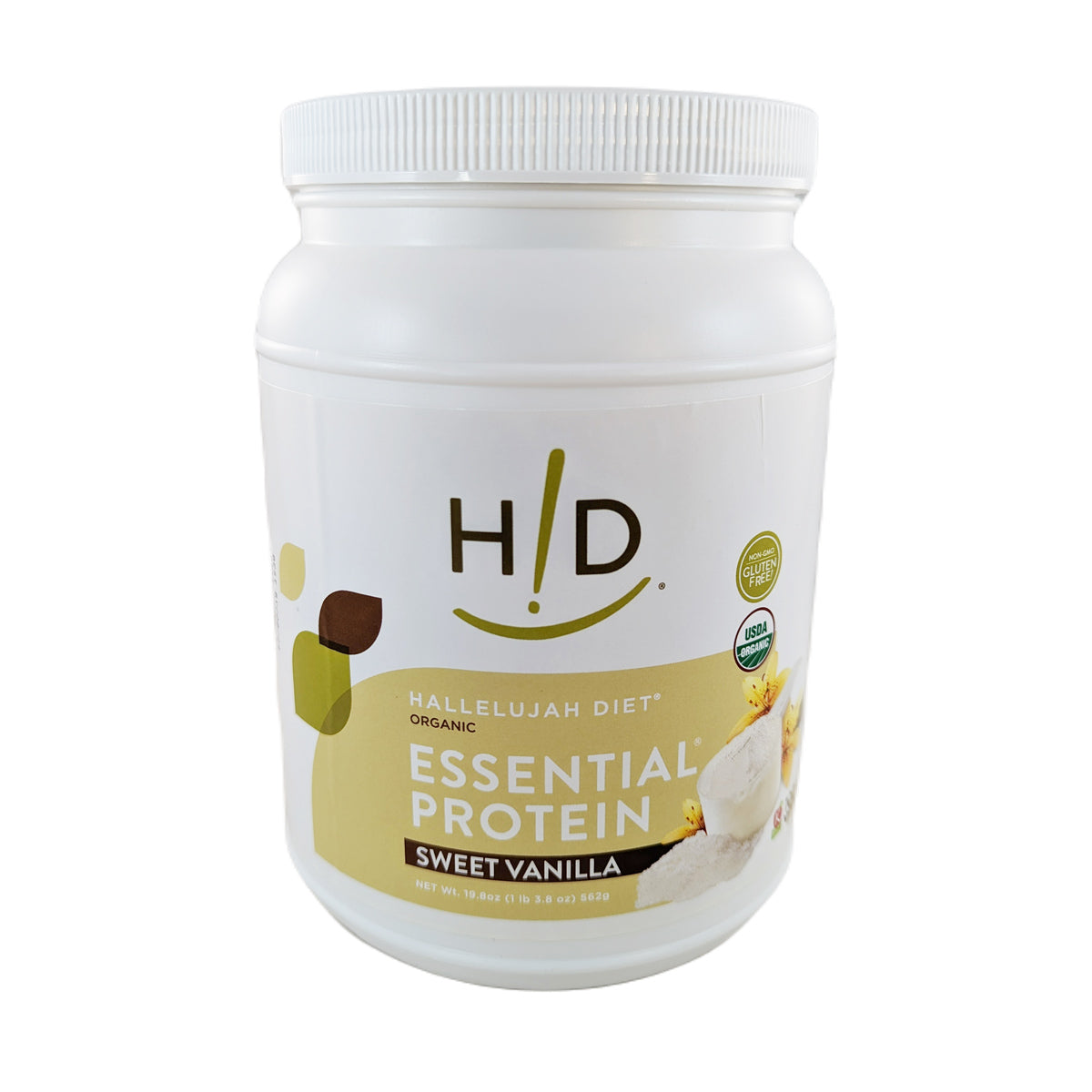
Plant protein sources, such as legumes, edamame, tempeh, quinoa, hemp seeds, and pea protein, provide the building blocks of muscle without the saturated fat load of animal protein that drives insulin resistance. Aim for 25 to 30 grams of protein at each main meal to maximize muscle protein synthesis, which research suggests requires larger per-meal doses as we age. If you're not getting enough from your meals, consider adding Hallelujah Diet's Essential Protein. It's not a workaround; it's part of eating well.
6. Use Omega-3s for Inflammation and Mitochondrial Support
Menopausal women consistently show elevated markers of low-grade inflammation. Estrogen had been doing anti-inflammatory work that no longer happens at the same level. Omega-3 fatty acids, particularly EPA and DHA, help reduce inflammatory signaling directly. Estrogen helped lower your risk of cardiovascular disease, and your risk now went up with lower levels of estrogen. Omega-3 fatty acids can help take up the slack.
There is also mitochondrial evidence. Omega-3 fatty acids integrate into cell membranes and influence membrane fluidity, similar to how estrogen affects mitochondrial membranes, as shown by research from Torres and colleagues. It isn't as powerful as estrogen, but it supports membrane function from the nutritional side.
Supplements are tools rather than foundations, and they are not all the same. If you're weighing one against another, we've written about what to look for in a whole-food supplement and how the popular ones compare.
7. Cut Processed Foods and Added Sugar Aggressively
Things you used to get away with when you were younger now catch up to you fast. Every hit of refined carbohydrate and added sugar has a bigger effect on you than it did before menopause. Ultra-processed foods drive the exact dysbiosis that is already worsening the microbiome situation at menopause. Sugar-sweetened beverages are the worst offenders. They deliver glucose and fructose without fiber, which is the fastest route to elevated insulin and liver fat.
You don't have to be perfect, but you do need to shift the direction you're going. It is time to build your meals around vegetables, legumes, and whole intact foods. Read labels on anything packaged. If added sugar appears in the first five ingredients, skip it.
What the Clinical Evidence Looks Like Together
Bajerska and colleagues at Poznan University of Life Sciences conducted a 16-week randomized controlled trial in 144 centrally obese postmenopausal women comparing an energy-restricted Mediterranean diet to a higher-fiber Central European diet. They reported that both groups showed significant reductions in body weight (8.8%), waist circumference (7.0%), and visceral fat (24.6%). There was a direct correlation: women who ate more fiber lost more visceral fat.
Visceral fat reduction of nearly 25% in 16 weeks. On a dietary intervention alone. For postmenopausal women. Don't you think that would improve your "mirror” image?
This could be you. And the mechanism is exactly what we've been describing: lower glycemic load, higher fiber, less insulin stimulation, and a microbiome that gets to work with better fuel. These are real results, and a lot more dietary fiber is the key.
A Note on Strength Training
No article on menopause weight gain is complete without a mention of resistance exercise. Diet does the heavy lifting metabolically, but muscle mass is where your resting metabolic rate lives. Strength training two to three times a week (even bodyweight exercises) preserves the muscle tissue that estrogen decline is working against. The dietary strategies above are most effective when paired with regular resistance work.
A Hallelujah Diet Perspective
We find, over and over, that when we return to eating close to what God prescribed for us in Genesis 1:29, we experience better health. It works when we're young, and it works even more when we're older, when we don’t have as much wiggle room for compromised eating habits. If you'd like the fuller picture of what Scripture actually says about food, we've walked through the passages in order.
It's time to stop searching and sighing and get to work. You can do this, and you don't have to do it alone. We're here to help you complete the mission God has given you here on Earth. Whether you need a get-started kit, want to join the Foundations class, or need a health retreat, we're here to support you at the level that you need and are ready for.
Your body and your health can support you so that you feel great, have energy for everything on your list all day long, and you can shout, "Hallelujah!" for your excellent health and your beautiful life.
Questions We Hear Most Often
Q: Why am I gaining weight during menopause when I haven't changed anything?
Because the plate didn't change but the way your body handles what's on it did. Falling estrogen reduces insulin sensitivity, makes mitochondria less efficient, and shifts the gut microbiome — three changes at once. The same eating that held your weight steady at 35 asks more of a body at 52 than it used to.
Q: Why does menopause weight settle around the middle?
Higher insulin favors fat storage in the abdomen specifically. That's why the pattern changes as well as the number — women who never carried weight there start to. Visceral fat is also metabolically active rather than inert, which is why it's worth addressing rather than tolerating.
Q: Is perimenopause weight gain the same thing?
It's the same mechanism arriving earlier and less predictably. Estrogen doesn't fall in a straight line in the years before menopause — it fluctuates — so the effects come and go, which is part of why so many women in their early forties can't tell whether anything has actually changed. The dietary response is the same.
Q: Can I lose it without counting calories?
The trial described above used energy restriction, so calories weren't irrelevant. But the finding worth holding onto is that within both groups, the women who ate more fiber lost more visceral fat. Fiber and glycemic load are doing work that a calorie count alone doesn't describe.
Q: How long before I'd notice a difference?
The 16-week trial above is a reasonable frame. Some changes — energy, digestion, how meals sit — arrive sooner. Visceral fat takes months, not weeks, and it moves quietly. Judge it at ninety days rather than at ten.
Q: Isn't soy risky for women?
The concern is common and the evidence doesn't support it. Soy isoflavones bind weakly to estrogen receptors and behave as modulators rather than as estrogen. Whole-food forms — edamame, tempeh, tofu, miso — are what the research is built on.
Q: How much protein do I actually need, and can plants supply it?
Aim for 25 to 30 grams at each main meal, which is more per meal than most people are used to and matters more with age. Legumes, tempeh, edamame, quinoa and hemp seeds supply it without the saturated fat that works against insulin sensitivity.
Q: Do I have to lift weights?
Not with a barbell, but resistance work of some kind is worth doing. Muscle is where resting metabolic rate lives, and estrogen decline works against muscle. Two or three sessions a week, bodyweight included, protects the tissue the diet is trying to feed.
Q: Which supplements are worth taking?
Supplements are tools, not foundations — the food does the work. Ground flaxseed, adequate protein and omega-3s are the ones with the clearest rationale here. Anything beyond that is worth judging on what's actually in it rather than what's on the label.
Q: Is menopause weight gain simply inevitable?
Common and inevitable are different words. The hormonal change is not optional; what the body is given to work with is. The trial above produced meaningful visceral fat reduction on diet alone, in postmenopausal women, in sixteen weeks.
References
1. Torres MJ, Kew KA, Ryan TE, et al. 17β-Estradiol directly lowers mitochondrial membrane microviscosity and improves bioenergetic function in skeletal muscle. Cell Metab. 2018;27(1):167-179. https://doi.org/10.1016/j.cmet.2017.10.003 PMID: 29103922
2. Becker SL, Manson JE. Menopause, the gut microbiome, and weight gain: correlation or causation? Menopause. 2021;28(3):327-331. https://doi.org/10.1097/GME.0000000000001702 PMID: 33235036
3. Cross TL, Simpson AMR, Lin CY, et al. Gut microbiome responds to alteration in female sex hormone status and exacerbates metabolic dysfunction. Gut Microbes. 2024;16(1):2295429. https://doi.org/10.1080/19490976.2023.2295429 PMID: 38153260
4. Kahleova H, Znayenko-Miller T, Uribarri J, et al. Dietary advanced glycation end-products and postmenopausal hot flashes: a post-hoc analysis of a 12-week randomized clinical trial. Maturitas. 2023;172:32-38. https://doi.org/10.1016/j.maturitas.2023.03.008 PMID: 37084590
5. Bajerska J, Chmurzynska A, Muzsik A, et al. Weight loss and metabolic health effects from energy-restricted Mediterranean and Central-European diets in postmenopausal women: a randomized controlled trial. Sci Rep. 2018;8(1):11170. https://doi.org/10.1038/s41598-018-29495-3 PMID: 30042488



1 comment
Paula
Great encouragement!! Thank you so much!
Great encouragement!! Thank you so much!