


The call usually comes a few days after the biopsy.
She has been up since two in the morning reading. By the time she reaches us, she has already cleared out part of her pantry. The tofu went first, then the soy milk, then the bag of ground flaxseed, because a website told her all three would feed her cancer. She wants to know what else to throw away.
What we'd tell her, and what either of us would tell any friend that week, is that she threw out the wrong things.
Among more than 9,500 breast cancer survivors followed in the United States and China, the women who ate the most soy foods had about a quarter fewer recurrences than the women who ate little or none. And in a small trial in Toronto, women who ate ground flaxseed every day in the few weeks between diagnosis and surgery had tumor tissue that showed slower signs of growth by the time it was removed.
Ann has sat with a great many women in exactly this week. It's a big part of why she wrote Unravel the Mystery, her book on cancer and what goes on the plate, and much of what follows comes from those kitchen-table conversations.
The weeks before treatment are not a waiting room. They are some of the most useful weeks she has, and the kitchen is where she can use them.
The Decisions Are Yours. Your Team Advises.
A diagnosis sets things moving fast. Within days there are appointments with surgeons, oncologists, imaging, a nurse navigator with a binder, and dates already on the calendar. The pace can make it feel as though the decisions have been made for her.
They haven't. Her doctors bring knowledge and experience she should hear out carefully, but the decisions about her body are hers. She is allowed to slow down long enough to understand what she's been told, to ask questions until the answers make sense, and to get a second opinion. Some women choose the conventional route, some look at other approaches, and many combine the two. Whatever she chooses, it should be a choice and not a conveyor belt.
And there is one decision nobody else is even making for her: what goes on her plate three times a day. It needs nobody's permission, and it is the one part of this situation that is entirely in her hands, which matters more than it sounds to someone who has just been told her body is doing something she can't control.
She does not have to overhaul her whole kitchen this week, either. Pick one or two things below and start there.
Find Out What Kind of Breast Cancer It Is
"Breast cancer" is really several different diseases that happen to share an address. Her pathology report will say whether the tumor is hormone-receptor positive (estrogen or progesterone), whether it is HER2 positive, or whether it is neither, which is called triple-negative.
That label shapes her treatment, and it shapes a few food questions too. If the cancer is hormone-receptor positive, it makes sense to go easy on concentrated plant-estrogen supplements: soy isoflavone pills, flax lignan capsules, red clover. The research on those is mixed rather than alarming, but caution is the standard. Whole foods are a different matter entirely, and that difference is where most of the fear on the internet goes wrong.
Ask for a copy of your pathology report and keep it. It's yours.
The Soy You Were Told to Throw Out

If you have followed the Hallelujah Diet for a long time, this section may surprise you, because for many years we told people to stay away from soy too. We owe you an explanation for why we see it differently now.
The worry about soy made sense on paper. Soy contains isoflavones, plant compounds shaped enough like estrogen to attach to the same receptors. If a cancer grows in response to estrogen, the reasoning went, then soy must be dangerous.
When researchers actually followed women who had been through breast cancer, the reasoning didn't hold up. The After Breast Cancer Pooling Project combined three large studies, two in the U.S. and one in Shanghai, and tracked 9,514 survivors for an average of more than seven years. Women eating at least 10 milligrams of soy isoflavones a day, roughly a glass of soy milk or a few ounces of tofu, had a 25 percent lower risk of recurrence. That held in American women eating modest amounts and in Chinese women eating a great deal more.
The international review that grades this research for the World Cancer Research Fund and the American Institute for Cancer Research rates the evidence as suggestive rather than settled. But the direction is clear, and it is the opposite of what she was told at two in the morning. The American Institute for Cancer Research now says that soy foods are safe for women with breast cancer.
That is the research that changed our thinking. But it comes with conditions, and they matter as much as the headline.
Choose organic, non-GMO soy. Most soy grown in this country is genetically modified and heavily sprayed. Organic labeling rules out both.
Choose the soy the studies were about. The women in Shanghai were eating soy the traditional way: tofu, soy milk, edamame, and fermented foods like tempeh, miso, and natto, the way it has been eaten in Asia for centuries. That is a different food from most of the soy Americans eat now, which comes as isolated soy protein in meat substitutes, protein bars, powders, and the long list of "healthy" packaged snacks. Those weren't what was studied, and we wouldn't lean on them.
So the tofu can come back, along with edamame, tempeh, miso, and unsweetened soy milk, all organic. One or two servings a day of the traditional foods, not the isolates, powders, and pills. We'll be writing a fuller piece on soy and what changed in our teaching, for the long-time readers who deserve the whole story.
A Spoonful of Ground Flax Every Morning

The flaxseed trial is small, and it is about exactly the weeks she is in right now.
Researchers at the University of Toronto took 32 postmenopausal women who had just been diagnosed and were waiting on surgery. Nineteen of them ate a muffin each day containing 25 grams of ground flaxseed, about two and a half tablespoons. The rest ate a muffin without it. After roughly a month, the tumor tissue was compared from biopsy to surgery. In the flax group, the markers of cell growth had dropped by about a third and the markers of cells clearing themselves out had gone up. The women who ate the plain muffin showed no such change.
Thirty-two women is not enough to call flax a treatment, and nobody should read it that way. What it shows is that a few tablespoons of an ordinary seed, eaten in the weeks before surgery, was measurable in the tissue itself. That is a remarkable thing to know when you are sitting at the kitchen table wondering whether anything you do this month matters.
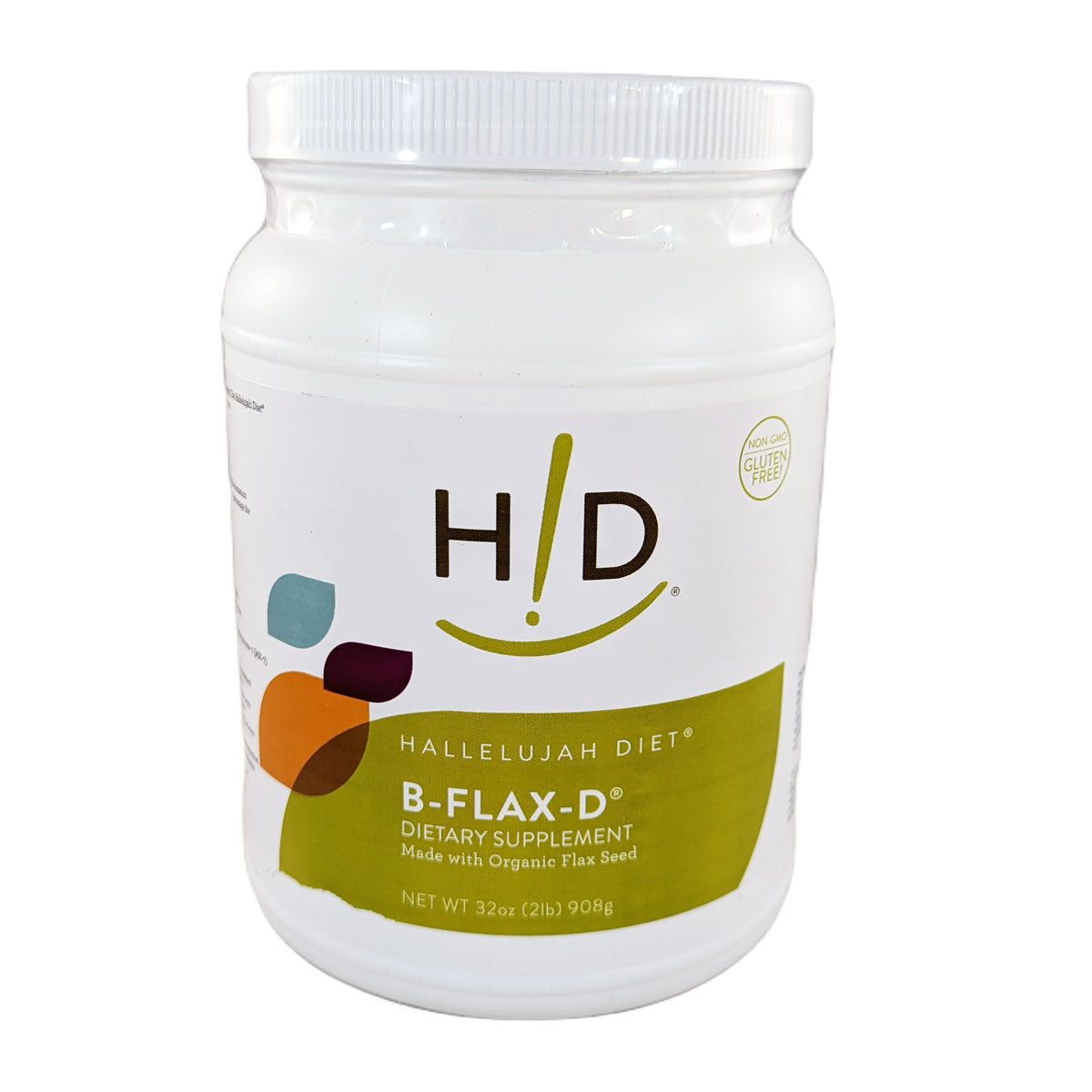
Once flaxseed is ground, its oils start to go rancid, which is why we say to buy it whole, grind only a few days' worth at a time, and keep it in the refrigerator. Stir it into oatmeal, a smoothie, or a salad. If grinding isn't going to happen, a flax product prepared to resist rancidity, like our B-Flax-D, does the same job without the grinder. We've written more about what flaxseed brings to the table if she wants the longer version.
Fiber Is How the Body Clears Estrogen It's Done With
The body doesn't just make estrogen. It also has to get rid of it. The liver packages used estrogen and sends it into the gut with bile, headed for the exit. But some gut bacteria can unwrap that package, and when they do, the estrogen gets absorbed back into the blood and makes another trip around. That recycling system has a name, the estrobolome, and what you eat shapes it.
Fiber keeps things moving and feeds a different mix of bacteria. Back in 1982, researchers in Boston compared women eating a vegetarian diet with women eating a standard one. The vegetarian women ate more than twice the fiber, moved more estrogen out through the stool, and had lower estrogen levels in their blood.
The research on women who already have breast cancer points the same way. In the same international review, every additional 10 grams of fiber a day was associated with a 13 percent lower risk of death from any cause. A cup of cooked lentils carries about 15 grams. Beans, lentils, greens, vegetables, whole grains, ground flax. This is the food we have taught for thirty years, and here it is doing one very specific job.
Something From the Cabbage Family Every Day

If she changes only one thing about her plate this month, we'd make it this.
Broccoli, cauliflower, cabbage, kale, Brussels sprouts, bok choy, arugula, collards, radishes, watercress. When these vegetables are chopped and chewed, they release compounds that researchers have studied for decades, including for the way they influence how the liver processes estrogen. They are some of the best-researched vegetables in the food supply, and they cost very little.
Shredded cabbage in a salad. Roasted Brussels sprouts. A handful of arugula under everything. And fermented cabbage, raw sauerkraut or kimchi from the refrigerated case rather than the shelf-stable jar, brings the cabbage family together with the living bacteria that help keep the gut in order, which matters for the estrogen-clearing job in the section above. A forkful with dinner is plenty.
Broccoli sprouts grown in a jar on the counter carry far more of these compounds than the grown vegetable does. Raw sprouts and unpasteurized fermented foods are the two things to set aside if she goes through chemotherapy and her counts drop. We've written about what changes when white counts are low.
Fresh Vegetable Juice, Every Day

A body that is about to be asked to heal needs raw material, and a great deal of it. Fresh vegetable juice is the most direct way we know to supply it.
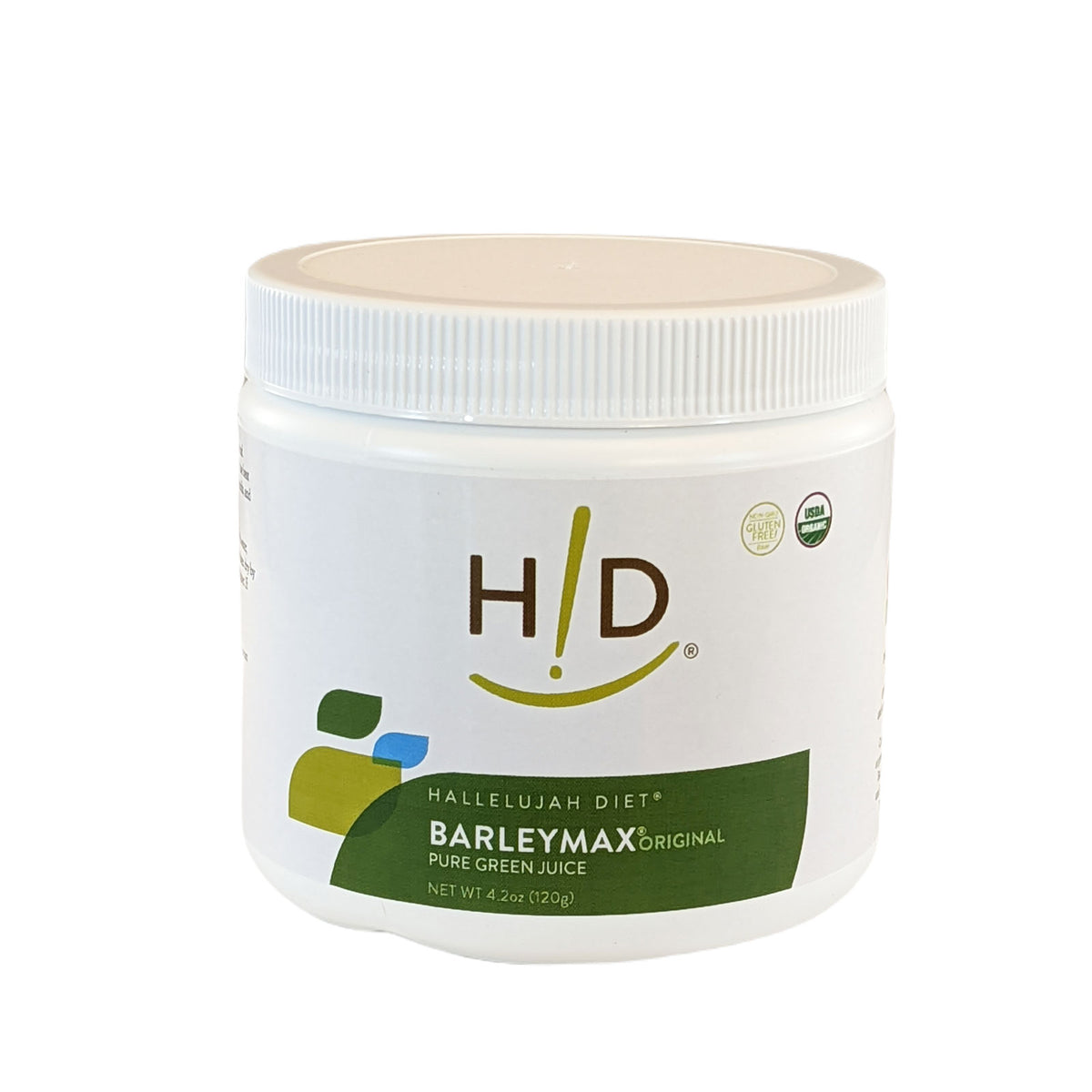
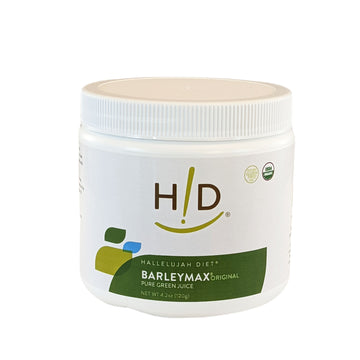
Juicing opens the plant's cell walls and does the digestive work in advance, so the nutrients arrive in minutes and ask almost nothing of a body that may be tired, anxious, or not hungry. Dr. H. E. Kirschner put the difference at under 35 percent of the nutrients absorbed from vegetables eaten whole, against upwards of 90 percent from the juice. Carrots, celery, cucumber, dark greens, a little beet. Two glasses of fresh juice a day, along with some BarleyMax, is an excellent start for someone who is rebuilding.
Juice your vegetables and eat your fruit. Fruit juice carries a lot of sugar and loses the fiber that slowed it down; vegetable juice carries very little. If the natural sweetness of carrot juice worries her, we've answered that one in full. And on the days nobody has the energy to run a juicer, a glass of BarleyMax stirred into water takes thirty seconds.
This Is Not the Season to Diet
Many women in midlife have spent years trying to eat less. A diagnosis can turn that instinct up, because cutting back feels like doing something.
We'd gently say the opposite. Surgery, chemotherapy, and radiation all ask a lot of the body, and holding onto weight and muscle helps a woman tolerate whatever comes next. Eat enough. Eat often if appetite is small. Make protein a decision rather than an accident: beans and lentils most days, tofu and tempeh, hemp hearts in the smoothie, seeds on the salad, a clean plant protein powder on the days nothing else sounds good.
Two Things We'd Put Ahead of Anything on the Plate
Everything above is food, and food matters. But if she asked us where to put her energy first, before any single change in the kitchen, we'd point her to two places that most cancer conversations never mention.
Look at your mouth
The mouth is connected to the rest of the body, and hidden infection there doesn't stay there. That goes well beyond gum disease, which is why "my gums are fine" isn't the end of the question.
The places we'd want looked at are the ones a routine dental visit can miss: wisdom teeth that are impacted or were pulled years ago, old extraction sites where the bone never fully healed and bacteria can settle in a pocket under the surface, root canals, and infection below the gum line. These often don't show up on the standard panoramic X-ray. A cone beam CT scan, a three-dimensional image of the jaw, shows far more.
There is some research pointing the same way. In a study of more than 73,000 postmenopausal women in the Women's Health Initiative, those with a history of gum disease had a higher rate of breast cancer than those without it. That is the most studied piece, and it is the smallest part of what we'd check.
So find a dentist who takes this seriously, often called a biological dentist, and ask for a cone beam CT. Do it in these first weeks, before treatment makes dental work harder to schedule.
Tend to the heart

We've walked with enough women through this to believe the emotional side is not a footnote. Over and over, women tell us about a hurt they've carried for years: a betrayal, a loss, a marriage, a parent, words that were said and never taken back. Or guilt, over something they did or didn't do, held so long it has become part of the furniture. Many describe a hard season of grief or strain in the years before the diagnosis.
None of that is something to blame yourself for. It is something to tend to, the same way you'd tend to your plate.
One simple place to begin: write a letter to the person who hurt you. Say all of it, honestly, including the parts you've never said out loud. Then don't send it. The letter isn't for them. It's a way of setting the weight down. If the guilt is your own, write that one too, and bring it to the Lord. "If we confess our sins, he is faithful and just to forgive us our sins" (1 John 1:9).
Pray honestly, including the angry and frightened prayers. Talk with someone you trust, a pastor or a counselor. When we work with women, we tend to the plate, the mouth, and the heart together. Healing doesn't stop at the neck.
The One Thing We'd Take Off the Table Now
Alcohol.
It is classified as a known cause of breast cancer, and the risk climbs with even one drink a day. During active disease there is no amount we would defend. That may be hard to hear in a month when the pink ribbon shows up on wine bottles, but it is one of the clearest lines in all of nutrition research.
She doesn't need to replace it with willpower. Sparkling water with lime, a warm mug of herbal tea in the evening, a pitcher of cucumber and mint water in the refrigerator. The ritual can stay. The glass changes.
Go Slow With the Bottles People Send
Within a week of the news, the supplements start arriving. A neighbor drops off a bottle. A cousin sends a link. Someone at church swears by a powder.
Every one of those comes from love, and she doesn't have to take any of them yet. Food first. Supplements can have a real place, and which ones depends on the path she chooses.
If she is going through chemotherapy or radiation, alone or alongside other approaches, high-dose antioxidant pills are a genuinely open question, because some of those treatments work partly through the very process the pills are designed to block. Vegetables at food amounts are not part of that question. Nobody is suggesting she eat fewer vegetables.
Whatever she decides to take, she should write it down and share the list with whoever is guiding her care, including teas, tinctures, and powders. That is not asking permission. It is making sure everyone helping her is working with the whole picture.
When People Ask What They Can Do, Give Them a Job

Everyone will ask. Most people won't know what to bring, and they will default to a casserole and a pan of brownies.
She is allowed to tell them. A short list on the refrigerator, or texted to whoever is organizing the meals:
- A pot of vegetable or lentil soup, frozen in single servings
- A bag of washed and chopped vegetables, ready for a salad
- A big batch of cooked beans, brown rice, or quinoa
- A morning of fresh juice, made and bottled for the day
- A ride to an appointment, and someone to sit in the waiting room
- An hour on the couch together, with no agenda
In a pooled study of more than 9,000 women with breast cancer, the women who were most socially isolated after diagnosis had a 43 percent higher risk of recurrence and a markedly higher risk of dying from the disease than women who were well connected. The researchers counted friendships, family, community, and church ties. The people who show up are part of the care.
Bear Ye One Another's Burdens
"Bear ye one another's burdens, and so fulfil the law of Christ." Galatians 6:2.
A lot of the women who call us are used to being the one who carries everyone else's burdens. They are the one who organizes the meals, not the one who receives them. Letting people help is its own kind of faith, and it is often the hardest part of the first month.
Let them bring the soup. Tell them which soup.
Where to Start This Week
- Get your mouth looked at by a biological dentist, and ask for a cone beam CT.
- Write a letter to the person who hurt you. Say all of it. Don't send it.
- Start fresh vegetable juice, two glasses a day, along with some BarleyMax.
- Bring back organic, traditional soy foods, one or two servings a day.
- Add two or three tablespoons of freshly ground flax to breakfast.
- Put something from the cabbage family on the plate every day, including a little raw sauerkraut.
- Add a serving of beans or lentils before you take anything away.
- Set the alcohol aside.
- Hold off on new supplements, and share a list of anything you're taking with whoever is guiding your care.
- Write the "what to bring" list and let someone else carry it.
There Is More to This Than Food
This article is about the first few weeks, so we've kept it to what she can do in her own kitchen and the few things worth doing early. Breast cancer is a much bigger subject than one article can hold: the choices between conventional, integrative, and alternative care, the connection with the mouth, the emotional side, and the long road after treatment. We'll take those one at a time in the weeks ahead.
When You're Ready for the Bigger Picture
The first weeks are about steadiness, not a full plan. When she has the bandwidth for more, Ann's book was written for exactly this season. Unravel the Mystery walks through what cancer is responding to and what to do about it, and the companion recipe book answers the question every woman asks after a diagnosis: what do I put on the plate tomorrow morning?
Questions We Hear Most Often
Q: Is soy safe to eat after a breast cancer diagnosis?
A: Traditional soy foods are, and the research points toward them helping rather than hurting. In a pooled study of more than 9,500 breast cancer survivors, women eating at least a glass of soy milk or a few ounces of tofu a day had a 25 percent lower risk of recurrence. Choose organic, non-GMO tofu, tempeh, miso, edamame, and soy milk rather than isolated soy protein in bars, powders, and meat substitutes. Concentrated soy isoflavone supplements are a different matter, especially for hormone-receptor positive cancers.
Q: Should I eat flaxseed if my breast cancer is estrogen-positive?
A: Ground flaxseed as food is a different thing from flax lignan capsules. In a small trial of newly diagnosed postmenopausal women, about two and a half tablespoons of ground flax a day in the weeks before surgery was linked with slower markers of tumor growth. Grind it a few days at a time and keep it cold, since ground flax goes rancid, or use a flax product prepared to resist rancidity. Go easy on concentrated lignan supplements.
Q: What should I eat in the weeks before breast cancer surgery?
A: Eat enough, and build meals around vegetables, especially the cabbage family, along with beans, lentils, soy foods, and ground flax. Make protein deliberate, set alcohol aside, and hold off on starting new high-dose supplements. This is a season for steady nourishment, not for dieting.
Q: Does alcohol matter after a breast cancer diagnosis?
A: Yes. Alcohol is classified as a known cause of breast cancer, and risk rises even at one drink a day. During active disease there is no amount we would defend. Keep the evening ritual and change what is in the glass.
Q: Should I start supplements after a breast cancer diagnosis?
A: Start with food. Which supplements make sense depends on the path you choose. If you are having chemotherapy or radiation, some high-dose antioxidant supplements may work against those treatments, and the evidence is still unsettled. Write down anything you take, including teas and powders, and share the list with whoever is guiding your care.
Q: What can friends bring someone who was just diagnosed with breast cancer?
A: Soup in single servings, washed and chopped vegetables, cooked beans or grains, fresh vegetable juice, a ride to an appointment, and their company. Women with strong social connections after a breast cancer diagnosis do measurably better, so showing up matters as much as what is in the dish.
You Might Also Like
- What to Pack for Chemo Day — the practical list for infusion days, for her or whoever is driving her.
- Can You Still Eat Salad During Chemo? — raw food and fresh juice when white counts are low, and what changed.
- Free Ice Cream at the Cancer Booth — what sugar does in a body fighting cancer.
- Does the Sugar in Carrot Juice Feed Cancer? — why vegetable juice is treated differently from fruit juice.
- Harness Your Gut's Estrobolome — more on how the gut handles estrogen.
We offer these teachings freely to support clarity, stewardship, and responsible care. If this article was helpful, you may explore additional resources here:
- MyHDiet.com — plant-based nutrition, enzymes, detox foundations
- WipeOutToxins.com — toxin-free living and prevention
- CleanseYourBlood.com — circulation and blood-flow support
- HealthRetreat.com — Hallelujah Diet Health Retreat
- AMPMForHealth.com — everyday wellness rhythms and curated tools
Thank you for being part of a community committed to thoughtful, responsible care.