


How to Choose a Whole-Food Supplement
Seven questions worth asking before you buy anything
Download the printable version (PDF)One page. Made to fold into a purse or sit in the cupboard.
We sell supplements. You should know that before you read this, and you should weigh what follows accordingly.
We're writing it anyway, because the questions below are the ones we'd want a family member to ask — including about our own products. A few of them we've had to answer uncomfortably about ourselves over the years, and the answers made the products better.
Food first, always. Nothing in a capsule builds a foundation. But most people have gaps, and when you decide to fill one, it's worth knowing what you're looking at.
- 1
How much is actually in a serving?
Not how many ingredients. How much. Find the serving weight in grams — it's usually in small print, and it's the most informative number on the package.
Everything the front of the container promises has to fit inside that number. Three capsules hold roughly two grams of powder. A scoop of a bulk powder usually holds eight or more.Look for grams per serving, stated plainly. If you can't find it, that itself is an answer.
- 2
How many ingredients is that divided across?
Divide the serving weight by the number of ingredients. It's crude, and it's usually revealing.
Thirty ingredients inside two grams means thirty very small fractions, no matter how good the sourcing is. Every name added to a label divides the same serving further — which is why a long ingredient list should make you look harder rather than feel reassured.Look for a short list at real amounts over a long list at trace amounts.
- 3
Is this food, or a nutrient doing a specific job?
Both are legitimate. They aren't the same product and they don't do the same work.
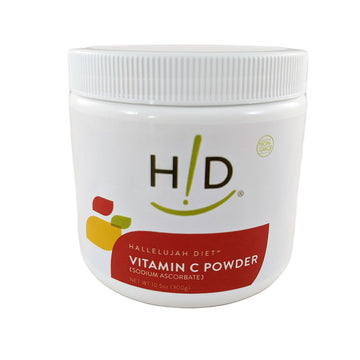
A whole-food supplement is a plant, dried and concentrated. Its job is broad nourishment. An isolated nutrient — vitamin C as ascorbic acid, say — is one compound at a defined dose, and its job is narrow but real. There are moments when you want a proper amount of one thing, and no quantity of food will get you there quickly.
The trouble comes from products that blur the two: priced like whole food, sold like a nutrient, delivering enough of neither.Look for clarity about which one you're buying, then buy it for the job it actually does.
- 4
What's the first ingredient?
Ingredients are listed by weight. If the top of the list is fillers, binders, rice flour or sweetener, that's most of what you're holding.
Look for a recognizable food at the top.
- 5
How was it dried — and is it the juice or the whole leaf?
This matters more than almost anything else on the label, and almost nobody asks it.
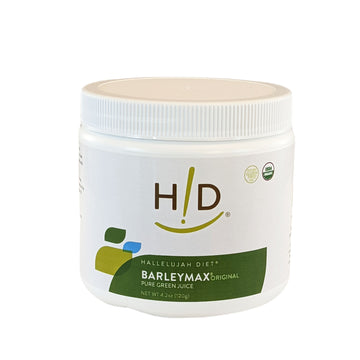
Heat degrades enzymes and a good deal besides, so a powder dried at high temperature is a different product from one dried gently, even when the plant on the front is identical. And a juice powder is a different thing again from a ground whole leaf — the leaf brings indigestible fiber that takes up room in the serving, while the juice brings the part your body can use.Look for low-temperature processing stated plainly, and clarity about juice versus whole leaf. Companies that do this well say so — it's expensive and they want the credit.
- 6
What's the serving actually costing you?
Compare cost per day, not price per bottle — and check how many servings the label assumes. A cheaper bottle at twice the daily dose isn't cheaper.
Then take that number through the produce section once and see what it buys.Look for cost per day, calculated yourself.
- 7
Would the food itself be better?
The honest question, and often the answer is yes.
A greens powder is a reasonable bridge when the greens aren't happening. It is not better than the greens. If the choice is between a supplement and buying more vegetables, buy the vegetables. If the choice is between a supplement and nothing, the supplement has a place.Look for honesty about this from whoever's selling. A company that tells you food comes first is telling you something true against its own interest.
Where we don't come out well
Question two applies to us too. Our superfood blend puts more than thirty ingredients into an eight-gram serving, and like nearly everything in this category the label gives you a blend rather than a line-by-line accounting. We'd rather say that here than have you work it out later.
We also sell some products in capsules, and a capsule delivers less material for more money than the same product as a powder. We make them because some people can't get past the taste of a green drink, and something you'll actually take beats something perfect you won't. If you can drink it, drink it. It's better and it's cheaper.
A word on comparison reviews
Most supplement comparisons online are affiliate content. The rankings follow the commission, not the analysis. That's worth knowing before any list makes up your mind — including lists that rank us well.
Use the seven questions instead. They work on any product, from anyone, and they don't care who wrote them.
“And God said, Behold, I have given you every herb bearing seed… to you it shall be for meat.”
Genesis 1:29
The garden came first. Everything else, ours included, is a supplement to it — which is what the word was always supposed to mean.
Blessings,
Paul & Ann
Read next
Whole-Food Supplements: What to Look For, and How the Popular Ones Compare
The seven questions applied to three products people actually ask us about — with the label arithmetic that most reviews leave out.
Read the articleIf this was useful
God's Original Diet — where to start
The seven simple steps we'd give anyone beginning this, in order. Free, and no perfection required.
Already on our list? You can ignore this — it won’t show once we know you.