



Where Serrapeptase Comes From
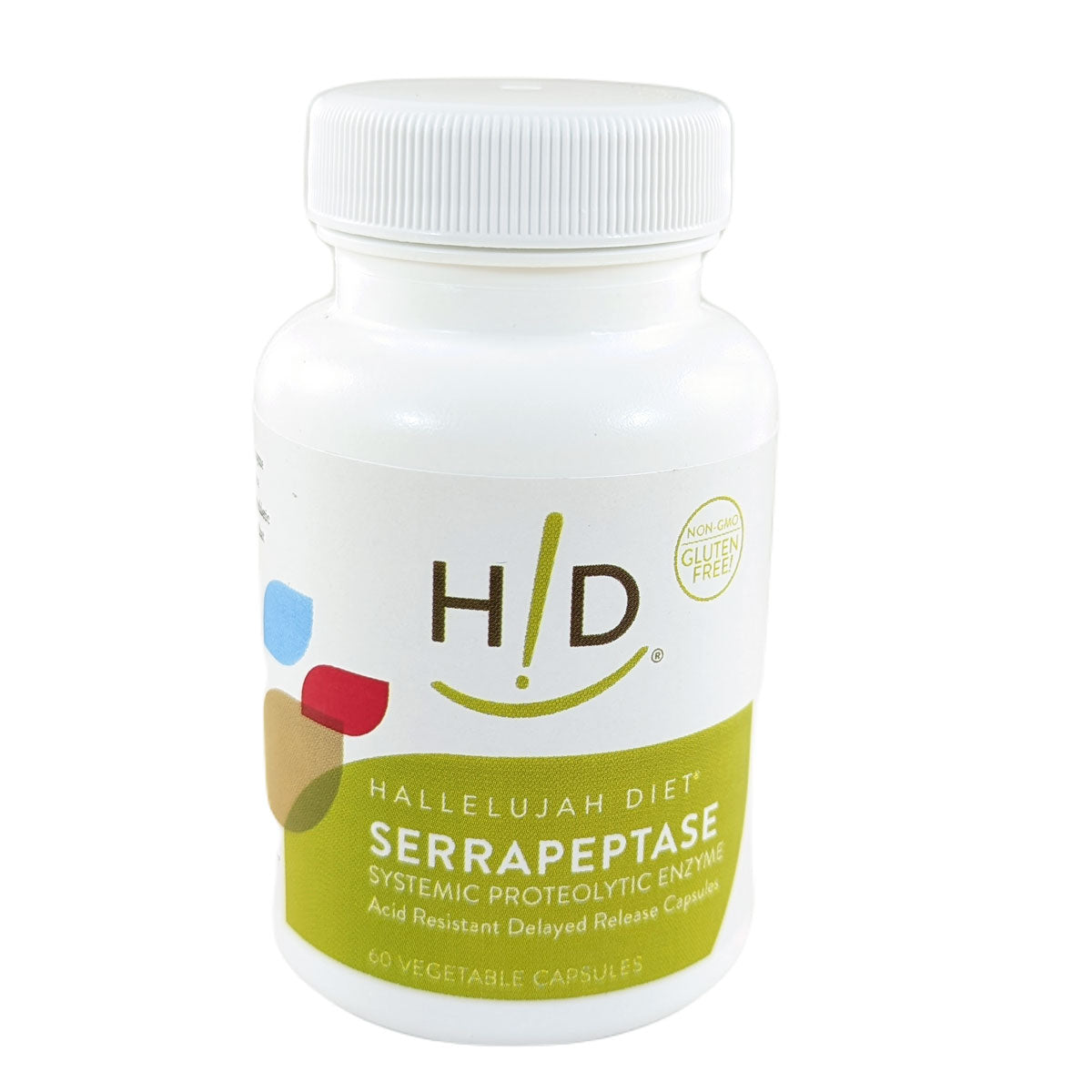
Serrapeptase is a proteolytic enzyme. That means it breaks down protein. It was first isolated from bacteria in the genus Serratia, living in the gut of silkworms. The silkworm uses this enzyme to dissolve its own cocoon (a tough protein structure) so it can emerge as a moth. That's the whole trick. Serrapeptase dissolves proteins that are no longer useful to the body.
In supplement form, it's taken orally, usually on an empty stomach, so it gets absorbed intact instead of getting used up digesting your breakfast.
What Serrapeptase Actually Does in the Body
Here's what's important to understand about serrapeptase, so that you know how to use it. Serrapeptase doesn't target one specific illness. It targets a category of tissue: dead or damaged protein. That includes scar tissue, mucus, and fibrin (the protein mesh involved in blood clotting). So if you have anything like that going on in your body, it might be helpful.
It breaks down fibrin.
This is why serrapeptase is often called fibrinolytic. Fibrin builds up around injuries, surgical sites, and areas of chronic inflammation. Breaking it down can support circulation and ease the swelling that comes with it.
It thins mucus.
In the airway, thick mucus is a mix of dead cells and protein. Serrapeptase can help loosen it.
It clears cellular debris after injury.
After surgery, trauma, or an infection, your body is left with cellular wreckage. Serrapeptase helps clean it up.
None of that is controversial in the world of biochemistry. Where things get more interesting and more honest is when you look at what actually happens in real people. Let me explain. There are many anecdotal references and stories, but there is not a wide variety of clinical trials involving serrapeptase. I have a few myself. But for this article, we'll stick with what we found in the published literature.
What the Clinical Trials Actually Show
Most of the serious research on serrapeptase comes out of oral surgery, specifically, wisdom tooth extraction. It's a good model, because researchers can measure exactly how much swelling, pain, and jaw stiffness (trismus) each patient develops, then compare treatments head-to-head.
Dr. Taiseer Al-Khateeb and Y. Nusair, at Jordan University of Science and Technology, ran patients through an intra-individual crossover study, meaning each person got serrapeptase on one side of their mouth and a placebo on the other. Published in International Journal of Oral and Maxillofacial Surgery, they found significantly less cheek swelling and pain with serrapeptase by day two, three, and seven after surgery.
Dr. Zaid Tamimi and colleagues, also at Jordan University of Science and Technology, ran a larger, registered randomized trial of 133 patients comparing serrapeptase plus paracetamol against placebo plus paracetamol. Published in BMC Oral Health, they found that serrapeptase meaningfully improved jaw stiffness and swelling by day four. Pain relief, though, showed no real difference from placebo.
That's an important, honest detail. Serrapeptase looks like a real anti-swelling agent. It doesn't look like a strong painkiller on its own. That's what was found in these particular clinical trials. When you look at our customer reviews, they mention anti-inflammatory and pain reduction effects quite often. But individual results do vary.
And not every study agrees, either. Dr. Deepti Chopra and colleagues, publishing in the same International Journal of Oral and Maxillofacial Surgery, compared serrapeptase against ibuprofen, betamethasone, paracetamol, and placebo. In that trial, serrapeptase showed no significant analgesic or anti-inflammatory effects. I mean, that's the kind of result you don't see mentioned on most supplement websites. But it's part of the real picture.
Outside the dental chair, Dr. A. Mazzone and colleagues ran a multicenter, placebo-controlled trial of 193 patients with ear, nose, and throat conditions like sinusitis, pharyngitis, and laryngitis. Published in the Journal of International Medical Research, symptom relief was significantly faster and stronger with serrapeptase than placebo, starting within three to four days.
And Dr. Seiichi Nakamura and his team at Tokyo Metropolitan Hiroo General Hospital gave serrapeptase to patients with chronic airway disease for four weeks. Published in Respirology, sputum weight, thickness, and neutrophil count (a marker of ongoing inflammation) all dropped. Patients coughed less and cleared mucus more easily.
So here's what to focus on: the research is real, but it's mixed, and it's concentrated in a handful of areas: post-surgical swelling, sinus and throat inflammation, and airway mucus. A 2013 systematic review by Dr. Shivani Bhagat and colleagues at Maulana Azad Medical College, published in the International Journal of Surgery, put it plainly. The existing studies are often small, and long-term safety data is thin. That's not a reason to dismiss serrapeptase. It's a reason to use it with realistic expectations. More recent formulations are much more powerful than formulations from 10 to 15 years ago, so results may be a bit better than they were 20 years ago. I remember formulations containing only 10,000 serrapeptase units (SPU) per capsule. Now, a common dose is 40,000, 80,000 or even 120,000 SPU units per capsule.
What About Weight Loss?
You may have seen serrapeptase marketed for weight loss. There's no clinical data showing that serrapeptase helps with weight loss. That's a bit of a stretch. What's plausible is indirect: less systemic inflammation and better circulation can make it easier to move, recover from exercise, and stay consistent with a healthy diet. But don't expect the scale to move solely because of the enzyme.
Dosing, Timing, and Who Benefits Most
Most clinical trials used doses between 10 and 30 mg per day, split into two or three servings, taken on an empty stomach (30 to 45 minutes before eating, or two hours after). Taking it with food means much of it gets used up digesting your meal instead of working elsewhere in the body.
Serrapeptase tends to show its clearest benefit for people recovering from surgery or injury, people dealing with sinus congestion or chronic mucus, and people with occasional joint or muscle swelling. If you're managing acute pain, it's not a substitute for the relief you'd get from acetaminophen or an NSAID. It's a different tool, aimed at a different part of the problem. Some people have experienced relief from pain using serrapeptase, but individual results do vary.
A Word on Safety
Because serrapeptase breaks down fibrin, it can have a mild blood-thinning effect. If you take anticoagulant medication, have a bleeding disorder, or have surgery scheduled, talk with your doctor before adding it. The same caution applies during pregnancy and breastfeeding, where safety data simply doesn't yet exist. As Dr. Bhagat's review noted, long-term safety research on serrapeptase remains lacking.
Quick Answers
What does serrapeptase do? It's a proteolytic enzyme that breaks down non-living protein in the body, mainly fibrin, mucus, and cellular debris left after injury or infection. Clinical trials show it reduces post-surgical swelling and eases sinus and airway inflammation. It's not a proven painkiller or weight-loss tool on its own.
Is serrapeptase safe to take daily? Most trials ran for only one to four weeks. Long-term safety data past that window is limited, so check with your doctor, especially if you take blood thinners.
Does serrapeptase reduce inflammation? Yes, but honestly, the strongest evidence is for swelling after surgery and ENT inflammation, not chronic inflammatory pain broadly.
This could be you: less swelling, easier breathing, and one more supportive tool to reach for instead of something stronger every time you flare up.
Hallelujah Diet Perspective.
Many people keep serrapeptase on hand for occasional acute conditions, such as swelling or post-surgery events like a wisdom tooth extraction. Or they use it to ease sinus and airway inflammation.
With the Hallelujah Diet, you tend to have less inflammation in the long term, so you don't need to take something like serrapeptase all the time. That's a good thing. But it's nice to have a tool around that helps with that occasional incident.
I had a daughter with a badly sprained ankle, and the serrapeptase did help with swelling, I think, and it certainly did with pain; she noticed when she didn't take it. Others have used the serrapeptase for bee stings. If you comb through the customer reviews, you might find some more ideas of how people have used serrapeptase over the years.
References
Al-Khateeb TH, Nusair Y. Effect of the proteolytic enzyme serrapeptase on swelling, pain and trismus after surgical extraction of mandibular third molars. Int J Oral Maxillofac Surg. 2008;37(3):264-268. PMID: 18272344. DOI: 10.1016/j.ijom.2007.11.011
Tamimi Z, Al Habashneh R, Hamad I, Al-Ghazawi M, Abu Roqa'a A, Kharashgeh H. Efficacy of serratiopeptidase after impacted third molar surgery: a randomized controlled clinical trial. BMC Oral Health. 2021;21(1):91. PMID: 33653320. DOI: 10.1186/s12903-021-01451-0
Chopra D, Rehan HS, Mehra P, Kakkar AK. A randomized, double-blind, placebo-controlled study comparing the efficacy and safety of paracetamol, serratiopeptidase, ibuprofen and betamethasone using the dental impaction pain model. Int J Oral Maxillofac Surg. 2009;38(4):350-355. PMID: 19168326. DOI: 10.1016/j.ijom.2008.12.013
Mazzone A, Catalani M, Costanzo M, et al. Evaluation of Serratia peptidase in acute or chronic inflammation of otorhinolaryngology pathology: a multicentre, double-blind, randomized trial versus placebo. J Int Med Res. 1990;18(5):379-388. PMID: 2257960. DOI: 10.1177/030006059001800506
Nakamura S, Hashimoto Y, Mikami M, et al. Effect of the proteolytic enzyme serrapeptase in patients with chronic airway disease. Respirology. 2003;8(3):316-320. PMID: 12911824. DOI: 10.1046/j.1440-1843.2003.00482.x
Bhagat S, Agarwal M, Roy V. Serratiopeptidase: a systematic review of the existing evidence. Int J Surg. 2013;11(3):209-217. PMID: 23380245. DOI: 10.1016/j.ijsu.2013.01.010
Jadhav SB, Shah N, Rathi A, Rathi V, Rathi A. Serratiopeptidase: Insights into the therapeutic applications. Biotechnol Rep (Amst). 2020;28:e00544. PMID: 33134103. DOI: 10.1016/j.btre.2020.e00544