




One day, this thing is important and will save your life, and then a week later, the headlines say, "Oh, don't bother with that. It doesn't actually work." You feel jerked back and forth by nutrition headlines.
Cauliflower rice is one of those headlines. It was all the craze a few years back with the low-carb diet crowd. But that's been years now, and cauliflower rice is still around, so maybe it's more than a fad after all.
It turns out that there are some real benefits to cauliflower, and you can prepare it in a way that actually tastes very good. Let's get into it in this article.
What's Actually in a Bowl of Cauliflower Rice
One cup of raw riced cauliflower has about 25-27 calories and about 5 grams of carbohydrate, 2 grams of which are fiber. A cooked cup of white rice is closer to 200 calories and 45 grams of carbohydrate, and almost no fiber. So if you're trying to get flavor without a lot of calories, cauliflower rice might fit the bill.
But calories and carbs are only part of the story. Cauliflower belongs to the Brassica family, which also includes broccoli, kale, cabbage, and Brussels sprouts. These plants are known to be very healthy, and it's true of cauliflower too.
Is Cauliflower Rice Anti-Inflammatory? Here's What the Research Actually Shows
Cruciferous vegetables like cauliflower contain compounds called glucosinolates. When you chop, chew, or process the vegetable (which is exactly what happens when cauliflower gets "riced"), an enzyme called myrosinase converts those glucosinolates into isothiocyanates. One of the best studied is sulforaphane.
Sulforaphane switches on your body's own antioxidant defense system. It activates a pathway called Nrf2, which turns up production of your body's internal antioxidant enzymes. This is the mechanism that operates at the cellular level and has been demonstrated in many research studies.
Usually, when scientists study cruciferous vegetables, they choose broccoli sprouts or broccoli extract because they contain higher concentrations of glucosinolates such as sulforaphane. Cauliflower has some, but not nearly as much as broccoli. Broccoli sprouts are king when it comes to sulforaphane.
In an article published in Clinical Nutrition, researchers at the Catholic University of Murcia in Spain gave 40 overweight adults 30 grams of broccoli sprouts daily for 10 weeks and tracked inflammatory markers. IL-6, one of the key signals your body uses to drive inflammation, dropped from an average of 4.76 pg/mL to 2.11 pg/mL. C-reactive protein also dropped.
This same compound also connects to blood sugar directly, not just inflammation. In a 2017 highly cited study published in Science Translational Medicine, researchers at Lund University's Diabetes Center showed that sulforaphane, delivered as concentrated broccoli sprout extract, reduced fasting blood glucose and HbA1c in obese patients with type 2 diabetes, working through the same Nrf2 pathway already at work here.
That finding held up under closer scrutiny. A more recent trial from the same research group, published in 2025 in Nature Microbiology, tested broccoli sprout extract against a placebo in 74 people with prediabetes over 12 weeks. Fasting blood glucose decreased significantly overall, and the effect was strongest in people with mild obesity and lower baseline insulin resistance.
As I mentioned above, cauliflower does carry glucosinolates, but it doesn't have as much as broccoli sprouts do in these studies cited. So don't expect your blood sugar just to drop because you ate some cauliflower rice. But it all adds up. You should eat some cauliflower and get some broccoli and cabbage, too. Nutrients are team players, not silver bullets.
Potassium, Magnesium, and a Surprising Amount of Choline
Cauliflower also contains more minerals than it gets credit for. One cup of riced cauliflower has about 320 mg of potassium and 16 mg of magnesium. A cup of cooked white rice, the food you're actually replacing, has around 52 mg of potassium and 11 mg of magnesium. That's close to six times the potassium in the same-sized bowl. Vegetables generally are a great source of potassium, and cauliflower is no exception.
One cup of cauliflower rice won't meet your daily potassium needs on its own (adults need around 3,400 mg a day). That's not really the point. It's what you displaced to get there. In every meal where cauliflower rice replaces white rice, you're trading a nutrient-thin food for a nutrient-dense one. Do that over and over for every meal every week, and it adds up quite a bit.
Then there's choline, and this one might genuinely surprise you, as it did me. Choline usually shows up in eggs, meat, and dairy, foods with real fat content, so a low-fat vegetable doesn't seem like an obvious source. But according to the USDA's Choline Content of Common Foods database, cauliflower carries about 44 mg of choline per 100 grams, around 47 mg per cup. That's one of the higher counts among vegetables.
Here's why. Choline isn't only stored in fat. A large share of it is bound up in phosphatidylcholine, a structural part of every cell membrane, not a fat-storage molecule. Cauliflower is dense with actively dividing plant cells, and all that cell membrane comes with choline built in, regardless of how little fat the vegetable itself contains. Choline correlates with how much living cell tissue is packed into the vegetable, not with its fat content.
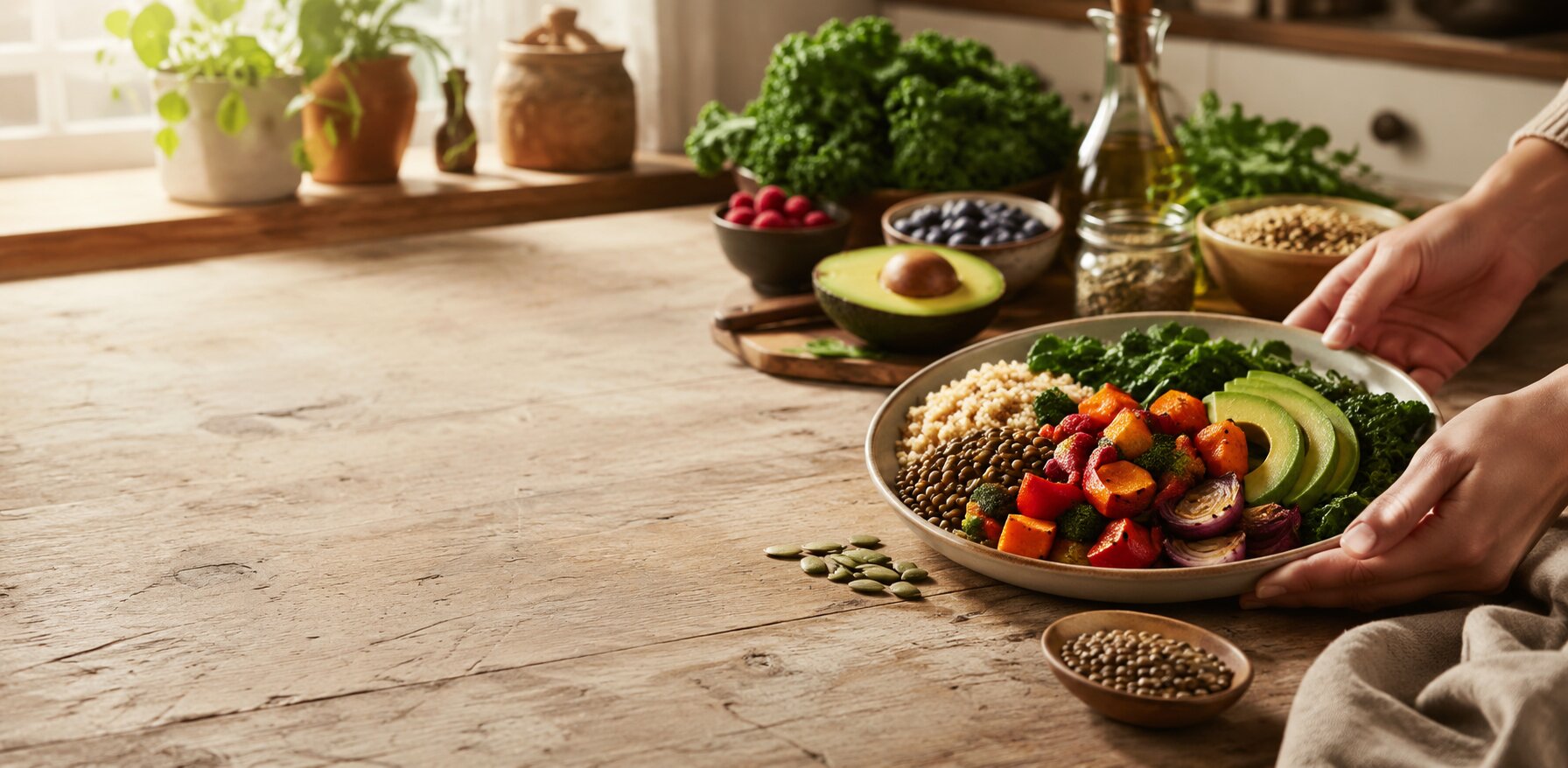
None of these numbers turns a bowl of cauliflower rice into a multivitamin. But they're a real answer to "does this actually do anything," and they add up meal by meal. That's the way a whole-foods, plant-based diet really adds up: a little bit here and a little bit there, without any superstars, but a lot of real food.
How to Actually Make It Taste Good
Now let's talk about the real reason you're still hesitating. Cauliflower is good for you, but it has a reputation for being watery, bland, and a little bit “sad.” It's earned that because people have cooked it wrong. You boil rice, but you don't boil cauliflower rice. Boiling just adds more water to it, and you get this soggy, flavorless pile of vegetable fiber that doesn't taste like anything; it's just watery. Gross.
Here's what you need to do: Get a dry, wide pan over medium-high heat so you can spread out your cauliflower rice. Cook it in batches if you have to. Sauté it for five to seven minutes, stirring it only occasionally so it has time to sit on the hot pan and let the water cook off until you see the edges turning golden. That golden color is flavor; it's the same browning reaction that makes roasted vegetables taste better than steamed ones.
You might want to try grilling it. Grilling cauliflower might be the best-kept secret. I've had some that a friend cooked who knew what he was really doing, and those cauliflower steaks tasted really good. You can use a barbecue for that, and you get a nice char and a real smokiness that your white rice never had. This makes cauliflower a genuinely good dish.
One more thing about cauliflower: it's more versatile than most of its cruciferous cousins because it doesn’t have a strong flavor. Broccoli and cabbage are just more potent, and so you can't put them in as many places. Cauliflower is milder. It takes on whatever you season it with, which also means you can use a variety of different seasonings: garlic with lemon, curry and turmeric, taco seasoning, or just soy sauce in a stir-fry.
That makes cauliflower much more versatile because it pairs well with many different flavors. So try it out and use it in many different ways with a variety of seasonings. You get bored with eating it the same way, so try different flavors.
What About the Downsides People Ask About?
If you've searched for "cauliflower rice side effects" or "disadvantages," you might find there aren't many. The main one is that it is a cruciferous vegetable, and it could interfere with thyroid hormone production if you eat very large amounts of it raw. This is especially true for people who have low iodine intake.
When you cook cruciferous vegetables, it almost entirely deactivates that effect. Most healthy people should take a little bit of supplemental iodine anyway, but if you have a diagnosed thyroid condition, you should talk with your health care practitioner. The goitrogens in cruciferous vegetables are not a reason to skip them.
People sometimes complain about gas or bloating from eating cruciferous vegetables. It does have some fermentable fibers that take some getting used to. If you eat small amounts and work up to it, your body adjusts, and you have more beneficial bacteria as a result.
So, Where Does This Leave You?
Cauliflower rice isn't a magic anti-inflammatory pill disguised as a vegetable, but it's not just a fad or a low-carb gimmick either. It is a genuinely good vegetable with real published anti-inflammatory research behind it, and it has almost no calories, and it can be made very tasty.
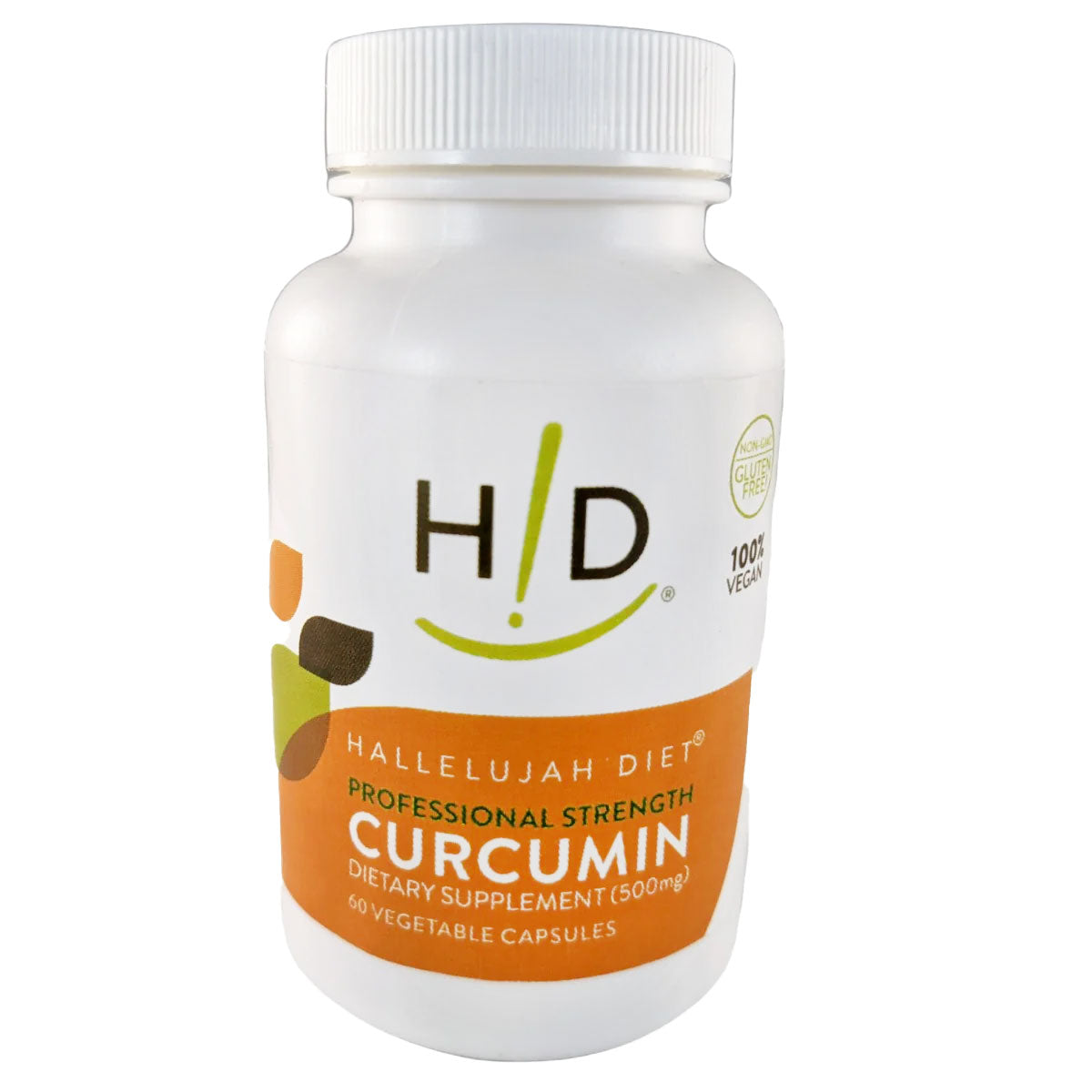
If you're building an anti-inflammatory way of eating, cauliflower rice is one tool in your bigger toolbox. It's part of the solution, but not the whole thing. It's part of eating well, alongside other cruciferous vegetables, whole plant foods, and, for some people, a targeted anti-inflammatory supplement like curcumin.
Hallelujah Diet Perspective
God's original diet for mankind was plants, as we see in Genesis 1:29. We didn't need medicine back then. And we find that many people who adopt a whole-foods, plant-based diet don't need much, or any, medicine now either.
Medicine is sometimes a crutch because addressing root causes takes time. Cauliflower rice can be one of those tools to help you get there.
If you want help, check out our Get Started page or the Foundations class to figure out how to adopt the Hallelujah Diet without struggle. After all, if you want to change your future, you have to change what you've been doing. Like George often said, “If you always do what you've always done, you're always going to get what you've always got.”
References
López-Chillón MT, Carazo-Díaz C, Prieto-Merino D, Zafrilla P, Moreno DA, Villaño D. Effects of long-term consumption of broccoli sprouts on inflammatory markers in overweight subjects. Clin Nutr. 2019;38(2):745-752. PMID: 29573889. DOI: 10.1016/j.clnu.2018.03.006
Axelsson AS, Tubbs E, Mecham B, Chacko S, Nenonen HA, Tang Y, Fahey JW, Derry JMJ, Wollheim CB, Wierup N, Haymond MW, Friend SH, Mulder H, Rosengren AH. Sulforaphane reduces hepatic glucose production and improves glucose control in patients with type 2 diabetes. Sci Transl Med. 2017;9(394):eaah4477. PMID: 28615356. DOI: 10.1126/scitranslmed.aah4477
Dwibedi C, Axelsson AS, Abrahamsson B, Fahey JW, Asplund O, Hansson O, Ahlqvist E, Tremaroli V, Bäckhed F, Rosengren AH. Effect of broccoli sprout extract and baseline gut microbiota on fasting blood glucose in prediabetes: a randomized, placebo-controlled trial. Nat Microbiol. 2025;10(3):681-693. PMID: 39929977. PMC: PMC11879859. DOI: 10.1038/s41564-025-01932-w
Nutrient figures (potassium, magnesium, calories, carbohydrates for cauliflower and white rice): U.S. Department of Agriculture, FoodData Central.
Choline figure: Zeisel SH, Mar MH, Howe JC, Holden JM. Concentrations of choline-containing compounds and betaine in common foods. J Nutr. 2003;133(5):1302-1307. USDA Database for the Choline Content of Common Foods, Release Two.



1 comment
Central Virginian
I fix cauliflower rice I’ve made in the food processor by sauteeing until very soft in olive oil with a little bit of pink or sea salt. A tight lid on the pot contains the steam that the cauliflower gives off while cooking and keeps it moist. If necessary I’ll add a small amount of distilled or spring water. Well cooked at a lower temp makes it easy to digest.
It is delicious prepared with this simple method; and leftovers reheated the next day are good too.
I fix cauliflower rice I’ve made in the food processor by sauteeing until very soft in olive oil with a little bit of pink or sea salt. A tight lid on the pot contains the steam that the cauliflower gives off while cooking and keeps it moist. If necessary I’ll add a small amount of distilled or spring water. Well cooked at a lower temp makes it easy to digest.
It is delicious prepared with this simple method; and leftovers reheated the next day are good too.