




The Juicing Guide
What to juice, what to leave out, and the small things that change how much of it you actually absorb
Download the printable version (PDF)Five pages. Printable, and made to live on the counter beside the juicer.
We have been telling people to juice vegetables for more than thirty years, and in all that time the questions have barely changed. What goes in the glass. How much. Does it have to be right now. Which machine. Is the sugar a problem.
This is the whole answer in one place. Some of it will be familiar. A few things in here are not in any juicing article we know of, including one that can multiply how much of the good stuff your body actually takes up — by a great deal more than most people would guess.
Why the glass at all
It takes roughly a pound of raw vegetables to make an eight-ounce glass of juice. Nobody sits down and eats a pound of carrots and greens. But most people can drink eight ounces without thinking about it.
That is the whole argument. Juicing takes the fiber out of the way so a tired digestive system can get at the nutrition without having to do the work of breaking it down first. If your digestion is compromised — and after a few decades of the standard American diet, most people’s is — that difference is not small.
The fiber matters too. That is what your plate is for. Juice is not a replacement for food; it is a way of getting a great deal more nutrition into a body that needs to rebuild.
The rule that settles most questions
Juice your vegetables. Eat your fruit.
Take the fiber out of an apple and you are drinking sugar water with a few vitamins in it — nothing left to slow it down. Take the fiber out of a carrot and you get a low-glycemic juice carrying a dense load of protective compounds. The two are not the same transaction, and lumping them together is how people end up afraid of vegetables.
So: no fruit juice. Not fresh-squeezed, not organic, not “one hundred percent.” A green apple to make a bitter glass drinkable is a small thing and we would not fight you over it. A glass of fruit juice is a different matter.
What goes in — the base
Most of the glass.
- CarrotThe foundation for good reason. Alpha- and beta-carotene, falcarinol, falcarindiol. Scrub them; don’t peel them. The good compounds sit in the skin and the core.
- CucumberVolume, minerals, and it makes everything else taste milder. Buy unwaxed, or peel the waxed ones.
- CeleryMild, mineral-rich, and one of the better vegetables for blood pressure.
The greens
A third of the glass, or thereabouts.
- Collard greensOur first choice. Deep nutrition, and genuinely low in oxalates. You would have to drink an enormous quantity of collards to approach what a small serving of spinach delivers.
- Dandelion greensBitter, and worth it. They also hold their nutrition in storage better than almost anything else we have seen measured.
- Romaine, green leaf, butter lettuceThe gentle on-ramp if bitterness is a problem.
- ParsleyA small handful. Concentrated, and it brightens the whole glass.
For flavor and function
Small amounts.
- GingerA knob the size of a thumbnail. Settles the stomach and cuts bitterness.
- LemonHalf of one, peel and all if it is organic.
- BeetsA small one. See the note below on what beets are actually for.
- Red cabbage, bok choy, fennel, zucchiniGood in rotation. Variety matters more than any single vegetable.
What we leave out, and why
- Fruit. Covered above. Eat it whole, keep it to no more than about fifteen percent of the day, and during active disease keep it smaller still.
- Spinach and Swiss chard. Both are excellent foods. Neither belongs in a daily juicer. They are among the highest-oxalate vegetables measured — chard sits right alongside spinach — and oxalate is what kidney stones are built from. Eat them. Do not drink them every morning. If you have ever passed a stone, leave both out of the juicer entirely.
- Kale. Kale is low in oxalates; its issue is different. In the quantity a daily juicer puts through, kale presses on thyroid function. Kale in a salad is fine. Kale in the glass every day for a year is a different exposure, and a lot of the people reading this are already managing a thyroid.
- Beet greens. High oxalate, same as chard. Use the beet, compost the tops.
- Anything bitter that should not be. A cucumber or zucchini that tastes sharply, unmistakably bitter is carrying a compound that will make you genuinely ill. That is not a flavor to push through. Throw it out.
How much
Start where you will actually stay.
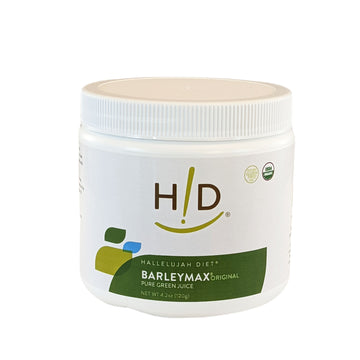
- Starting out: one eight-ounce glass a day, plus two servings of BarleyMax.
- Steady state: one to two glasses a day, plus two to three servings of BarleyMax.
- Rebuilding from something: considerably more. Six glasses a day is not unusual, and the people who get the most out of this are almost never the ones doing the minimum.
That last line is worth sitting with. Most people come to this depleted, and rebuilding a body takes more true nutrition than maintaining one does. The floor is not the target.
BarleyMax is the floor, not the ceiling
It is barley grass juice with the water taken out — a glass, not a capsule. On the days nobody in the house has the strength to run a juicer, and in a hard season there are a great many of those days, it takes thirty seconds and it counts.
Five things that change how much you absorb
This is the part almost nobody tells you.
- 1
Drink it with fat.
This is the largest single lever in this entire guide. In controlled work, adding a fat source to a vegetable meal raised carotenoid absorption dramatically — beta-carotene by more than thirteen-fold, alpha-carotene by roughly eight, lutein and lycopene several times over. Carotenoids are fat-soluble. Without fat present, most of what you juiced goes straight through you.
Half an avocado, a small handful of walnuts, a few olives, a spoonful of flax oil. Something with fat in it, alongside the glass. The old advice to take juice on an empty stomach may be quietly costing you most of what you paid for.
A little good fat also slows sugar absorption, which is the answer to the blood-sugar question people ask about carrot juice.
- 2
If you drink beet juice for your blood pressure, mind your mouth.
Beets work through nitrate, and your body cannot convert nitrate into what it needs without the bacteria living on your tongue. Antibacterial mouthwash wipes those bacteria out and cancels the effect — this has been measured directly.
Gum disease does the same thing. In one study, beet juice dropped blood pressure meaningfully in healthy people and did nothing at all in people with periodontitis. After their gum disease was treated, the effect came back. If you are juicing beets and seeing no change, the problem may be in your mouth rather than in the glass.
- 3
Carrots are not the blood-pressure vegetable.
Carrots carry roughly 10 to 30 mg of nitrate per 100 grams. Beets carry 250 to nearly 500, celery 150 to 250, arugula similar. If blood pressure is what you are after, the beet and the celery are doing that work. The carrot is doing something else entirely, and doing it well.
- 4
Scrub, don’t peel.
Falcarindiol sits in the carrot’s skin. Falcarinol concentrates in the core. Peeling throws away one and heat destroys both — two minutes at cooking temperature and they are gone. This is a large part of why we press so hard on raw.
- 5
If you take levothyroxine, juice is not water.
Thyroid medication needs thirty to sixty minutes with nothing but water. Calcium and iron can cut its absorption by twenty to fifty percent; food generally cuts it by ten to twenty. A morning green juice taken too close to the pill is a plausible, entirely invisible reason for a thyroid number that keeps drifting.
Keeping it
Make it and drink it. That is the simple version, and it is what we do.
But the anxiety around this has gotten out of hand, and it makes people quit. So here is what the measurements actually show:
- The first twenty-four hours cost you almost nothing. In refrigerated glass, vegetable juice loses somewhere between zero and seventeen percent of its vitamin C in a day. Enzyme activity in carrot juice falls only about ten percent over three days cold.
- Glass beats plastic, consistently, at every temperature tested.
- Fill the jar to the very top and cap it tight. Air is what does the damage, not time.
- Do not freeze it. This one surprised us. In the same study, freezing carrot juice for a week cost more vitamin C than refrigerating it did.
- Day three is where it changes. Past that point the question stops being nutrition and becomes bacteria. That is the hard stop.
Juice made the night before and drunk in the morning is fine. Juice sitting in the door of the refrigerator since Tuesday is not.
The machine
The best juicer is the one you will actually use. We have watched more people quit over cleanup than over anything else.
That said, our own research director, Michael Donaldson, PhD, put six household juicers through measured testing rather than guessing at it. Press and twin-gear machines preserved the most — the People’s Press ran twenty percent above the Norwalk and Green Life, fifty percent above the Omega, and two and a half times a centrifugal Juiceman. The Pure Juicer produced the highest yield of anything tested.
Two honest notes alongside that. The centrifugal machine in his comparison did better than the old warnings would suggest, and the variation between batches of produce was larger than the variation between machines. And a good machine sitting in a cupboard is worth nothing.
Clean the gasket
Not the blade — the gasket, the screen, and the pulp chute. In household testing, appliance seals are among the germiest things in a kitchen, because they are the part that has to be taken apart to reach. That rubber ring is where the trouble grows.
The produce itself
- Organic matters more here than on your plate. You are concentrating two pounds of vegetables into one glass, and the pesticide load concentrates with it. Washing is not the answer people think it is: across dozens of studies, a plain water rinse removes about thirty percent of surface residue, a baking soda soak about half. Systemic pesticides are inside the plant tissue, where no wash reaches them. If the budget only stretches so far, spend it on the vegetables you juice in volume — carrots and greens.
- Heat costs more than time. Greens lose vitamin C and folate steadily in the refrigerator, but an hour in a warm car costs more than several days cold. Get produce home and get it cold.
- Store greens damp, not wet — a towel in the bag, in the crisper. Carrots keep for weeks in a sealed bag, tops removed. The tops pull moisture out of the root.
What it costs
A sixteen-ounce glass takes roughly two pounds of produce. Carrots yield about eight ounces of juice per pound; cucumber rather less. Depending on where you shop and whether you buy organic, a daily glass runs somewhere between two and five dollars.
That is real money, and worth saying plainly rather than pretending otherwise. Buy carrots in twenty-five pound bags. Buy what is in season. And on the days it does not happen, BarleyMax costs about a dollar.
The pulp still holds the fiber and a good share of the polyphenols. Compost it, put it in soup, put it in a loaf. It is not nothing.
Where to be careful
- Kidney disease. Vegetable juice is a substantial potassium load, and large daily volumes of any juice concentrate oxalate. Work this out with a nutritionally minded health care professional before you start.
- A history of kidney stones. No spinach, no chard, no beet greens in the juicer. Drink plenty of water alongside.
- Warfarin. The guidance is consistency, not avoidance. A steady daily amount of greens works fine; erratic intake is what causes trouble.
- Diabetes. Vegetable juice is low-glycemic, but there is no fiber to slow it. Watch your own numbers, and drink it with fat.
- Pregnancy, small children, and anyone immune-compromised. Fresh unpasteurized juice carries a real bacterial risk for these groups. Make it fresh, keep everything scrupulously clean, and drink it the same day.
- Orange palms. If you drink a lot of carrot juice your skin may take on a faint orange cast. It is called carotenemia, it is harmless, and it fades. The way to tell it from jaundice is the whites of the eyes — carotenemia spares them.
A week to start
You do not need a system. You need one glass.
- Day 1Carrots, one cucumber, a lemon. That is it. Drink it with breakfast.
- Day 2The same, plus a handful of parsley.
- Day 3Add collard greens. Start with two leaves.
- Day 4Add a thumbnail of ginger.
- Day 5More greens, fewer carrots — work toward roughly two-thirds base, one-third green.
- Day 6Try dandelion greens. Bitter is a signal, not a flaw.
- Day 7Make it the night before, in a glass jar filled to the top, and see how the morning goes.
By the end of that week you will know whether this fits your life. If it does, it will still be in your life in ten years.
One more thing
Genesis tells us God gave us every seed-bearing plant for food. What has always struck me about the carrot is how ordinary it is. Cheapest thing in the produce section. Grows almost anywhere. It has been in the ground under our feet the whole time, carrying compounds researchers are only now getting around to naming.
That seems to be the pattern. The provision is already there, in plain sight, at almost no cost, and we go looking somewhere else.
“And God said, Behold, I have given you every herb bearing seed, which is upon the face of all the earth, and every tree, in the which is the fruit of a tree yielding seed; to you it shall be for meat.”
Genesis 1:29
The cheapest thing in the produce section has been carrying this the whole time. Keep the juicer on the counter.
Blessings,
Paul & Ann
Read next
Why Your Body Heals a Cut
The glass supplies the raw materials. This is what the body does with them — and why it needs a good deal more of them than most people hand it.
Read the articleOnce the glass is handled
The Yes List — 25 foods worth adding
Juice is what goes in the glass. This is what goes on the plate — twenty-five foods worth adding, and what each one is doing there. One page, made for the refrigerator door.
Send me the list